Category Archives: Higher Education

Adventure via Oculus
My mind has moved into 2021 as I start to plan my next adventures. But my body had been struggling with 2020 pandemic workout options.

That is until I discovered the Oculus Quest 2 Virtual Reality Headset. My son-in-law introduced me to it and I knew immediately that I needed to have this technology. The opportunity to immerse yourself is another place such as a good backpacking trek totally justified the purchase. Then I explored some exercise oriented apps and decided to buy a 1 year subscription to SuperNatural.
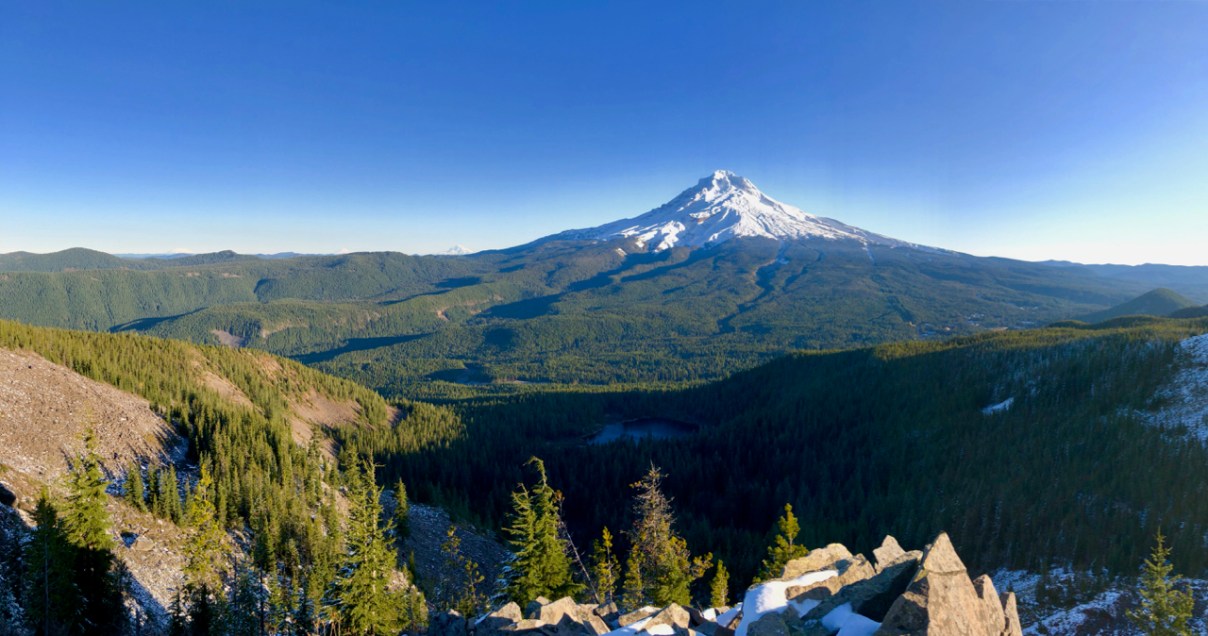
So this is my short post about how the Oculus 2 Headset has allowed my Adventures to Continue. The YouTube VR Library is growing with some really great 360 videos. Plus there is Oculus TV which gives you many options to travel around the world. But then I explored the exercise option and realized that this VR thing could be the answer to the exercise motivation needed to keep my old body ready for the live adventures. I have never participated in any organized exercise program. I don’t do yoga and I have never joined a health club for exercise. But this SuperNatural App made exercise enjoyable and I have selected a few coaches who I like and my body is truly starting to experience the rewards. The concept of hitting black and white balls coming at you with virtual bats along with squatting under triangle barriers also coming at you is good. I decided to write a post after ending a session where I worked out on the surface of the moon as well as at my favorite backpacking location of Tom, Dick & Henry Mountain. The technique of placing you in a beautiful setting hitting balls and squeezing under virtual tunnels gives your body a complete workout. You can work up a sweat with a good 15 minute session and you definitely have to push yourself to finish the longer sessions. Here is the SuperNatural Promo Video:
This Virtual Reality tech is not entirely new to me. As a CIO in Higher Education I have watched the progression of the VR Technology. In the early days a team of many developers would spend months to develop an immersive experience on the high priced Oculus headset of the day. But now VR’s time has arrived and Facebook’s purchase of Oculus is a part of it. The Headset is relatively affordable now because the money is going to be made off the apps. This is just the next Playstation or XBox. BTW – my right arm is a bit sore from playing so much Table Tennis on the Eleven app.
Update 6 weeks later – still very positive. I have been meeting my goal of working out 4 times a week and I am seeing amazing improvements with strength and flexibility. I don’t worry to much about points, I realize that just doing the workout is a victory. The thing that bugs me the most is when I hit a ball with the wrong colored bat. I think the mental exercise aspect of the workout is as important as the physical. I think the combination of exercising and then getting in the Hot Tub is great for the body. I have always had low back concerns and now I feel so much more confident. I can’t wait to hit the ski slopes or the backpacking trail to enjoy what this old body can do.

Update 12 weeks – still going strong. This article from CNN captures my experience accurately. Tomorrow I head out for a 4 or 5 day trek on the Lost Coast Trail which will be my first opportunity to gauge my fitness progress from Supernatural with the demands of backpacking. Overall my Supernatural journey has been all that I could have imaged from an exercise program, but most of all it provided the motivation to “Just Do It”. I have progressed steadily to harder sessions but have also realized that I need to pace myself. My streak of 11 weeks meeting my goal will end this week.
Great Possibilities for my New CIO Role
I just finished up a visit to Western Washington University where I will be the Interim CIO for a year starting June 20th. I pleased to say that I am very excited about the prospects for the job and the university. Once I came out of the wilderness at the end of 2015 I decided I was ready to return to higher education and the opportunity that I selected was this unique role as an Interim CIO for one year. This all began thanks to a recommendation from an external review of the WWU Information Technology organization conducted by Marty Ringle, President of the Northwest Academic Computing Consortium, NWACC. One of the recommendations offered was to consider hiring an Interim CIO who would be able to work with the TBD new President exploring how WWU might want their Information Technology organization to be structured. Well I was one of the possible candidates and the stars aligned with respect to their believing in me and my ability to commit to this interim role.
Spending 2 days in Bellingham meeting most everyone who has a vested interest in who the new Interim CIO will be was more exhausting than a typical job interview. This was because we had dispensed with the possible and commenced to the real issues that we want to consider. Think about this opportunity. We joked about how I can blame everything on my predecessor CIO and how I have an exit strategy. Translated, that means we can actually place issues on the table with the freedom to actually address them. The reality is that my predecessor, who is retiring after an impressive career, has done a great job to set the stage for moving the IT organization forward. Everyone agrees that budget cuts after the 2008 downturn hit IT especially hard and it has taken a number of years to recover to the point now where they can focus on building rather than just surviving. Yes, I am really excited about the role I will be able to play in leading the Western Washington University Information Technology organization. WWU is a great university located in the beautiful Northwest near some fabulous backpacking opportunities, imagine that. But more important, it is a university where people want to be and that is why I am excited to be one of those people.
The Great Potential of SAP HANA

The experiment with integrating SAP HANA into teaching and research here at Missouri S&T is paying off. Last week I observed our Business and Information Technology, BIT, students presenting their ERP Simulation projects to a team from Deloitte SAP Service Line. What caught my eye was that the students are now incorporating data from our Autism gene mapping research project, which is a university research project that my IT DBA staff are collaborating on in order to learn how to better support SAP HANA. This goes back to my original strategic decision to invest in SAP HANA to allow our researchers and students to align more closely with the desires of our corporate employers. See my blog post from last year. I elaborated on the concept of IT’s changing role as a facilitator of teaching and research in this article published in “CIO Review” last Fall. Observing our students understanding of the potential of SAP’s HANA for the Business Intelligence support for their projects is justification enough for the investment. But the excitement is now being generated by how HANA fits into our overall STEM teaching and research environment.
The Autism project was a fortunate opportunity to learn and explore the potential of HANA. Feedback from my DBA’s about how HANA is different from their traditional relational database experience is encouraging as well. What I hear is that HANA is initially daunting in it’s complexity. However, it makes the initial database layout easier because it shows you so many more possible relationships. Of course this is the Hadoop foundation based on large in-memory utilization. The HP SAP HANA appliance just packages it all into a more effective tool chest. Combine HANA with an already rich set of BI and Visualization tools, then let talented students run with it and you see the potential is endless.
Back to the Autism Project, the study is fascinating, especially to me with my bioinformatics background. The research investigators include: Drs. Tayo Obafemi-Ajayi, Bih-Ru Lea and Donald C. Wunsch. Here is a portion of their abstract:
Several studies conducted on autism gene expression analysis suggest that autism can be linked to specific genes though there are still no genetic markers that are undeniably diagnostic for idiopathic ASD. What is known is that the genetic landscape of autism is complex, with many genes possibly contributing to the broad autism phenotype. Genetic data analysis involves big data analytics. The ASD HANA in-memory database project will facilitate the goal of the ECE researchers to develop novel computational learning models for analysis of ASD genetic data. The genotype data of these ASD patients is available through the Simons Simplex Collection (SSC).
So the research is progressing and we expect significant new funding thanks to the proof of concept work already done. Chalk up a win for stimulating research. But another win is how the students have applied a portion of the data to create BI class projects. Now they see the connection to the Health Science industry. Because we now understand the potential of HANA we have also validated a research connection for the petroleum industry. This was the hope for the HANA investment, a perfect storm matching STEM savvy Business students with corporate recruiters identifying research ideas is a Win for all. This is the type of IT support flexibility needed by the emerging higher education teaching and research model of the future.
SAP Community reference to our use of HANA to leverage research and teaching

Research Support and Student Experiential Learning
The pursuit of a STEM degree has gained significant attention in recent years as we evaluate the ROI for a college degree. A recent article in NerdScholar by Yesenia Rascon, “Top 5 Reasons to Apply to a Research University” highlights the importance of experiential learning, access to research facilities and hands on career development quantifies many of the reasons we allow our IT student workers the opportunity to participate in exploratory projects. This all relates back to a culture that we promote for our very successful IT Research Support Services, RSS, group here at Missouri S&T. I have been fortunate to be in a position to carve out some IT budget to dedicate to research support. However, because some of my funding comes from student tech fees I make sure that the students benefit from our efforts. This translates via the hiring of student workers, but extends beyond tradition tech support jobs. We hire students in RSS who seek out that opportunity and we benefit from important support services that they are able to provide to our university. However, we also reward them with the opportunity to own their own research projects. Our staff does offer advice and support but we also let the students fail.
Our students also earn the right to attend national research conferences such as the annual SuperComputing and Great Plains Network. These opportunities provide them excellent presentation experience which we utilized this summer by having our students conduct a workshop for the CyberMiner camp for high school students. We asked them to present their current projects to about 50 high school juniors and seniors. We designed the workshop to encourage the campers to engage with our students and it was truly an inspiration Geekfest showcasing our future technology leaders.
Here is a quick glimpse of the projects they presented and a sense of the workshop.

MinerBytes or Digital Signage Project
MinerBytes which is a digital signage project based on using the Raspberry PI computer connected to any monitor with access control given to designated administrators. This was a project conceived by a biology student last summer and this summer we are preparing it for version 1 production deployment on campus and in our community. Somewhat of a surprise to us was that this project generated the most interest by the high school students as they were intrigued by the coding behind MinerBytes.

Drone Project in Initial Phase
The Helicopter Drone Project is in its infancy which was good to be able to show the campers how a project gets birthed. We don’t know where this project will go but we believe we should be on top of the explosion in use of drones. We have ideas for using it in creating virtual tours.

First Segway Prototype
The Segway project started out last summer and has proven to be the perfect multi-discipline opportunity for our students. With a heavy electrical, mechanical and software development component we have had many students involved with this one. Our students presenting the Segway gave the campers some excellent advice based on their experience in designing the controller boards which they fried more then once. They told the campers what they appreciate most about their opportunity to work on these projects is that they are allowed to fail, and that has been their greatest learning experience.

Video Wall built by Students
The Segway prototype moved to a production design this summer which offered an excellent opportunity to display how they used SolidWorks design software on the new Video Wall that RSS built this summer. The Video Wall currently named MinerView is built on solid computer video display principles but was built from scratch with special attention given to the structure to mount the 9 55 inch high resolution monitors. The students had just a few hours to assemble the video wall in the classroom used for the workshop.

Using Video Wall for Engineering Design
The Video Wall will be used in the upcoming Research and Technology Development Conference, #RTDatSandT on September 15-16 where representatives from Indiana University and the University of Texas will show off the latest in visualization techniques. RTD2014 is another great opportunity for students at S&T.

Video Wall to look at Mt Everest
Of course the Video Wall has many uses and will be an important addition to our Library where it will be made available to the entire campus for visualization. We already know that it will be instrumental as a foundation for our Business and Information Technology department’s ERP Center.
Hopefully this gives you an idea of what is possible if your Information Technology department combines the needs of the university with an opportunity for experiential learning.
This New RSS website presents the students projects very well.
They are changing the face of education globally
I checked out Coursera’s course offerings and I have to admit they have a great lineup of quality courses. I signed up for “Introduction to Logic” from Stanford which begins soon so I could evaluate the process and quality of delivery, plus I am somewhat interested in logic. Then I signed up for “Introduction to Genome Science” from University of Pennsylvania for a fun refresher to my MS in Bioinformatics where my thesis was “Security of Our Personal Genome”. Purely continuing education but what a huge market that could be. You do realize this is wave 2 of open courseware. Coursera’s quote: We are changing the face of education globally, and we invite you to join us. Let’s assume Coursera is able to competently deliver these courses to any number of students. And let’s assume their student assessment techniques allow them to validate that learning took place. They have the prestigious of elite institutions of higher education. What does this mean?
What if a year from now millions of people are successfully completing courses through Coursera, Udacity and probably other copycat competitors. First Coursera is going to be worth billions and second a benchmark will be established that will define what is a quality online course. What will this benchmark mean? It will eliminate the argument that legitimate For-Profit online providers lack in quality. But more important it will validate the other argument that many of the online courses from traditional non-profit institutions are not worth the bandwidth you are wasting on them. So what does this mean for most of us (higher education)? Our online or blended offerings which we realize we must offer will have to be of similar quality to the free offerings from the Coursera’s of the world. We will have a benchmark. And then we just worry about holding on to our control of accreditation for validating what is a college degree and what is it worth. I am thankful that we will still have the value of the campus experience, but again, what will it be worth.
Update July 17, 2012 – More research universities join Coursera
We will offer the iPad as a choice for our laptop program
George Fox University historically offered incoming freshmen a choice between an Apple iPad or a MacBook laptop as part of their mobile learning initiative. The purpose for the program was for marketing, standardization and convenience. The issue for us is the changing landscape of educational computing and the value dilution of a laptop for a traditional undergraduate. George Fox University happens to find itself at the crossroads for both of these issues.
We had been hoping that the iPad would be the perfect transition technology, but I address some of the shortcomings of the iPad that prevented us from offering the iPad in place of the MacBook next year. However, in looking for a way to offer an option to the MacBook we have decided to offer the iPad as an alternative choice. I think this will be a very interesting opportunity that will first be marked by the percentage who select the iPad and second by the success we find in utilizing and supporting it. Now we will make sure the iPad offering is as complete as possible and we won’t be able to give any guarantees that the iPad equally replaces the MacBook. In fact the smarter value choice would be for the MacBook, but what will the students choose?
There will be many reasons why students may choose an iPad and it will typically break down into those who already have their laptop of choice or those who actually believe that the iPad is the more functional computing device for them to be a successful student. How the numbers work out will be interesting, but no matter what I think we will see many iPads, iPhones and iTouches throughout the undergraduate population. We will be deliberate in tying to integrate these mobile devices into our Teaching & Learning strategies, but in most cases we will just be observing whether the iPad satisfies the technology needs for undergraduate higher education. Of course the rapid availability and our adoption of E-Textbooks will strongly influence the value of the iPad. Stay tuned.