Proud Father of a Gamer
How many of you have a son who you feel spends way to much time playing video games. Or how many of you spend way to much time playing video games. So my son, Dylan, probably does spend too much time playing video games, but he has also adapted that into a side career. Dylan will soon be a host on the new Game Out Loud Podcast show and website. Dylan, my 30 year old son who we adopted at age “7 months” from Korea.

Host of Game Out Loud – Dylan Smith
I think we all realize how significant the influence that the video gaming industry has on our world. I think about the overall influence that gaming has on my IT world today and I reflect on what gaming was to me while growing up.
From a CIO’s perspective at a significantly geek cultured STEM university, I know that gaming is not only the primary means of relaxation for our students but also for many of my staff. Our university’s network has been brought to its knees due to unhappy gamers seeking revenge on some of our students. Technology associated with gaming was a major influence at the recent CES that I attended. I’m sure it won’t be long before my university offers scholarships for top student gamers. And like everything else related to technology this is moving at warp speed. An industry generating more then $60 billion in less then 20 years.

Cadaco’s All Star Baseball
In listening to the Game Out Loud Podcast I was impressed by the audio performances by the show hosts. Over the last few years they have typically produced a weekly podcast talking about everything a gamer would want to know about and they are pretty good at it. I tried to imagine what I might have equated this to when I was growing up. So I reminisce to a time before video gaming and digital communication. Would I have listened to a podcast that gave me insights into the culture of board games? The only game that I could truly say that I invested way to much time on was “All Star Baseball”. Yep, it would have been cool to compare lineups and strategies for how teams were put together via a podcast.
Wow, what a great time to live. I’m not going any deeper with this post. Good luck Dylan, enjoy this time. Someday you’ll get to reminisce about it as well.

Consumer Electronic Show
Consumer Electronics Show Las Vegas
I am going to attend the Consumer Electronics Show, #CES2015, next week in Las Vegas, which causes me to reflect on why. CES has been around for a long time but for me it never carried enough clout to justify going to it rather then certain computer-tech oriented shows. If I wanted the scoop on major consumer technology it would have been COMDEX which I believe has been absorbed by CES and Interop. I fondly remember going to COMDEX in 1981 in Las Vegas and seeing the Xerox Star. Now I did take in CES in the early 2000s in Indianapolis due to my involvement with smart home technology. In my University CIO life I have juggled various Higher Education tech conferences such as Educause or UBTech. However, today my technology appetite is driven by the need to know what consumers will be interested in. Because those consumers are our students whom we need to stay relevant with for what we teach and for what they experience.
This shift of interest to Consumer Electronics has been rapid and strategic. As the computers that we so love to support fade into consumable electronic devices our challenge shifts to adapting our technology support to the technologies that our students use or want to connect to. Innovation for the sake of competitive advantage or student experience is heavily influenced by Consumer Electronics. Look back on our Research Support Services group 2014 projects and it mirrors what was shown at last year’s CES. So bring it on CES and Las Vegas, but for this visit What Happens in Vegas will not stay in Vegas.
Get Ready for WYOD
I kicked off the Bring Your Own Device (BYOD): A Summit for Decision-Makers (summary article) as the keynote speaker last week in Ann Arbor, Michigan. This Summit was put on by Merit, who provides the network service needs of higher education, K-12 organizations, government, health care, libraries, and other non-profits for the state of Michigan. It brought together public and private sector technology and security leaders, as well as experts from academia and a wide array of vendor sponsors, to discuss hot trends for employees who are bringing their own devices to work.
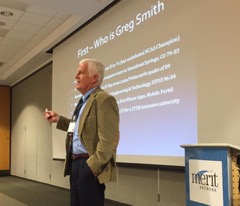
Keynote Address for BYOD Summit
I was interested in presenting on this BYOD topic because I understand the concerns but I also feel we need to put the issue into proper perspective. BYOD is officially defined as the practice of allowing the employees of an organization to use their own computers, smartphones, or other devices for work purposes. This is the valid concern which causes us to question our preparedness for dealing with bandwidth and security issues associated with BYOD. But the acronym has become synonymous with challenges relating to the explosion of mobile internet access devices which tend to pressure our network management more than security risks. My Keynote entitled, BYOD: We just need to keep up, focused on the emerging concerns from Wear Your Own Device (WYOD) and the evolution of The Internet of Things (IoT).
Wearable devices today are not really pressing our infrastructure or security concerns, however, that is the calm before the storm. The focus for these wearables today typically points to some form of activity or health monitoring. Interaction with the Internet or local WiFi is minimal now typically because of power consumption issues. However, the stage is set for these small useful devices to interact with our personal Internet space. And the most significant use will evolve out of the NFC based authentication made popular by the Apple Pay entry for transacting purchases. The key here is the validation of mobile devices, typically today’s smartphones, as authenticators of our personal identity. Replacement of the credit card swipe for retail purchases will lead the way, however, we in IT will get to explore and support all of the other uses that will play off this technology. For us in higher education we will see this become our student’s ID Card for building access, attendance and even remote test proctoring. The technology challenge is not daunting, however, the shift of our support mentality may be difficult. We will need to protect the effectiveness of these activities along with ensuring the security. It will mean a lot more technology responsibility on our plates.
Return to the One Room Schoolhouse
I have seen a trend with my STEM connected colleagues over the last 6 months wanting to discuss concepts of adaptive or competency based learning, CBL. These discussions evolved for many reasons such as; lack of classroom space, course scheduling problems or issues surrounding non-tenure track faculty. This discussion is right on target when it occurs with younger faculty, however, now older faculty are asking questions and seem to be contemplating how this could work. Generally there is agreement that it is inevitable that education will move in this direction, but then you start talking about the repercussions of what that might look like to the higher education business model and fear returns to the conversation. I guess what is different is that now there seems to be recognition of the value of the learning model and discussions are tending toward how we might implement it.

Personalized Learning
I decided to write this post after a number of discussions yesterday, some stimulated by those who viewed CNN’s airing of the “Ivory Tower” documentary. As we talked about implementing adaptive learning to our STEM courses I was drawn to the vision of the old one room schoolhouse. STEM possibly more then any other academic discipline is based on building blocks or competencies. Math and the sciences dominate this with competency based requirements built into courses as well as with interdependencies between courses. So when I thought of the one room schoolhouse I saw it as similar to the students that we receive. In the one room schoolhouse students have to progress through levels of reading, writing and arithmetic, and they had a built in remediation process. The teacher was there to help at all levels.
How did we get to our current college degree attainment path based on taking a selected number of courses that may or may not actually give you all of the competencies that you or your employer desire? I think we used to have a much more standardized entry path to college. Students from high school, mostly Americans, had very similar competencies due to similar curriculums that could not be supplemented by additional information as is now available via the Internet. The over achievers could go to World Book, but for the most part if a student got accepted to college then they pretty much entered at the same level and the progression through a standard set of courses with a few electives worked fine. That world no longer exists. We have screwed up high school believing that standardized testing validates competencies. Combine that with the financial pressure universities are under to maintain enrollment and you end up with a freshman class that is much more in line with the one room schoolhouse.
Change is coming and it will be heavily influenced by competency based learning and I think STEM may be well positioned to adapt to this. We have been working on this concept in our general ed core curriculums of math and science. At first it was about trying to figure out online or hybrid learning but now we are starting to see how we may need to change the academic business model. The emerging CBL providers such as Western Governors are built upon a personalized learning foundation that allows the student to progress at their own pace. Tuition is based on a period of time not on credit hours, which creates the incentive of “the faster you progress, the more you save”. Maybe there is a hybrid version of this that can work for the traditional residential university.
I’m going to take a stab at what this might look like for STEM degrees. I’m looking at this as realist considering what might be acceptable for our entrenched higher education culture, today’s student and the political and financial forces that will inevitably force the change. The first 2 years of most STEM degrees are fairly similar based on the need to build a foundation of math through calculus, basic concepts for the sciences with English and physics typically being foundational as well. This is true for pre-meds through engineering and it is typically fairly challenging to ensure that we are not wasting our time on the students in the upper level of the degree program. So how about a one room schoolhouse for each STEM discipline complete with a set of competency based learning modules designed with assessments that provide adaptive options to complete each step. We have talented non-tenure track faculty always available and still teaching but not on a fixed lecture circuit. The environment would facilitate collaborative learning along with the necessary lab requirements. The student pays the same tuition, and heck we even keep the semester structure. The advanced students finish early or have more time for extra curricular activities such as undergraduate research or experiential learning options. As the student emerges from this general ed core they enter into the more traditional degree completion with the upper level courses and labs taught by tenure track faculty to complete their STEM program.
I’m going to stop here without digging into the obvious questions and details. But what do you think? I think it might be an improvement.
Providing Technology that Students Actually Use
While eating lunch at my desk I opened up the webcam view of our new Nonavitra 6K Visualization Wall we built for use in the library. Three students jumped on the system and proceeded to spend 15 minutes exploring chemical bonding options starting from some periodic table application. I wouldn’t say that it was utilizing hi-res graphics but what was important is that the students were having such a great time exploring. This brings me to what I feel is one of the most important reasons for giving our students access to this visualization resource. The opportunity to explore and gain experience in working with resolution that is typically reserved for corporate showcases or expensive research facilities.
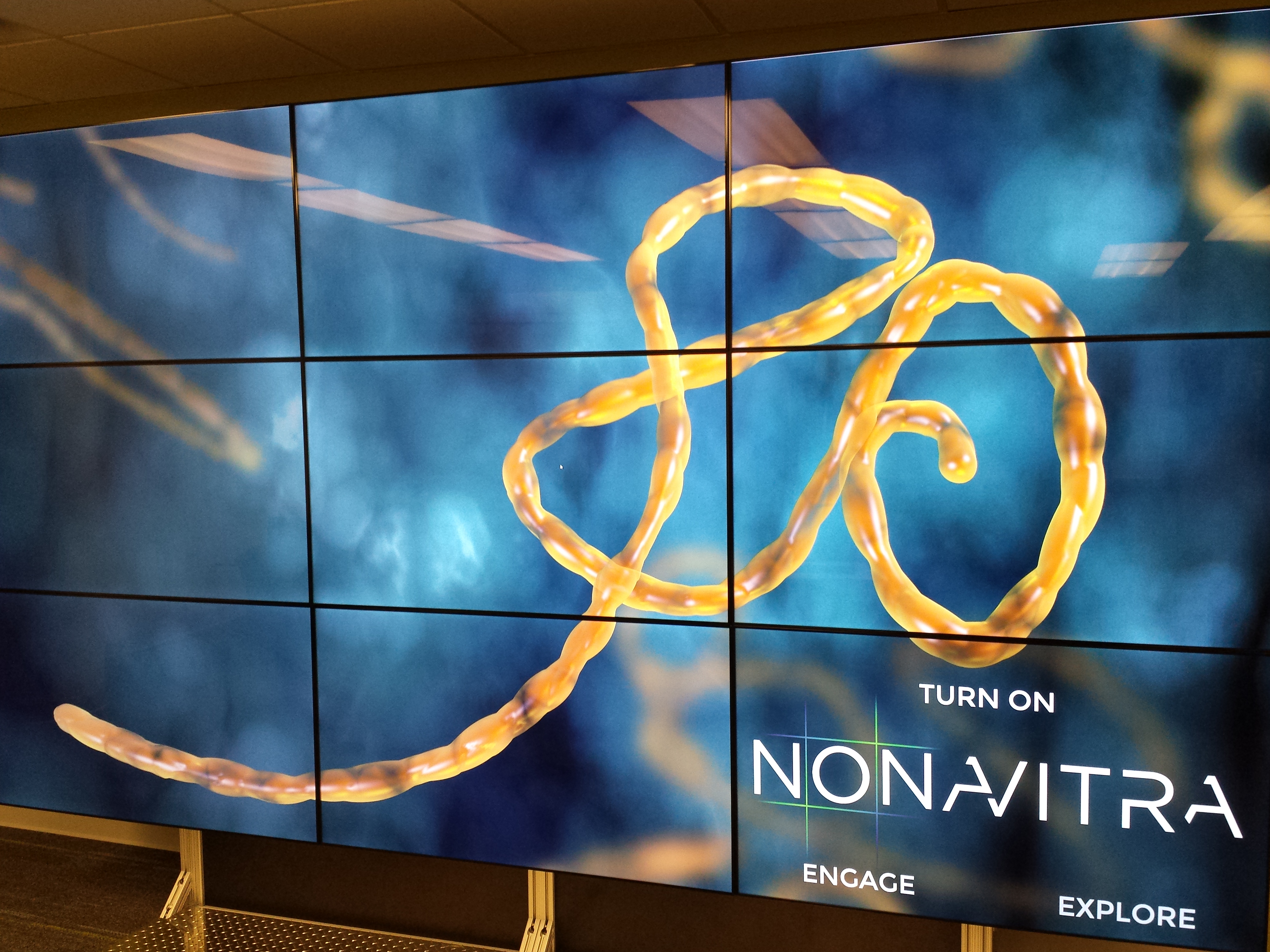
Nonavitra Visualization Wall
The library had an open house a few weeks ago where they introduced Nonavitra and ever since we have seen the reservation schedule for the resource fill up with student groups especially in the evening. In fact one of the first uses for the wall was the rugby club using it to scout a future opponent. But what I love is that student study groups are reserving it.
In the beginning my Research Support team started bugging me to allow them to build some sort of a visualization facility. They wanted to build an immersion visualization experience reminiscent of CAVE2 at the UIC’s Electronic Visualization Laboratory (EVL). And yes that would be fabulous but we need to walk before we run, which is why user adoption is the overriding requirement. Last year’s V4DiR focused on 3D data review and the Nonavitra Visualization Wall now allows us to put a powerful visualization resource in the hands of our faculty and students. The one condition that I set was that I would not build a visualization resource that would become relegated to providing campus visitor demos. We seem to be having success with these technology rollouts. The 3D Printer program in the library has been extremely successful. The secret to success is to put your effort into engineering the business process for making the resource available.
Be Supportive not Restrictive
I was outside recently watching our Research Support Student employees fly our helicopter drone over campus capturing some great autumn video.

Abby
I also had my dog, Abby, with me since I designated it to be “bring your dog to work friday”. Well Abby was generating some interest from students homesick for their pets while I got into a conversation with a couple of our IT Support Services Student employees about their programming ideas. These ideas come from our encouragement for our student employees to explore ways that we might improve our business processes. The idea was about a web app that the student workers could use to trade shifts with their coworkers. The gist of the conversation quickly focused on their perception that IT only recommended development based on Perl. Well he mentioned this to the right guy, actually the boss, but really what a ridiculous perception that obviously had roots from the past. But that type of preferential influence will not fly today.
Perl does have a significant development presence here and there is nothing wrong with Perl, but that should not dictate the requirements of future development. The student asked if he could develop in PHP but was told that PHP was not secure. Well maybe that a general statement with some merit but probably not of concern for a student employment shift sharing application. The student actually wanted to use Python and then our conversation steered toward new ideas like the possibility that WordPress might be utilized. My major point with bringing this up is that we in IT have to be cognizant of the influence we convey and that our way is not the only way. IT should remember when they were the radical adopters of new application platforms. Consider the fights they must have had with cobol and fortran proponents.
IT Facilitating Teaching and Research
Reprint of IT Facilitating Teaching and Research: this article of mine that was recently published in CIO Review Magazine’s Education Edition offers my observations about how IT needs to take a more deliberate role in not just supporting academics and research but also to stimulate it. I used our example of investing in a SAP HANA Appliance and committing staff resources to support the use of it for teaching and research. This has proven to be beneficial even without the opportunity for our Business ERP students to get hands on experience or the Autism Spectrum Identification research project now using it. It has been successful by just expanding our staff expertise in this area.

Nonavitra Video Wall
Now we have a few more of our investments showing potential and all of these solutions have been developed by our student employees. We built a 8×10 ft 3×3 video wall that our students named Nonavitra that we have located in the library so that everyone can use it. Here is the Library Guide describing what it is and the procedure for access. We are seeing use range from the ERP business students presenting their SAP Dashboards, examination of gigapan photos from geology, Electromagnetic Compatibility display from ECE, students exploring NASA Eyes to the Rugby Club using it to watch a video of an upcoming opponent.

MinerFly Drone
We are also looking at mounting a LiDAR camera on our new helicopter drone. Again another example where IT provides a tool that can stimulate research, but IT also owns maintenance and operator expertise that is critical for taking advantage of the drone. We have built a digital signage solution that we call MinerBytes based on the Raspberry Pi computer that is being deployed throughout campus. We are also close to finishing our production version Segway. I will save the Segway story for another post, but again another project which provides incredible experience for students that just might translate into something that can benefit our university.
RTD 2014 went Further Faster
My RTD review post as promised is mostly to confirm how satisfied we were with the success of the conference. Attendance doubled from the previous year, the Keynote presentations were right on, the sessions were valuable and well attended and the Fireworks were more spectacular. This is not your normal Research and Technology Development Conference because Missouri University of Science and Technology is not your normal research campus. The difference focuses around S&T’s need and desire to collaborate with regional research universities. Missouri S&T confirms this focus by going above and beyond to throw not only a rich professional conference but also an extremely enjoyable experience. All this comes at the expense of S&T staff and partners working hard, but driven by the rewards.
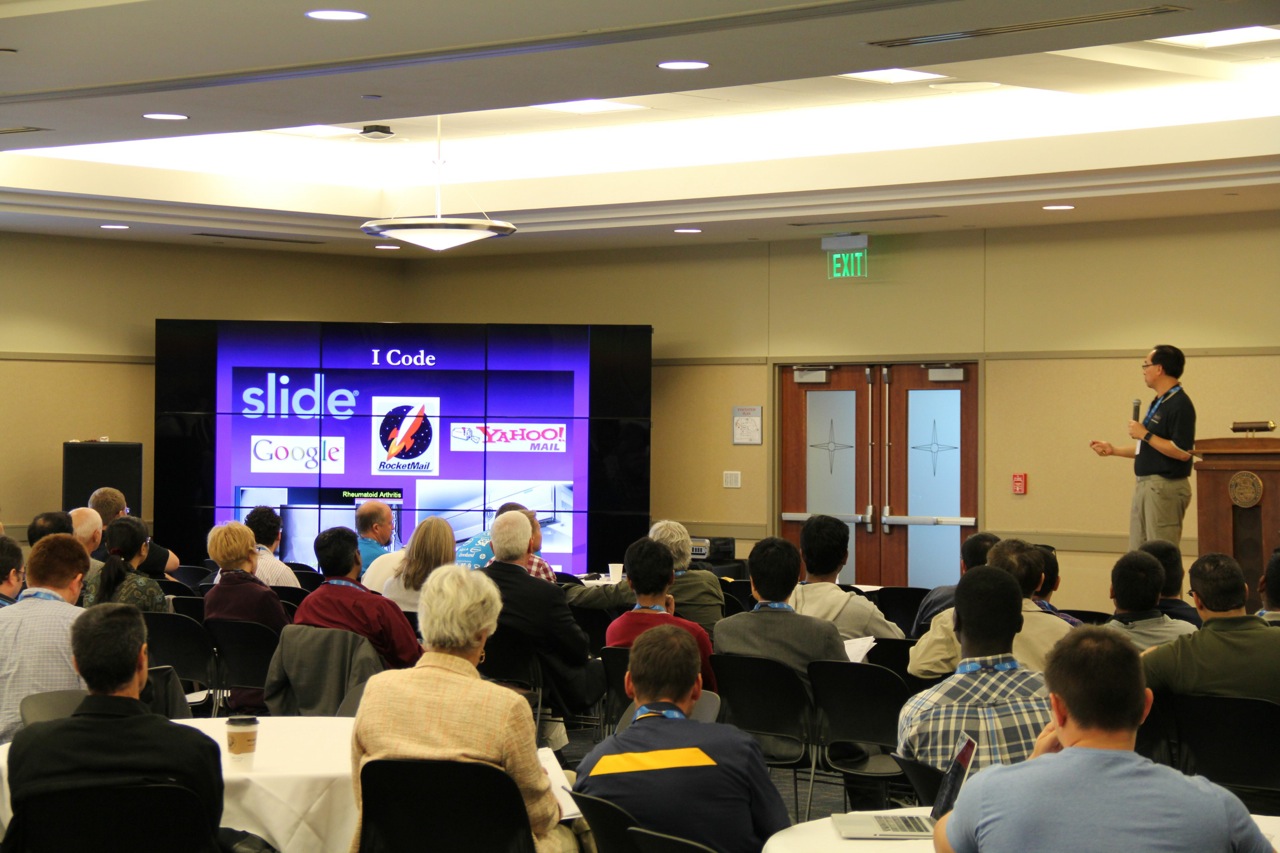
Wesley Chun Keynote Presentation
Wesley Chun, from Google and author of the “Core Python” Series of books kicked off with a Keynote presentation that helped everyone understand the value of embracing new technology even if it might be disruptive. Mark Suskin, PhD, from the NSF Division of Advanced Cyberinfrastructure followed up with a reflective look at our traditional public research funding model and asked us to offer new ideas for what that model might look like.
The three pillars of Computational Science, Additive Manufacturing and Large Scale Visualization provided very distinct and engaging conference content areas. Many new professional connections were established for those seeking information about these pillars.
The talk of the conference again will be the Monday Night Social Event. Anytime you offer some of the finest BBQ in the region along with a selection of local beverages and the finest Pie in the land you have a winner. Follow that with a custom fireworks show put on by your own Explosives Engineering department and end it with a high energy rock band and you greatly improve the technical conference experience. Yes it was a great time, Thank You to all who were involved.
Checkout the Time-lapse of setting up the Video Wall
Considering Hire Education
I try to discuss innovation and disruption in higher education on my blog. However, it is difficult at best to dig too deep into these areas since I am digging from the inside. That sounds a bit like digging your own grave and I’ll just leave that comment hanging. But I have been accused of being the most innovative and too innovative and because of that I must carefully manage that perception as it relates to disruption. Higher education as it is primarily established today cannot handle the disruption which tends to evolve from innovation. Very sad really, it means that any innovation in higher education must fit into the existing structure which tends to predict its doom. But it is that structure that is predicting higher education’s doom.
My motivation to open up this topic comes from my increased interactions with our corporate partners looking to hire our students. This is a good thing that we have corporate partners who want to build a relationship with us because the trend is not necessarily moving in that direction. Two recent Gallup Polls revealed that although 96 percent of chief academic officers believe that they are doing a good job of preparing students for employment, only 11 percent of business leaders agree that graduates have the requisite skills for success in the workforce. I hear the same concerns but thankfully we do produce graduates that are acceptable to employers but we cannot rest on our reputation. The skill sets needed by employers is changing much faster then our curriculums.
It is commonly accepted that higher education is approaching a bubble of dramatic disruption. Theories on what that might look like range across the spectrum typically dependent upon what role one plays in that industry. But when you step back from personal feelings it is hard to understand how this system designed centuries ago can continue much longer without some serious overhaul. Of course change or innovation rarely occurs from within, it will be outside forces that create the bubble. Those forces evolve from our customers and the options that they explore. I think the most significant force will come from the employers of our graduates. The Christensen Institute has helped alert us to disruptive signals over the years and I think they have produced an excellent review of how our employers are shifting their tactics in their latest publication “Hire Education”.
The publication as mentioned in the video shifts focus to an examination of online competency-based education. Unfortunately for our traditional institutions of higher education online competency-based education would probably have the most disruptive affect imaginable on our current business model. I do sympathize with the overall value proposition that higher education offers and we should not lose what is working in HE, but I think we know that change is coming, so shouldn’t we we planning for it. Read the “Hire Education” report with an open mind and consider how we might adapt our credit hour, semester based approach to conveying a degree. I am fascinated by how we might adapt our ERP systems. I could see year round college campuses where you protect all that is great about a residential and experiential learning college experience. Maybe some of the students are working in a competency based track and given support from subject matter experts and academic staff. It may not be the tenure track dream job but it could still be an extremely rewarding alternative.

Research Support and Student Experiential Learning
The pursuit of a STEM degree has gained significant attention in recent years as we evaluate the ROI for a college degree. A recent article in NerdScholar by Yesenia Rascon, “Top 5 Reasons to Apply to a Research University” highlights the importance of experiential learning, access to research facilities and hands on career development quantifies many of the reasons we allow our IT student workers the opportunity to participate in exploratory projects. This all relates back to a culture that we promote for our very successful IT Research Support Services, RSS, group here at Missouri S&T. I have been fortunate to be in a position to carve out some IT budget to dedicate to research support. However, because some of my funding comes from student tech fees I make sure that the students benefit from our efforts. This translates via the hiring of student workers, but extends beyond tradition tech support jobs. We hire students in RSS who seek out that opportunity and we benefit from important support services that they are able to provide to our university. However, we also reward them with the opportunity to own their own research projects. Our staff does offer advice and support but we also let the students fail.
Our students also earn the right to attend national research conferences such as the annual SuperComputing and Great Plains Network. These opportunities provide them excellent presentation experience which we utilized this summer by having our students conduct a workshop for the CyberMiner camp for high school students. We asked them to present their current projects to about 50 high school juniors and seniors. We designed the workshop to encourage the campers to engage with our students and it was truly an inspiration Geekfest showcasing our future technology leaders.
Here is a quick glimpse of the projects they presented and a sense of the workshop.

MinerBytes or Digital Signage Project
MinerBytes which is a digital signage project based on using the Raspberry PI computer connected to any monitor with access control given to designated administrators. This was a project conceived by a biology student last summer and this summer we are preparing it for version 1 production deployment on campus and in our community. Somewhat of a surprise to us was that this project generated the most interest by the high school students as they were intrigued by the coding behind MinerBytes.

Drone Project in Initial Phase
The Helicopter Drone Project is in its infancy which was good to be able to show the campers how a project gets birthed. We don’t know where this project will go but we believe we should be on top of the explosion in use of drones. We have ideas for using it in creating virtual tours.

First Segway Prototype
The Segway project started out last summer and has proven to be the perfect multi-discipline opportunity for our students. With a heavy electrical, mechanical and software development component we have had many students involved with this one. Our students presenting the Segway gave the campers some excellent advice based on their experience in designing the controller boards which they fried more then once. They told the campers what they appreciate most about their opportunity to work on these projects is that they are allowed to fail, and that has been their greatest learning experience.

Video Wall built by Students
The Segway prototype moved to a production design this summer which offered an excellent opportunity to display how they used SolidWorks design software on the new Video Wall that RSS built this summer. The Video Wall currently named MinerView is built on solid computer video display principles but was built from scratch with special attention given to the structure to mount the 9 55 inch high resolution monitors. The students had just a few hours to assemble the video wall in the classroom used for the workshop.

Using Video Wall for Engineering Design
The Video Wall will be used in the upcoming Research and Technology Development Conference, #RTDatSandT on September 15-16 where representatives from Indiana University and the University of Texas will show off the latest in visualization techniques. RTD2014 is another great opportunity for students at S&T.
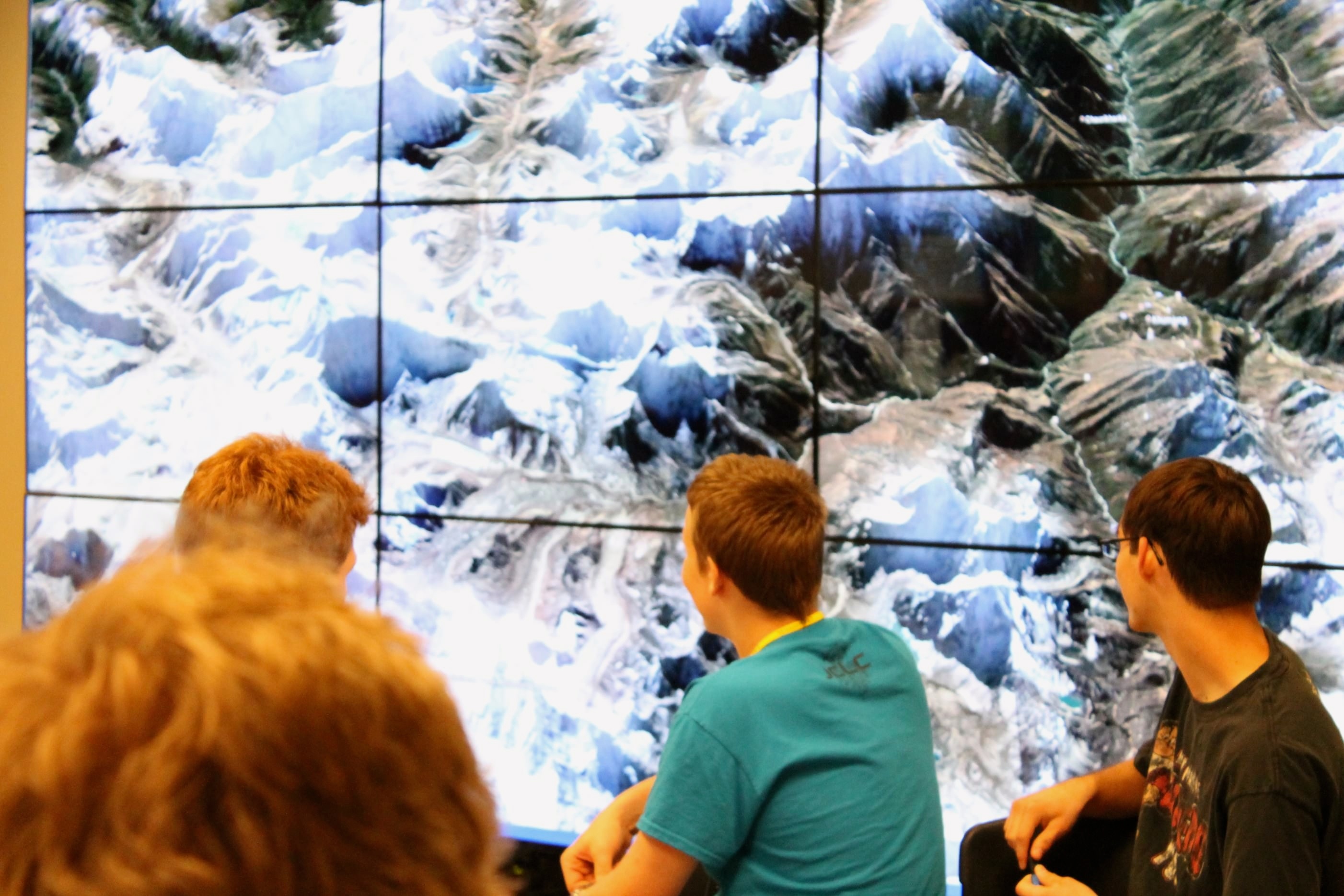
Video Wall to look at Mt Everest
Of course the Video Wall has many uses and will be an important addition to our Library where it will be made available to the entire campus for visualization. We already know that it will be instrumental as a foundation for our Business and Information Technology department’s ERP Center.
Hopefully this gives you an idea of what is possible if your Information Technology department combines the needs of the university with an opportunity for experiential learning.
This New RSS website presents the students projects very well.


 The Adventure Continues