Backpacking Tomorrow – Yes
The backpack is loaded and I am ready to go. Tomorrow I will kickoff my first segment at Willamette Pass on highway 58 just East of Eugene, OR, where I will head north on the Pacific Crest Trail for 75 miles to McKenzie Pass. This is actually Halfmile’s Oregon Section E Map, by the way, I’m excited to try out the Halfmile PCT iPhone GPS App. This segment will take me through the 3 Sisters Wilderness area and should be a good warmup. I am giving myself 8 days which should not be difficult even by not being in backpacking shape. This is a great trip with plenty of lakes, moderate vertical changes, some lava fields, lots of beautiful mountains and hopefully plenty of wildflowers with limited mosquitos.
My pack fully loaded including max water is 41 pounds. A little heavy but I know that I can cut out 3 or 4 pounds of water for the first half of the segment. I might need all of the water plus an additional water bag toward the end depending on the availability of stream water. The food weighs about 7 pounds and will only get lighter as it is consumed. Heat is going to be a concern. Temperatures on the trail will reach close to 90 on many of the days. The heat will allow me to use a lightweight sleeping bag and go light on cloths but hiking will need to be done early in the day with siestas for the afternoon.
I believe I have taken care of all the backpacking prep. REI was heavily utilized to provide me with the most efficient backpack and gear possible. Mentally I and totally psyched, I mean I can’t wait to immerse myself into the wilderness. My friends and family are concerned that I am going alone and they have pushed hard for me to consider a satellite phone or beacon. But no, I am not worried about this segment, by PCT backpacking challenge, this will be pretty easy. Sure I may injure myself but I will survive, there will be other hikers who will hear my whistle for help.

Should be my campsite on Day 6 – South Sister
The greater challenge that I have transitioned through is mental acceptance that I am actually doing this. Thoughts of shouldn’t I be working or what about other professional opportunities that have crept into my head, but I think I have them cleared away. Yes I am going to take a few days in-between the next segment to launch my consulting career with Willamette View, but everything has worked out to make me believe that I am truly supposed to be doing this. I do believe that there is some greater understanding that I will gain from it.
I don’t know what that might be but I can’t wait to reevaluate life after coming out of the wilderness in a few months. I know that what ever I will do, I will do it better for having this experience. I love that confidence that I know God has planted in me.
Where it all started
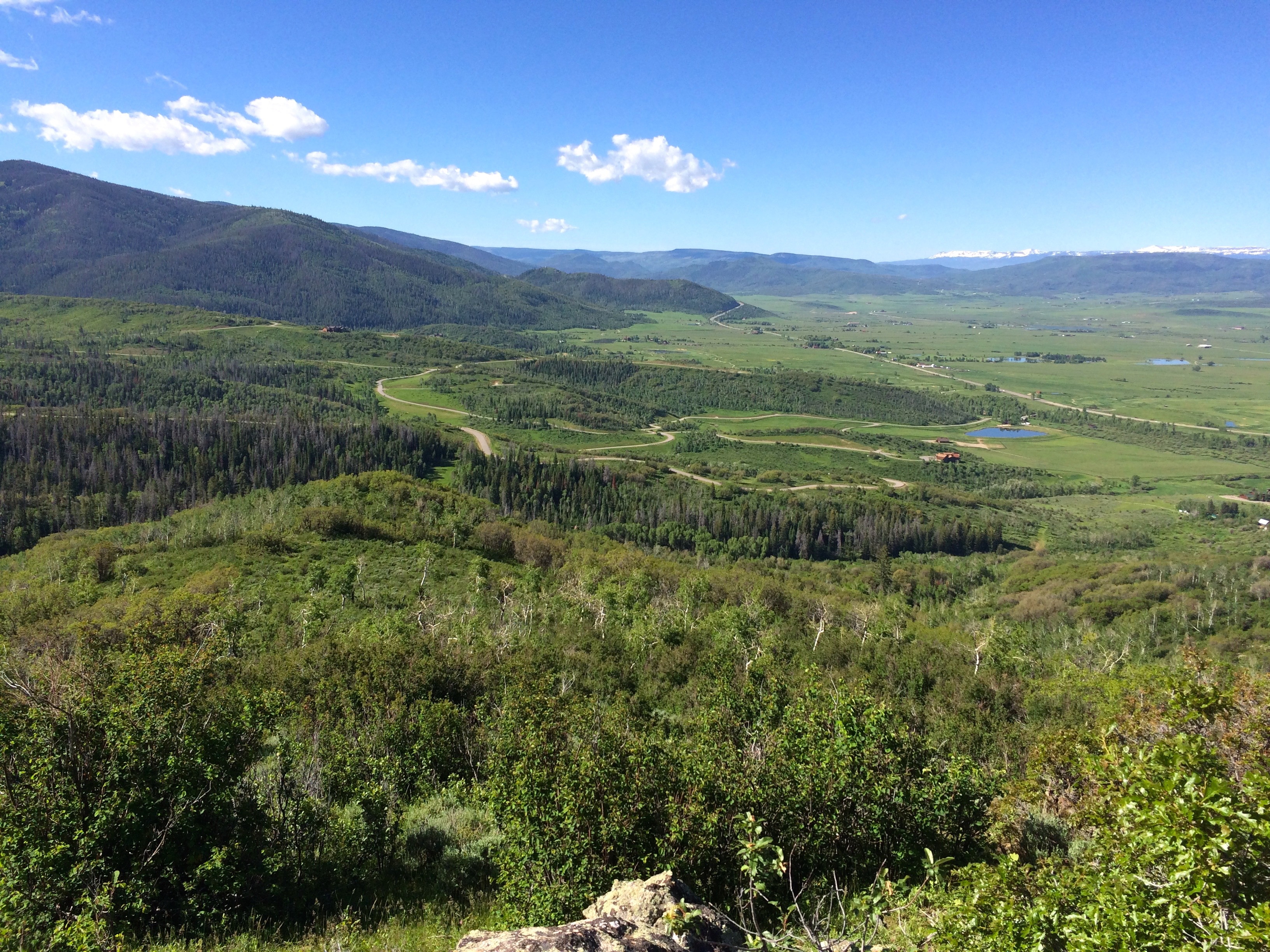
Yampa Valley
On my trip back to the Northwest an important stop for me is Steamboat Springs, CO. An old Indian legend of the Yampa was that one returns to live in the Yampa Valley 3 times. That legend was true for me. First as a Ski Bum living in Ski Time Square next to the Tugboat Saloon. I was a refugee from working at Snow Mountain Ranch and came to Steamboat with a job at the Holiday Inn in 1976. Of course this evolved after serving as a Presbyterian missionary working at a Chicano Day Care, “House of Neighborly Service” in Brighton, CO, during the summer of 76. Well the first stop in Steamboat ended when it did not snow that winter and they closed the mountain (soon there after snow making was installed).

Computer Store Looks to Future
The second visit was really the beginning of the computer career. I was a chemist at a electric power plant in Gary, IN, making a lot of money in a strike situation. I had purchased an Apple II and was obsessed with it. So I called my college room mate, Jeff Troeger, who was just finishing up his MBA and Law degree at IU. I asked him if he wanted to start a computer store in Steamboat Springs, CO. He weighed his alternative of working at the family business in South Bend, IN or move to Steamboat. Jeff is still here in Steamboat.
My final move to Steamboat occurred in 1984 after leaving the Oil Shale, UniCal Parachute Creek Project, to work for at the time, ACZ Inc. By this time I was a legitimate computer guy who was hired to be the I head of IT for this mine engineering consulting company with a commercial environmental lab. Today I am staying with one of last remaining mine engineers from ACZ living in Steamboat, Jerry Nettleton.

Steamboat Springs
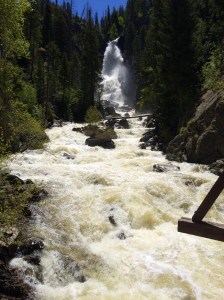
Fish Creek Falls
My visit here has been fabulous. My dog Abby has regenerated her appetite and is loving the opportunity to get back to her normal 22 hours of sleep per day. My first day involved hitting all the memorable sites. Views above the town, Fish Creek Falls, and exploring the new micro breweries. I hooked up with Jeff and he invited me to take his favorite hike on day 2 from his house up to the Thunderhead Lodge (top of gondola) on Mt. Werner. The hike was just what I needed to push the body for the upcoming PCT backpacking. 9.5 miles and 2200″ of vertical that hurt so good. Rainy day today but plan to seek out a few more old friends and do a little memorabilia shopping. On to Walla Walla, WA, tomorrow.
On the Road
I have been on the road for 5 days and Abby and I are adjusting to a relaxed flexible schedule. The drive across the plains was painless and a rather enjoyable way to begin the clearing of the head. Abby does not put her head down while traveling so long milage days take their toll on her, but she was a trooper. First stop in Monument, CO, allowed me to visit a great friend whom I have strong mountain man ties from an earlier life in NW Colorado.
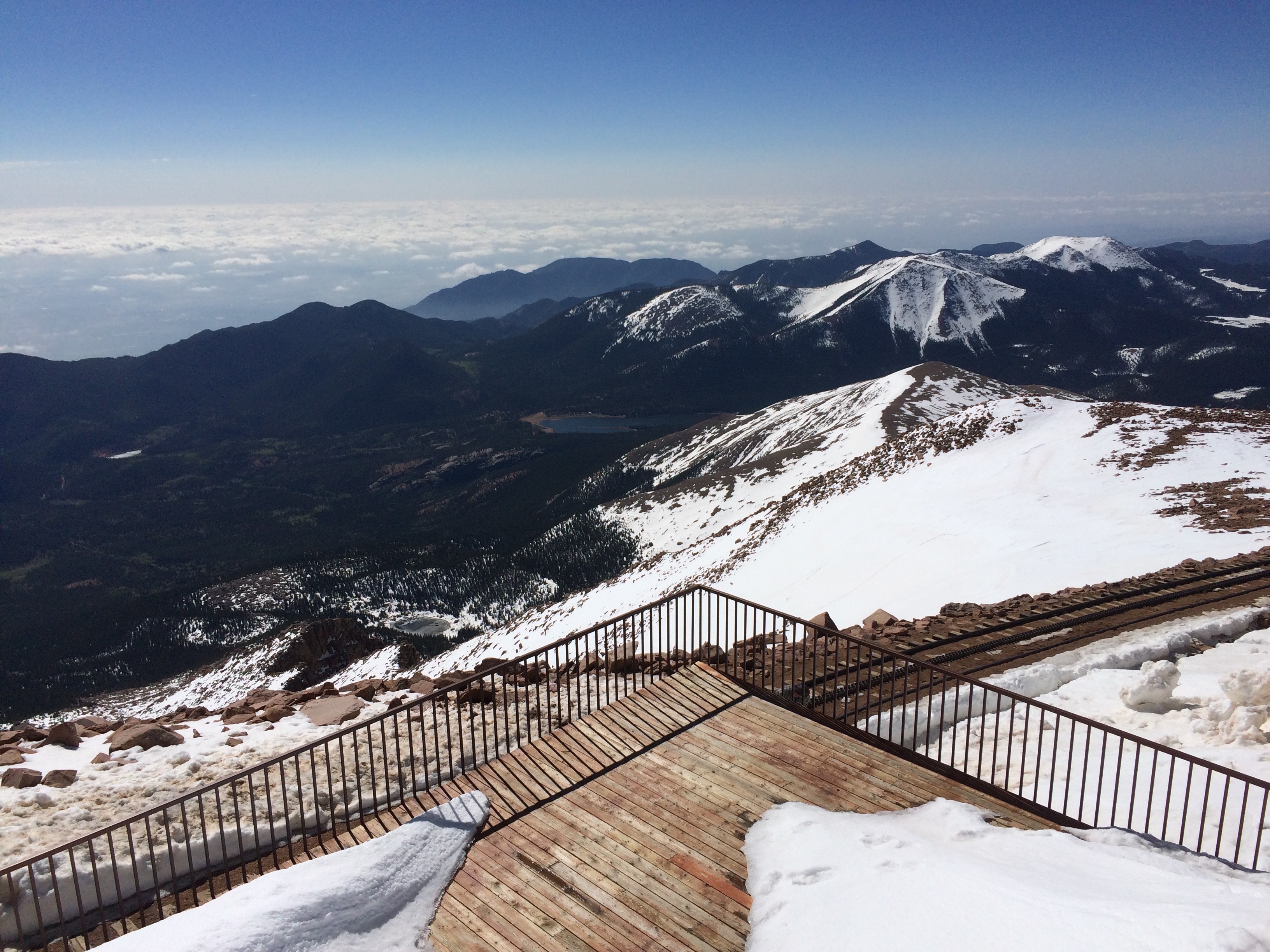
View from 14,110 ft.
I wanted to drive to the top of Pikes Peak but snow has not allowed that yet. So I did the tourist Cog Railway ride to the top. It was a beautiful day, 27 degrees at the top and extremely thin air for Missouri lungs. But that rush of cold air was exactly what my body needed to initiate the rebuild process.
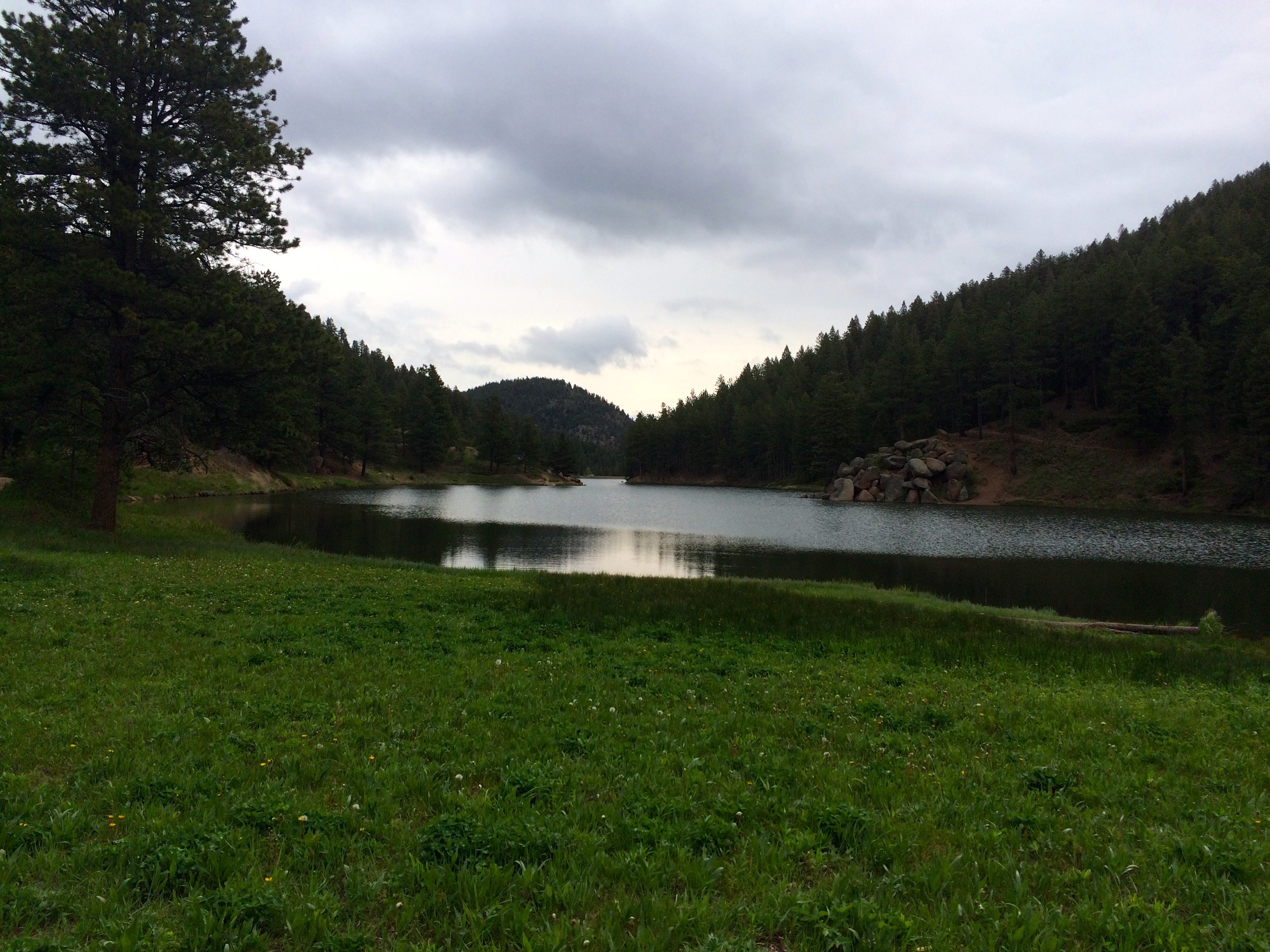
Palmer Lake Reservoir
So the next day I was off for a hike with Abby to test my legs and lungs as well as evaluate Abby’s 12+ year body. I was very pleased with my progress but Abby is not destined for anymore serious hiking. Abby doesn’t realize that her weak hips don’t work the way they used to.

Leaving Colorado Springs
The drive over to Vail by way of highway 24 out of Colorado Springs was majestic. The view of Pikes Peak, the many fourteeners around Buena Vista highlighted by the Collegiate Peaks and then enjoying a beer at the Silver Dollar Saloon in Leadville made for a great trip over to Vail. Sorry for the rushed post but I’ve promised many that I would share. Right now I’m recovering from a night in Vail and preparing for a round of golf at the Vail course.

Collegiate Peaks
NW Drought Backpacker Concerns
I am winding down my CIO career in Higher Ed so my thoughts wander more frequently to my next career of backpacking. It does appear that it will be a co-career with continued involvement with leading technological change in various industries, but backpacking is the immediate driver.
This brings me to the subject of this post which is the drought in the West.  The headlines have been informing us for a few years now how serious this drought is especially in California. But those headlines focus on identifiable concerns such as the supply of drinking water or irrigation of our nation’s richest agricultural region. This last year has been extremely significant for the drought due to the lack of snow pack in the Sierra or Cascade mountain ranges. Now this starts to get my attention because backpackers need water and water is heavy to carry.
I only plan on backpacking in Oregon and Washington this year which normally would not present a water concern, however, snowpack in the Cascades is at amazingly low. Washington’s governor just declared a drought emergency referencing snowpack at 16% of normal. From what I see the snowpack is better in northern Washington but the rest of the Northwest is in trouble. Not for drinking water but for some agricultural and higher threat for forest fires, but most important backpacking. My real concern is for Oregon which does not have as many lakes in the mountains as are in Washington. I hope to backpack through Crater lake in early July which normally would be a great challenge since it is rare to be able to get into Crater lake before July. Today there is no snow there, Crater Lake Webcam. The good news for that segment is that I can refill water in crater lake, but the challenge will be how much water I will need to carry to get to the next lake.
I want to do the PCT from Willamette pass to Mt. Jefferson which would take me through the Sisters. There are a few lakes but typically you count on snow melt streams. In fact I have backpacked in the east side of the Sisters knowing that the streams would only be running in late afternoon when the temperatures heated up. But many of those streams will be dry so I will be very grateful to trip reports from other hikers to help plan the water resupply strategy. I rely heavily on the many member reports on http://www.oregonhikers.org along with data from http://www.pcta.org and with high hopes for how Halfmile’s iPhone app will help guide me.
Washington will be better thanks to more lakes but it could mean missing exceptional flowers and it will cause different concerns about wildlife. My highlight segment for this year will be Spider Gap- Buck Creek Pass Loop in NC Washington. Good news is that the snow pack is much closer to normal in the north so our first week of August trip should be awesome.
Into the Wild
I have resigned as CIO of Missouri University of Science & Technology with an exit date planned for the end of May. I will be Returning to Oregon thanks to my wife’s new employment there. For the last few months I dabbled with other CIO opportunities but I’m not sure my heart was totally into it. I kept telling myself I would still consider trying to change higher education but I am really thankful that higher education is not quite ready for change. You see, I have the option to take some time off and make some dreams come true.  For the second half of this year I hope to spend significant time backpacking the Pacific Crest Trail in Oregon and Washington.
I will use this blog to expand more upon my career transition and the new adventures awaiting me in the wilderness. I may very well return to Higher Education someday but for now it will be Higher Elevation.

Teaching Real Business Skills
 I recently attended the SAP Academic Conference Americas 2015 in Tempe, AZ. I was invited to help present a session on how we had stimulated teaching and research with the purchase of our own HANA appliance at our university. I have mentioned this in previous posts but that was more about the strategic reasoning for why I invested in the leading “Big Data” solution. This conference was for the business professors who are committed to teaching SAP ERP and are excited about teaching the upcoming S4HANA Business Suite.
Yes, everyone was very impressed with how we have integrated HANA into our teaching curriculum and have shown how it can aid in scholarly research. But that success is due to our dedicated and talented professor, Bih-Ru Lea, who totally gets what our corporate partners want from her graduates. The conference attendee audience really could not fathom how a CIO would invest in technology that would actually advance their academic mission. This was flattering for me but what I took away from interacting with these professors was far more interesting. I sensed that most of the academics were just glad to have a job and teaching SAP ERP was a dependable niche. Many were at the conference hoping to discover options for how to get their research publication selected by an accredited journal with the inevitable goal of achieving tenure. And most seemed to be very frustrated with the lack of support they receive from their institution.
There were a few shining stars at the conference though, such as Robert Léger at HEC Montreal who helped develop and now champions the use of the ERPsim simulation or Bret Wagner at Western Michigan, another ERPsim contributor who is developing improved algorithms. This was encouraging to see this commitment to giving students an education that directly translates into real life jobs. However, the stars had to buck the academy in pursuit of this more effective teaching strategy. You see, developing this real life business simulation gains very little credit toward promotion and tenure. What I loved was that this didn’t really matter. They were way beyond that lunacy.
There is change in the air but Higher Ed is not behind it. The underlying stimulus for building a curriculum of these useful business skills is coming from the private sector. Obviously SAP has a vested interest, but they have to balance their commitment. SAP still wants to make a profit off their professional training but expanding awareness of their product justifies their support of the higher education ERP program support. It is the consulting companies who are beginning to supply the fuel to this development.
We have been working with a group from Deloitte who are doing their own research on enhancing their student recruiting strategy. PWC was at the conference and I’m sure the other firms are aware of the value of hiring a more experienced work force from higher ed. I know that the graduates who have been fortunate enough to acquire this hands on ERP knowledge are being well compensated. So why isn’t higher education catering to this demand? Because this model does not fit into their academy. And it is the pressure to adapt to the academy which is generating the greatest stress among the professors involved with the SAP Academic Alliance. They need to get published.
I don’t have the time or the stomach to debate the current state of the promotion and tenure process of higher education, but it is broken. I just applaud the professors out there who have abandoned their concern for the process and are actively working on improving their teaching deliverables.
1971 National Geographic Article on the PCT

National Geographic June 1971
My wife was visiting friends of ours in Oregon, mentioning to them that I was interested in backpacking on the Pacific Crest Trail, PCT. They quickly went down to their basement to return with the June 1971 edition of National Geographic that has a story on the Pacific Crest Trail. This is fascinating for many reason, the opportunity to read about their impression of the PCT in 1971 and the side benefit of being reminded by the magazines ads as to what was popular then. I loved Bell Telephones ad about providing emergency phones on a desolate stretch of Interstate 80 in Pennsylvania. However, the real treat was the article.
In 1971 the PCT was only about two-thirds complete as it had only been fully commissioned in 1968 (Public Law 90-543) in the establishment of a “National Trail System”. On October 16, 1970, Eric Ryback, an 18-year-old student, completed the first PCT thru-hike which probably stimulated the article. The writers definitely spent some time on the PCT and did realize the awesome gift that was being created for the outdoor enthusiasts.
The article itself allocated a lot of focus on the environmental pressures of the time such as the threat from smog in the LA basin or the over use of the PCT due to improved accessibility. So from a comparison 44 years later it is encouraging to know that the high ozone levels in the San Bernardino mountains did not kill all the trees and that wilderness use management has done a good job protecting the natural beauty of the PCT. Forest fires were of great concern back then as well. Significant credit was given to John Muir for educating our country about the value of this wilderness. And various mountaineers were recognized for helping to chart this trail. This was a treasure of a gift from the Chegwyn’s of McMinnville, OR.
The Great Potential of SAP HANA

The experiment with integrating SAP HANA into teaching and research here at Missouri S&T is paying off. Last week I observed our Business and Information Technology, BIT, students presenting their ERP Simulation projects to a team from Deloitte SAP Service Line. What caught my eye was that the students are now incorporating data from our Autism gene mapping research project, which is a university research project that my IT DBA staff are collaborating on in order to learn how to better support SAP HANA. This goes back to my original strategic decision to invest in SAP HANA to allow our researchers and students to align more closely with the desires of our corporate employers. See my blog post from last year. I elaborated on the concept of IT’s changing role as a facilitator of teaching and research in this article published in “CIO Review” last Fall. Observing our students understanding of the potential of SAP’s HANA for the Business Intelligence support for their projects is justification enough for the investment. But the excitement is now being generated by how HANA fits into our overall STEM teaching and research environment.
The Autism project was a fortunate opportunity to learn and explore the potential of HANA. Feedback from my DBA’s about how HANA is different from their traditional relational database experience is encouraging as well. What I hear is that HANA is initially daunting in it’s complexity. However, it makes the initial database layout easier because it shows you so many more possible relationships. Of course this is the Hadoop foundation based on large in-memory utilization. The HP SAP HANA appliance just packages it all into a more effective tool chest. Combine HANA with an already rich set of BI and Visualization tools, then let talented students run with it and you see the potential is endless.
Back to the Autism Project, the study is fascinating, especially to me with my bioinformatics background. The research investigators include: Drs. Tayo Obafemi-Ajayi, Bih-Ru Lea and Donald C. Wunsch. Here is a portion of their abstract:
Several studies conducted on autism gene expression analysis suggest that autism can be linked to specific genes though there are still no genetic markers that are undeniably diagnostic for idiopathic ASD. What is known is that the genetic landscape of autism is complex, with many genes possibly contributing to the broad autism phenotype. Genetic data analysis involves big data analytics. The ASD HANA in-memory database project will facilitate the goal of the ECE researchers to develop novel computational learning models for analysis of ASD genetic data. The genotype data of these ASD patients is available through the Simons Simplex Collection (SSC).
So the research is progressing and we expect significant new funding thanks to the proof of concept work already done. Chalk up a win for stimulating research. But another win is how the students have applied a portion of the data to create BI class projects. Now they see the connection to the Health Science industry. Because we now understand the potential of HANA we have also validated a research connection for the petroleum industry. This was the hope for the HANA investment, a perfect storm matching STEM savvy Business students with corporate recruiters identifying research ideas is a Win for all. This is the type of IT support flexibility needed by the emerging higher education teaching and research model of the future.
SAP Community reference to our use of HANA to leverage research and teaching
TLT at S&T March 12-13, 2015
Fresh back from the ELI Conference I wanted to compare the agenda for our upcoming Teaching and Learning Technology Conference, TLT, scheduled for March 12-13 here at the Missouri University of Science and Technology campus in Rolla, MO. This conference has matured over the years to be a leading regional conference for Education Technology. Under the direction of Meg Brady, Director, and Angie Hammons, Manager, of Education Technology at Missouri S&T, this conference has an all star lineup with extremely relevant sessions.
Plus: TLT will be hosting a CanvasCon by Instructure on the 12th.
The Keynote Speakers:
Robbie K. Melton, Ph.D. — Associate Vice Chancellor of Mobilization Emerging Technology; Tennessee Board of Regents, “The Emergence of Mobile and Smart Devices: Is Your Device Smarter than You?”
Jeff Schramm, Ph.D. — Associate Professor of History & Political Science; Missouri S&T, “MOOC’s, LMS, ELI, PRR, CB&Q and EMD: What the history of technology can teach us about the future of higher education.”
I love the fact that this conference brings together many innovative professors in higher education along with their Instructional Designers, Developers and Technologists, plus many from K-12 who want to make sure their students are properly prepared for college. TLT does carry some Missouri S&T STEM influence but I believe that it only strengthens how EdTech is applied to the liberal arts community. An exciting area of development in the last year has been with the preparation of virtual labs for chemistry and biology.
OH yes, did I mention that our TLT is FREE….
Educause Learning Initiative 10th Anniversary
I just returned from the Educause Learning Initiative, ELI, Conference in beautiful and warn Anaheim, CA. Another solid conference bringing together higher education teaching and learning innovators. ELI also celebrated their 10th anniversary and said goodbye to their successful president, Diana Oblinger, who will retire at the end of May. I have always been impressed with Diana’s leadership, she has been a master of motivation for ELI programs and she has also been a beacon light on future concerns for higher education. In her conference keynote she touched on all that is new and exciting and again reminded us of the growing influence of Competency Based Education. She also brought up some good questions about the state and purpose of the college diploma. An interesting question posed was, should we consider the ability to update a diploma?
ELI has served higher education well and Diana deserves a lot of the credit. The next decade in higher education signals a far more disruptive era, will ELI be a guiding light?


 The Adventure Continues