Category Archives: Wilderness

Above the Clouds
I love to ski Mt Hood via the Timberline Ski Area around Memorial Day. My visit this year on May 25th was extra special with the opportunity to ski above the clouds in comfortable temps with relatively no wind. In previous years I have been treated to better snow conditions thanks to colder temps and some fresh powder, but skiing above the clouds is a special treat.
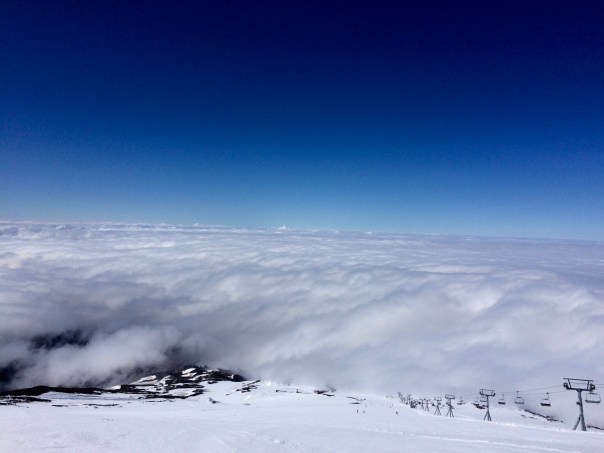
Looking South from top of Palmer Lift
This year’s Mt. Hood ski outing was definitely something I needed but it was also about sharing the experience with Nick the Director of MacHub who really needed a day off. We headed out to the Magic Mile lift before 9:00 am with some concern about conditions. We were totally socked into a cloud with a light mist. We got off the lift thinking we needed to find the Palmer lift to take us higher, but we turned the wrong way and had to ski back down to the Magic Mile lift with essentially zero visibility.

Emerging out of the Cloud
Next try we found the Palmer Lift and quickly emerged out of the cloud into sunshine above treeline. After assuming that we were destined to ski in fog and mist the excitement from seeing the clear sky was exhilarating.
I have skied all my adult life but since receiving 2 artificial hips I have become a little more concerned about the consequences of crashing at high speed. Skiing Timberline above tree line is about speed so my first run requires some soul searching to overcome that concern.  Awe yes, but the second run I forget those concerns and fly down the mountain feeling like I am the age of all the other skiers who are around me. Ski conditions were pretty good, plenty of snow and hard enough so you glided over it with ease. But the sun and warming temps did reduce the snow to a heavier mix that put significant strain on your thighs. You know what I mean, “It Hurts So Good”, but then your legs just give out; but not until I had skied to my heart’s content for yet another year.

Wild Rogue Loop
News Flash: “Wild Rogue Loop” selected as one of the Best New Trails in the US by Outside Magazine.
My backpacking companion had a few weeks off at the beginning of May and I’m still retired until June so we searched for a challenging early season backpacking trip. 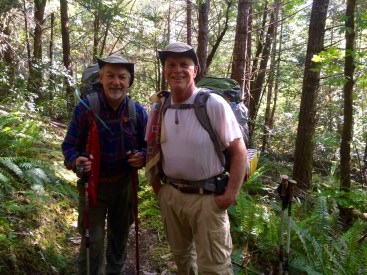 Looking for a loop with good temps, flowers and minimal bugs led us to find this refurbished Wild Rogue Loop in Southern Oregon. Last year the Siskiyou Mountain Club with help from grants rejuvenated the 25 mile Rogue River Loop which is a conglomeration of the Rogue River Siskiyou National Forest’s Mule Creek Trail 1159, Panther Ridge Trail 1253, Clay Hill Trail 1160A, and the Rogue River Trail 1160. This was necessary because of the damage done by the 2005 Blossom Fire after allowing the forest to heal for 10 years. The combined trail is one of the best in Oregon. The evidence of fire is minimal, the terrain is challenging and the scenic rewards are stunning.
Once this loop was chosen for our Spring outing, gathering trail details was more challenging, but critical feedback on the trailheads, poison oak and ticks was helpful.

USFS Livestock Pasture near Foster Bar
I decided to use the Foster Bar Rogue River Trailhead, which happens to be the West end of the 40 mile Rogue River Trail. This entry was down river a bit further than I expected but access and facilities were good and taking in more of the Rogue River was a plus. Overall I think we stretched our trip into about a 40 mile hike. We completed the trip in three and a half days but probably should have stretched that to 4+. We could have used more information on campsite options.
We set out toward the beginning of the loop heading up the Rogue River on Sunday May 1st. A beautiful day that pushed temps up into the 80s. The trail is cut out of the North bank or wall of the canyon presenting you with moderate difficulty and plenty of river vistas.


The waterfall at Flora Dell would be wonderful for a cool dip. 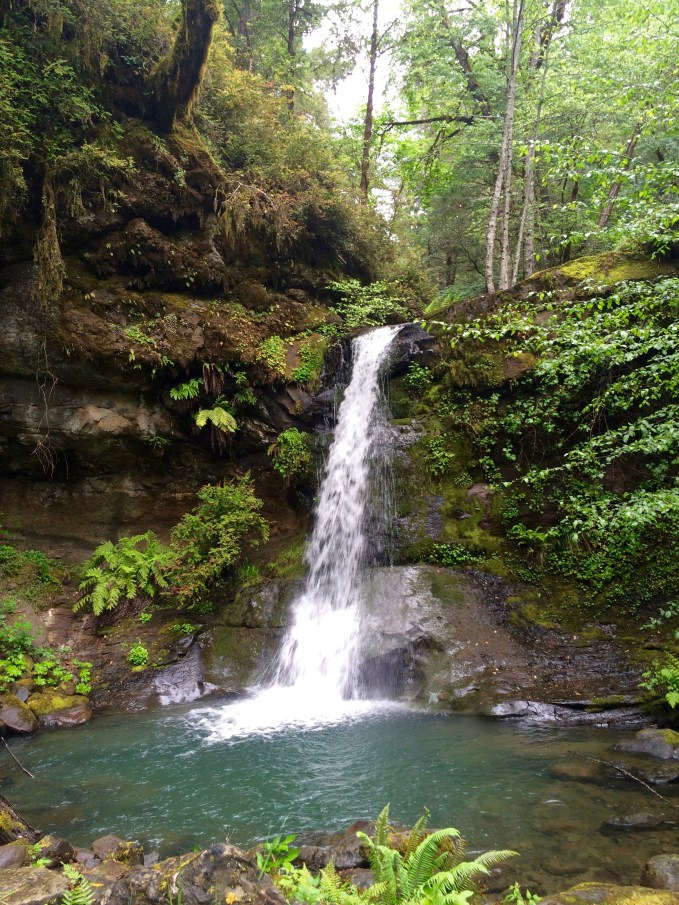 Obviously water is no issue, however, you rely on tributaries since direct access to the Rogue was generally not easy. On this beautiful Sunday we passed many backpackers, hikers and runners heading down river. However, we never encountered another human for the remainder of the trip.
 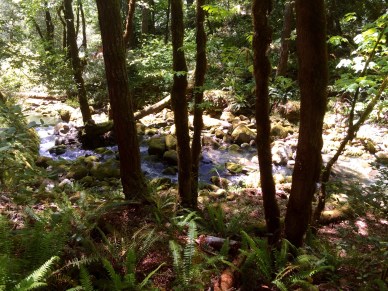 I will confirm that poison oak is plentiful until you get above 2000 feet. And yes, I had to deal with a number of ticks, humans can handle this, but I would not take a dog.
We decided to take the shortcut at Brushy Bar over Devil’s Backbone, a decision we questioned after comparing the added vertical to the shorter distance. Camping along the Rogue is primarily geared for the boaters but the camping area at Blossom Creek was perfect for our first night. Complete with a Bear Box and access to the Rogue for some fishing, it was excellent.


We definitely pushed ourselves on this first day but all was good. The second day took us through Marial to the Tucker Flat Trailhead in order to head up the West Fork of Mule Creek.


From our GPS PDF Map on Avenza it was obvious that water sources could be scarce as we climbed toward the top of the Mule Creek Trail.
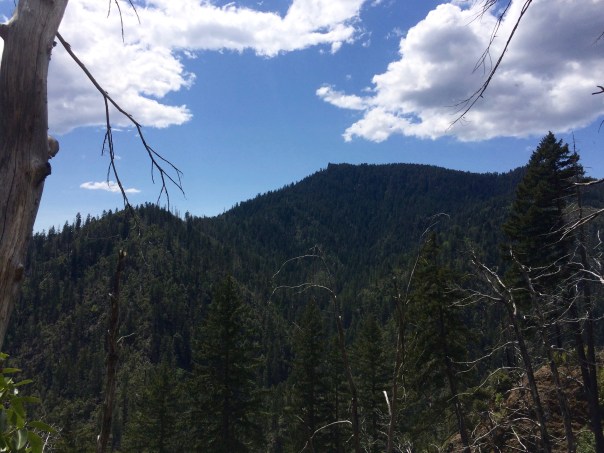
Hanging Rock from Below
It appeared that the site marked Camp Hope would be the most likely for water but there were 2 other streams just before there still flowing. The first is where we interrupted a black bear but he scurried off into the forest. Unfortunately the trail in this area does not offer great campsites so we pretty much camped on the trail. A thunderstorm accelerated our efforts to set up camp. Again we probably pushed ourselves a bit more then we would have liked on a warm day climbing 2500 ft.
The next day was focused on experiencing Hanging Rock, and it was all that I had hoped it would be.
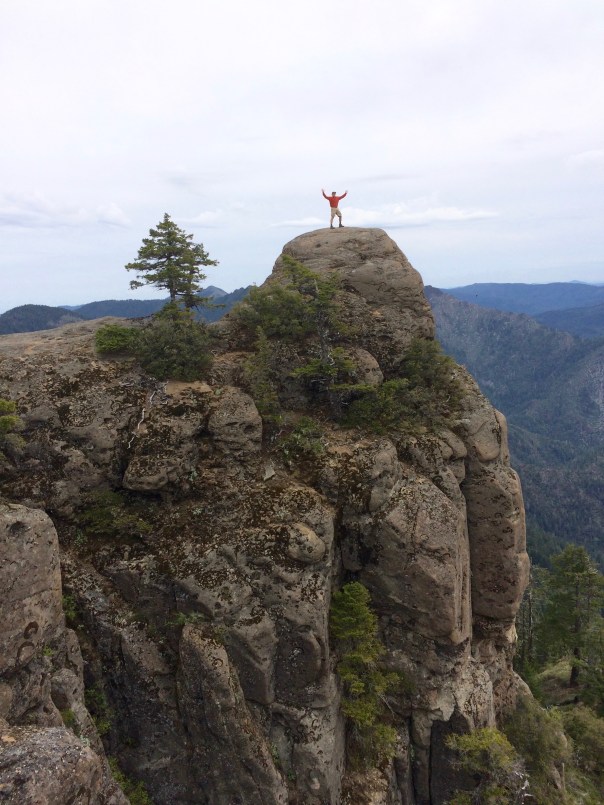
Greg on Hanging Rock
I would rank it as one of the Top 10 scenic locations in Oregon.
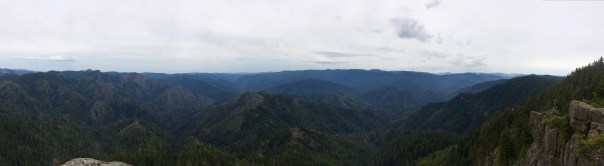
Pan from Hanging Rock

Where Hanging Rock Photos are taken
After lunch on the Rock we had the Panther Ridge Trail to cover and then a decision about how far down the Clay Hill trail we could make before our energy gave out. The 4.25 mile 3000 foot descent back down to the Rogue to complete the loop is tough on old knees.


About half way down we found just enough flat ground to setup our tents just before the rains opened up for the evening. This was another tough day since we had to carry extra water knowing that there would be no more available before we needed to stop.

Rogue River Valley from Clay Hill Trail
 The fourth and final day presented essentially a downhill hike back to our car but it was another 9 miles with plenty of climbs for two old guys with tired bodies. Hiking the same segment on the Rogue River Trail was entirely different in the opposite direction. Overall this was a perfect time to do the loop.
The wildflowers were plentiful, bugs were still sleepy and temperatures were moderate.

Raising a Backpacking Buddy
Puppy Brook is growing up and I took her on her first backpacking trip this week. She did great and I’ll share some of that in a bit. But any baby growing into adulthood is an incredible experience. Sure it is a lot of work but also a rewarding experience. Brook is our 3rd Australian Shepherd so it is interesting to compare but also helpful to know what the breed tends toward. An Aussie is primarily interested in serving her master which historically has meant herding their flocks of animals. So raising an Aussie does mean that you break them of that herding instinct especially with the neighborhood kids. Aussies will learn whatever you want them to, but their independence is also very important. Right now I am tempering Brook’s need to be the protector with the social requirement for her to be friendly. This is the critical artistry of parenting a pet.

Riding out a Thunderstorm
Our backpacking trip was a simple overnight on the Opal Creek Trail near the north fork of the Santiam River east of Salem, OR. This is an easy hike highlighted with typical Oregon majesty. Brook’s trail etiquette continued to be outstanding, but that is really built from her Aussie traits. I was really wondering about canine backpacking issues like staying on the trail, crossing narrow tree truck bridges and ignoring forest wildlife. And of course the critical test for how she would handle sleeping in the forest. An additional test of how she would handle a thunderstorm greeted us first as we barely got the tent setup before the storm hit. I was not real happy with how I had to rush the setup of the t ent, but it provided shelter in the nick of time. Brook immediately had to decide whether going into this tent was acceptable but quickly realized it was fairly cool hanging out with her master in such a confined space. This may have turned out to be the most valuable lesson most of us dog owners deal with. How does your dog deal with thunderstorms. Most of my previous dogs have gone berserk during a storm. However, during this storm Brook was so happy hanging out with me in the tent that she had no reason to fear the loud thunder. I may finally have a dog that can deal with thunderstorms. Awe yes, but then there will be the fireworks test someday soon.
The overall backpacking experience was perfect. Brook initially did not want to cross narrow log bridges. She was nervous about all bridges but if they had rails on both sides she could handle it. She does seem a bit reluctant to explore streams, I kept telling Brook that the best drink is from those babbling brooks. She did want to sleep in the tent but that worked out OK since she did not get overly dirty or wet. She would go out into the night for a drink and things but she did not waste much time staying away from the tent. In the morning she did get a bit spooked by all the birds serenading us, but that was quickly forgotten when she discovered how much fun it was to run up and down all the little trails around the campsite.
The major problem Brook is still dealing with is riding in a car. She does not prefer to do this, however, she does not have a choice in this matter. This trip was extremely valuable lesson for her, even with the throwing up in the car. She will be able to handle car travel, but I don’t think she will ever desire it.
April 30 I will be backpacking the Wild Rogue Loop in southern Oregon. Unfortunately Brook will not be accompanying me due to the presence of poison oak and ticks in the area.

I Lost to the Lost Coast
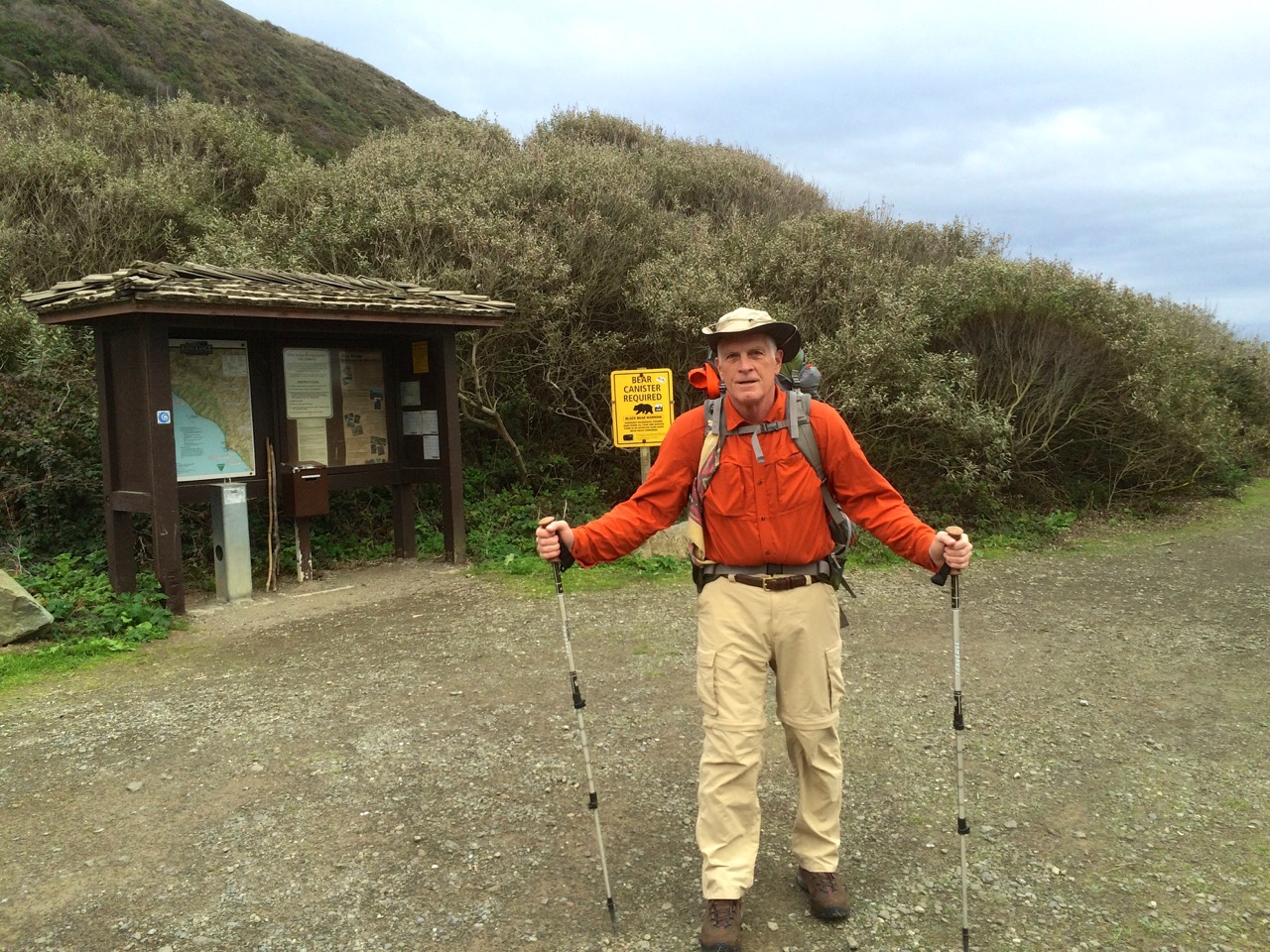
Ready for the Lost Coast
I headed into my Lost Coast Trail backpacking trip during the first week of December 2015 confident that I would accomplish my goal to hike from Mattole Trailhead to Shelter Cove and return. I knew it was going to rain a couple of days, but the forecast called for 10 mph winds. I also knew I had some bad timing for when the low tides occurred during the first part of the week. But I did not dig deep enough into this data to be properly prepared for what was ahead.
The drive down to northern California through the Redwoods was great, my car loves roads like the Redwood Highway. I visited the BLM office in Arcata first thing Monday morning to get my waterproof map, so with that map also on my iPhone equipped to use GPS, I was well prepared for navigation.
The low tide on Monday was not going to allow me to get past the first high tide hazard stretch so I had a leisurely hike past a herd of cattle to end up camping next to the Punta Gorda Lighthouse. It was a beautiful evening as I overlooked a beach full of seals.

Low tide on Tuesday was at 9:33 am at 3.2 feet, so I entered the beginning of this 4 mile stretch before 9:00 am. Based on most reports I had read this stretch was not going to be a problem even if you were a few hours on either side of low tide. Unfortunately, I did not consider the actual height of the low tide. The trek through this segment was tough even without navigating the dangerous rock points of which there are about 5 that are really challenging. Some you can climb up and over, but the rocks were really slippery probably due to the higher then normal waves preceding the approaching storm. So I worked my butt off hiking over the beds of football size boulders. As I neared the last few hazard spots it seemed like it was far more dangerous than it should have been.

Then the last point before Spanish Flat nearly did me in. It was a point where you had to go between a large rock as the waves were crashing, however, it was all under water. As I tried to see around the corner to determine what I was up against I caught a full face on wave that nearly pulled me into the ocean. At that point I couldn’t worry about waiting for the best wave timing so I jumped into waist deep water and made it around. I was soaked but relieved to have survived.

Spanish Flat
I stopped at Spanish Flat, put on dry clothes and checked the tide tables to discover that the low tides that I was experiencing were the highest low tides of the year. That explained things, but now I was concerned about the next day’s stretch of tide hazardous coast with another 3.2 foot low tide, not to mention my concern about coming back from Shelter Cove.


I decided to camp at a nice beach fortress just below Spanish Ridge. The winds were gaining strength which was good for drying out but it was also a bit foreboding knowing that rain was on the way. Yep, the rain started at sundown and the wind just kept getting stronger. It was time to reevaluate whether I should press on to Shelter Cove.
I knew it was going to rain all day so I decided to stay put through Wednesday with plans to head back to Mattole by hiking up the Spanish Ridge Trail over to the Cooksie Spur Trail on Thursday. This was a nice campsite and I was able to get out a few times during rain breaks. This video will give you an idea about how I spent Wednesday.
I was up before sunrise Thursday morning with my backpack ready to go, just needed to take down the tent. I was so happy that it had not been raining for a few hours and the tent was dry. Unfortunately all hell broke loose at sunrise. The rain and the wind hit what I would call typhoon force. My line holding my tent fly broke, my tent stakes were being uprooted, water was rushing in so I had to go. Taking down a tent in gale force winds is challenging but I captured everything, but somehow lost my reading glasses. Of course I was instantly soaked but my Marmot Gore-Tex jacket was taking care of me.

Climb to Spanish Ridge Trail
I decided to go straight up the side of Spanish Ridge and intersect with the trail which worked out fine thanks to the map I had with GPS location on my iPhone. The wind was blowing from the south so it was mostly going to be at my back.
My goal was to climb the 2400 foot vertical of the Spanish Ridge Trail and then take the Cooksie Spur Trail over to Cooksie Creek since I would need water.  Well halfway up the climb (see blue dot on map) I was realizing that this wind was a real problem. As it whipped up the slopes it must have gained even more power, so much so that I was barely able to stand up. Then I really got hit, actually blown off my feet, and I was a 250 lb object. I was totally exposed at this point, no trees or large rocks to shelter behind, so I laid face down next to a small rock that gave my head a little relief. I was pinned down about 45 minutes with the wind occasionally lifting me when it hit between my body and backpack. Oh yes, and the rain was as hard as you could imagine. So here I am face down trying not to be blown off the mountain and I’m getting cold. The night before I had listened to a chapter in Lawton Grinter’s book “I Hike” about his experience with hypothermia, so I knew that the shivering, loss of feeling in my hands and feet and the desire to burrow were typical of hypothermia. What was a bit fascinating from being in this predicament was getting a taste of what it may be like to face the real possibility of death so my conversation with God was with great urgency.
Of course the human spirit doesn’t just give up, I had to do something because my current situation was hopeless. I fought to stand which was really hard because my legs were not working as I would have liked. Something told me that I needed to climb out of this, however, I had no way of knowing what was ahead, but my GPS map at least assured me that I was on track. I walked with my back to the wind using my trekking poles as braces to counter the force and I made it to an area where a small cornice offered some relief from the heavy wind. At this point I knew I had to warm up so I pulled out a wool shirt to add a layer under my rain jacket. Buttoning that shirt with my cold fingers was far more challenging than I could have imagined. However, this accomplishment seemed to give me new motivation to press on at all costs. And pressing on was brutal. There were a few sections where the wind was at my back so I used it to essentially fly up the mountain, however, coming to a stop was never pretty. Then my backpack cover blew loose but was still attached to my backpack creating a spinnaker type sail that dragged me for 20 feet. In between my attempts to move forward I spent more time on my face trying to regroup. Overall it took me about 3 hours to travel about a mile through the really bad section of the ridge.

Beginning of Cooksie Ridge
Of course I did finally make it to the top and when I got off the Spanish Ridge Trail and onto the much calmer Cooksie Spur Trail I was singing praise to God for allowing me to live. From the looks of the map I knew that the Cooksie Trail was also going to present an exposed ridgeline so I opted for the best tree sheltered spot to pitch my tent with the goal to get into my sleeping bag and warm up. That evening was not great but compared to the effort to get there it was wonderful. I was very content to make it through the night with just 13 ounces of water. I had dry clothes, mostly wool, so I did eventually warm up.


The forecast for Friday was sunshine which held true, so I set out with the need to get to Cooksie Creek for water. I also decided that I had had enough of the Lost Coast and I really wanted to hike back to my car with dreams of a good meal and warm bed. But the hike out Friday turned out to be a lot tougher than I expected. Thank God for my GPS map locator since finding the trail to the creek was rather confusing. For some reason I thought that the trail was going to follow the creek back to the coast, but as I kept examining my map I realized I must cross the creek and then climb 650 feet and another 2 miles just to get back to the coast.
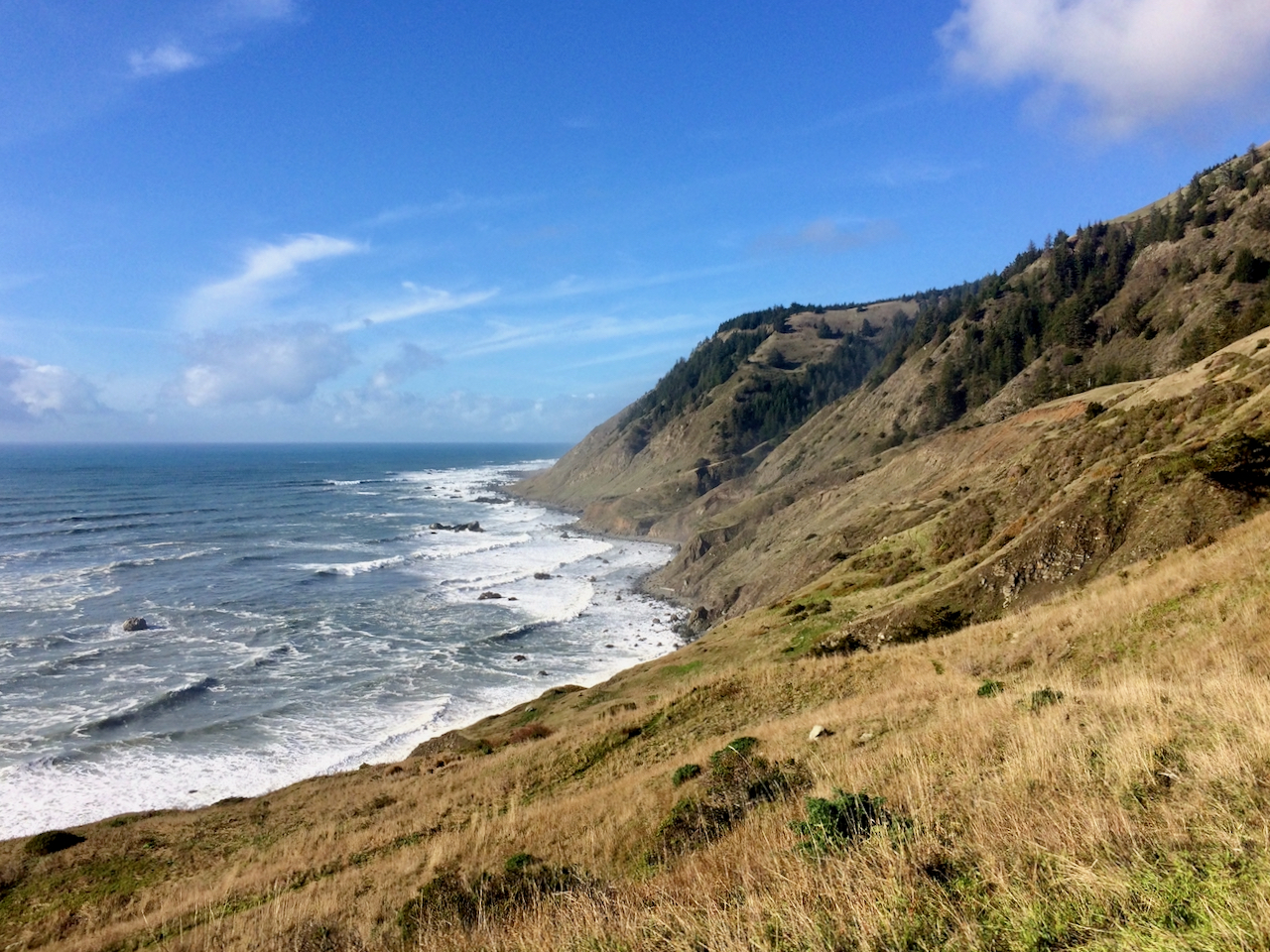
 Well of course the creek was swollen from all the rain so crossing it created some anxiety trying to crawl over trees and fight the current. Unfortunately I lost my backpack rain cover as I was crawling over a log for part of the crossing. I was really bummed about the simple climb because my legs were dead tired, but the weather was great and the motivation to end this trip lifted my effort. This was a typical view as I returned to the coast.
 The first beach segment on this final coastal leg required navigating a few difficult points but it was at the (high) low tide. Surprisingly I ran into a single woman just entering this difficult stretch and it was an hour after low tide. I warned her that she might want to reconsider trying to make it to Spanish Flat, and I’m not sure what she decided. The rest of the hike out was not dangerous but it was exhausting.

Walking on loose sand with tired legs was tough, but the motivation was strong and the sunset was beautiful.
When I finally got to my car at sundown (long day) I was met with yet another disappointment. I noticed that my gas cover was ripped open and then I noticed that all of my windshield wiper blades had been stolen. This was just so rude. Luckily I intentionally had less than half a tank which probably meant they didn’t get any gas. However, if it had been raining that would have been one dangerous drive back to Ferndale. I did get to Ferndale and I had possibly the greatest NY Strip Steak ever and a much needed warm bed.
Note: I returned 4 years later in February of 2020 to Conquer the Lost Coast Trail
I visited the LCT again in February of 2021 and have plans to return again in February of 2022.
I was able to reenact my 2015 route in 2022 with perfect weather. Here is the comparison

Psyched to Backpack the Lost Coast Trail
I am so grateful that I live near an ocean which provides the type of climate buffering conducive for backpacking.  The “Lost Coast Trail” in the King Range National Conservation Area is just 8 hours to the south and offers an excellent challenge for a December trip. The Lost Coast Trail, LCT, North Section in the King Range offers the best beach access and is typically accomplished as a point to point with use 2 cars or a shuttle.

LCT PDF Map
I won’t be hiking the South section which is in Sinkyone Wilderness State Park. My plan is to do a loop where I hike from Mattole Beach to Shelter Cove and then return with various inland trail options.
The use of GPS with the PDF-Maps App will be extremely helpful. The app’s search routine is flakey but if you search for BLM you will see the North and South Lost Coast Trail Maps that are free for download. This tool was very helpful when I used it for the Cape Perpetua Scenic Area.
I am really looking forward to this trip partly because I just need to get back to the wilderness and partly because the trip plan offers so many options. The option to regroup in Shelter Cove if the weather has been brutal. And the choices for inland trails are numerous which could also be dictated by weather conditions. Elevations approach 4000 ft so I suppose snow could be in the equation at least for a short period of time. This trip also justified my purchase of a BearVault which is required for the LCT. I opted for the BV500 in anticipation for its use on the John Muir Trail in the future. Plus I like the fact that it will serve as a nice camp seat, unfortunately it adds weight.
I’m actually looking forward to the high possibility of rain, I feel like I have unfairly dodged the rain element and I think it would be a good test to have to deal with inclement weather. All part of the adventure. I also like the idea of doing this trail in the low tourist and bug season. Anyways, I am pumped. I will drive down on November 30th and hit the trail on the 1st of December.

A Night in Paradise Park
It had been 3 weeks since I last escaped to the wilderness so I just had to take advantage of the two day good weather forecast.
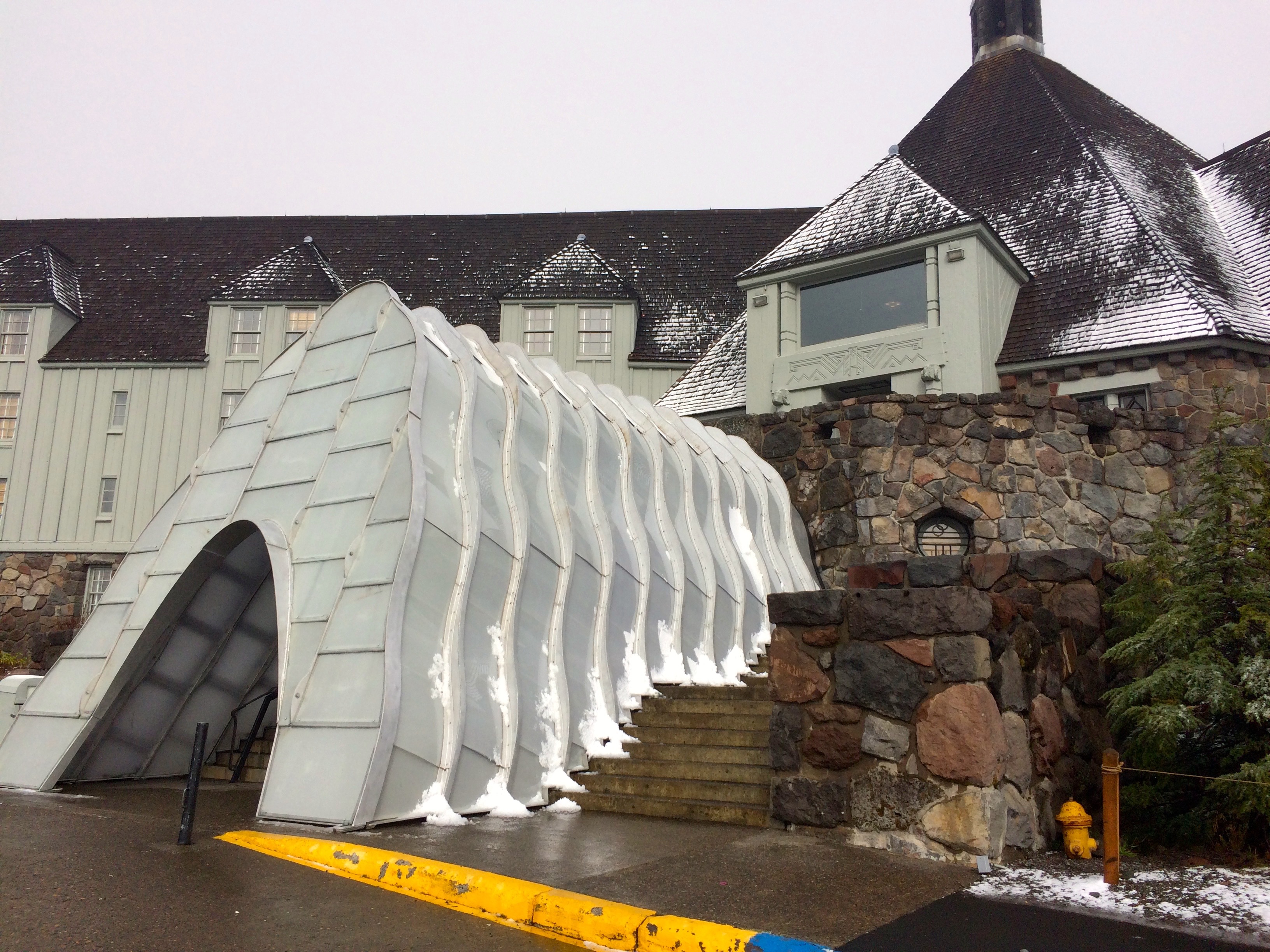
Timberline Ready for Winter
I initially tried to select another outing in the Tillamook State Forest since my last trip to Elk Mountain had been so rewarding, but something drew me to higher elevation. What about Mt. Hood, even if it may have gotten some fresh snow. Perfect, I had wanted to check out Paradise Park ever since my PCT segment that took me past the trail loop back in July. From Timberline Lodge it is about 5 miles to where I would want to camp. The Timberline webcams showed melting snow. The forecast called for a clear but cold night so let’s do it.
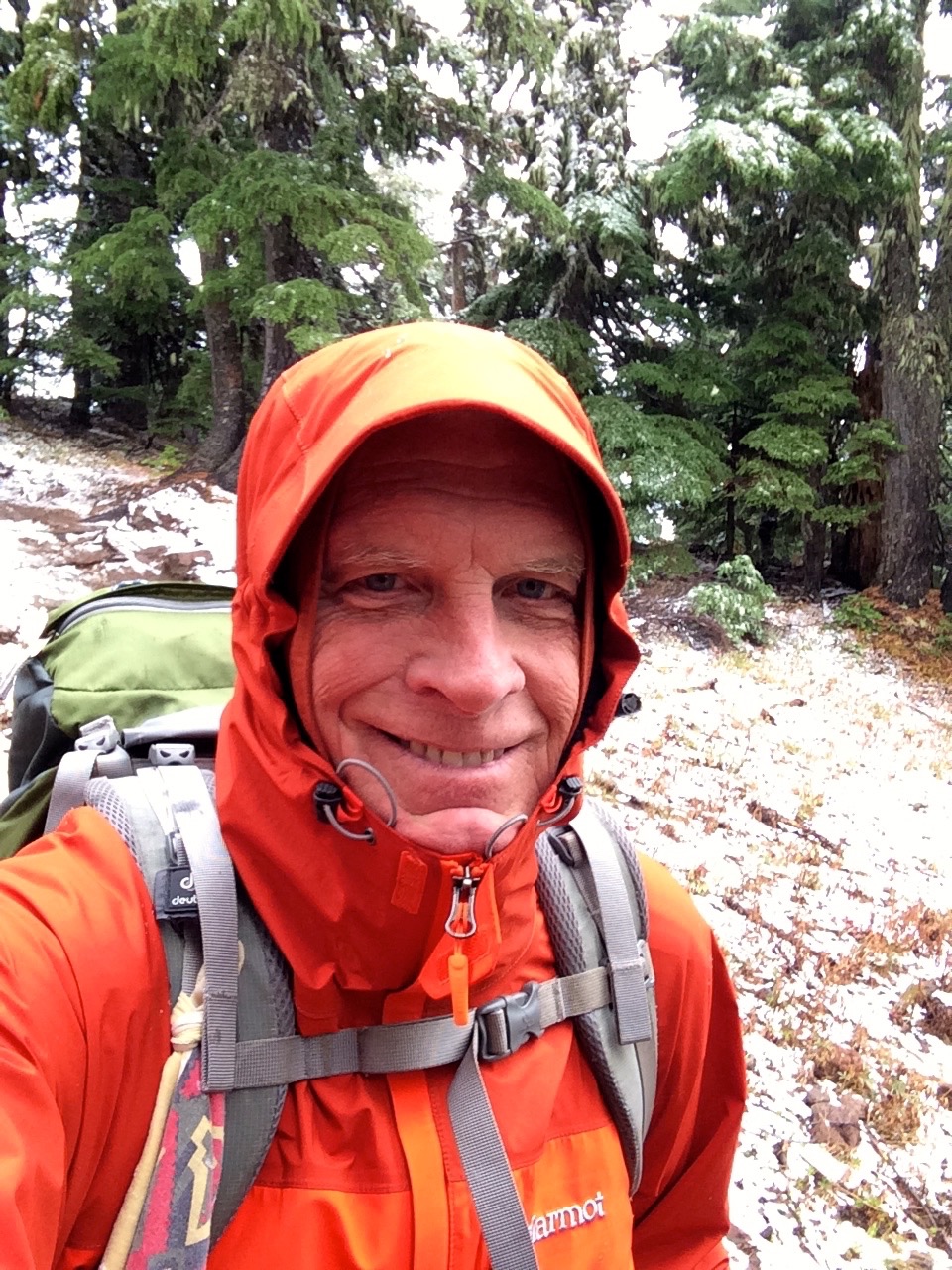
Cold Start
I packed my warmer bag and my perma-rest air mattress along with adequate warm cloths which turned out to provide sufficient comfort as the temperature may have hit a cold of 30 degrees. After a lunch buffet and IPA at Timberline I was off.
The typical day hike distance to the Zig Zag Canyon overlook and below offered a before and after shot showing just how much the weather changed from the trek in and next day return.


The trail takes you down to the bottom of the canyon and then you get to climb back up, but it went very well with a fresh body.
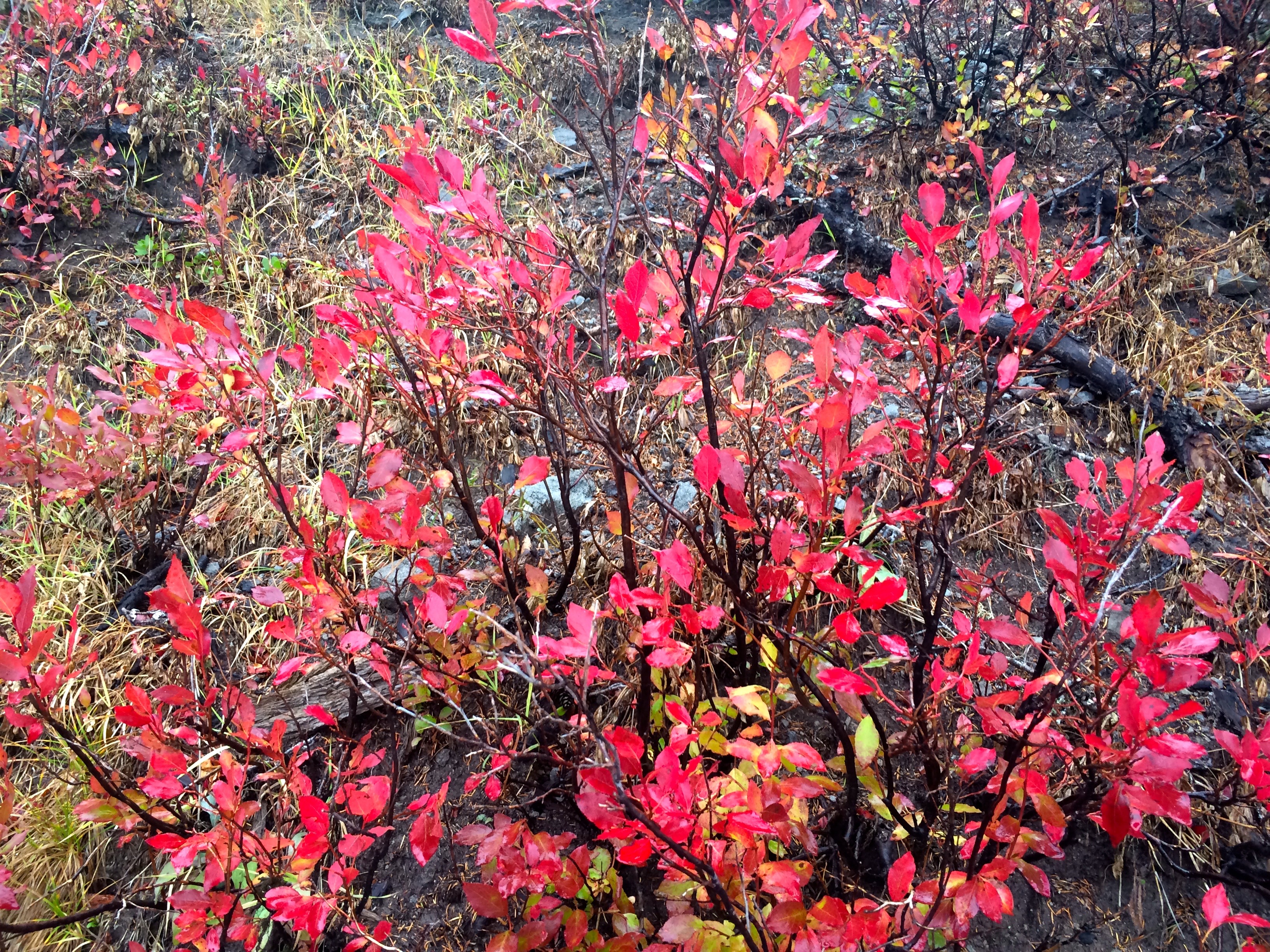
Autumn Color
I was a little slower on the return trip as I was feeling some tired muscles. Hiking in late October does not provide the lush foliage but it was just as interesting seeing the mountain prepare for its winter blanket. I arrived at Paradise Park around 4:30 pm.

Setting Up Camp
I scouted the terrain quickly selecting a campsite with a view and accepting the consequences of a cold wind. The October evening was playing out way to fast. I had to enjoy the view but I also needed to setup camp.

Deer Family Visitors
Then a family of deer, 4 doe and a young buck strolled by. They stood near looking at me as if to say, “what are you doing here”.
Back to the view, which was highlighted by the clouds opening to a valley exploding with sun rays. I had no idea what lay behind me as Mt. Hood was engulfed in a cloud. However, the hopes for a glorious sunset were high, but the temperature was dropping rapidly. The sunset did turn out to be unique but it was not photogenic due to the light sky above. The cold drove me into the tent where it seemed like I might be in for an uncomfortable evening.


It turned out to be just fine after I closed my air vents and put on a second pair of socks. It seemed like it was coldest at about 10 pm and then the wind shifted from the east. I wanted to enjoy the almost super moon rising over Mt. Hood but it was just too cold.
Mt Hood in Moonlight
When I got up around 3 am it was awesome, a bit warmer and the moonlight exposing a clear Mt. Hood was gorgeous.
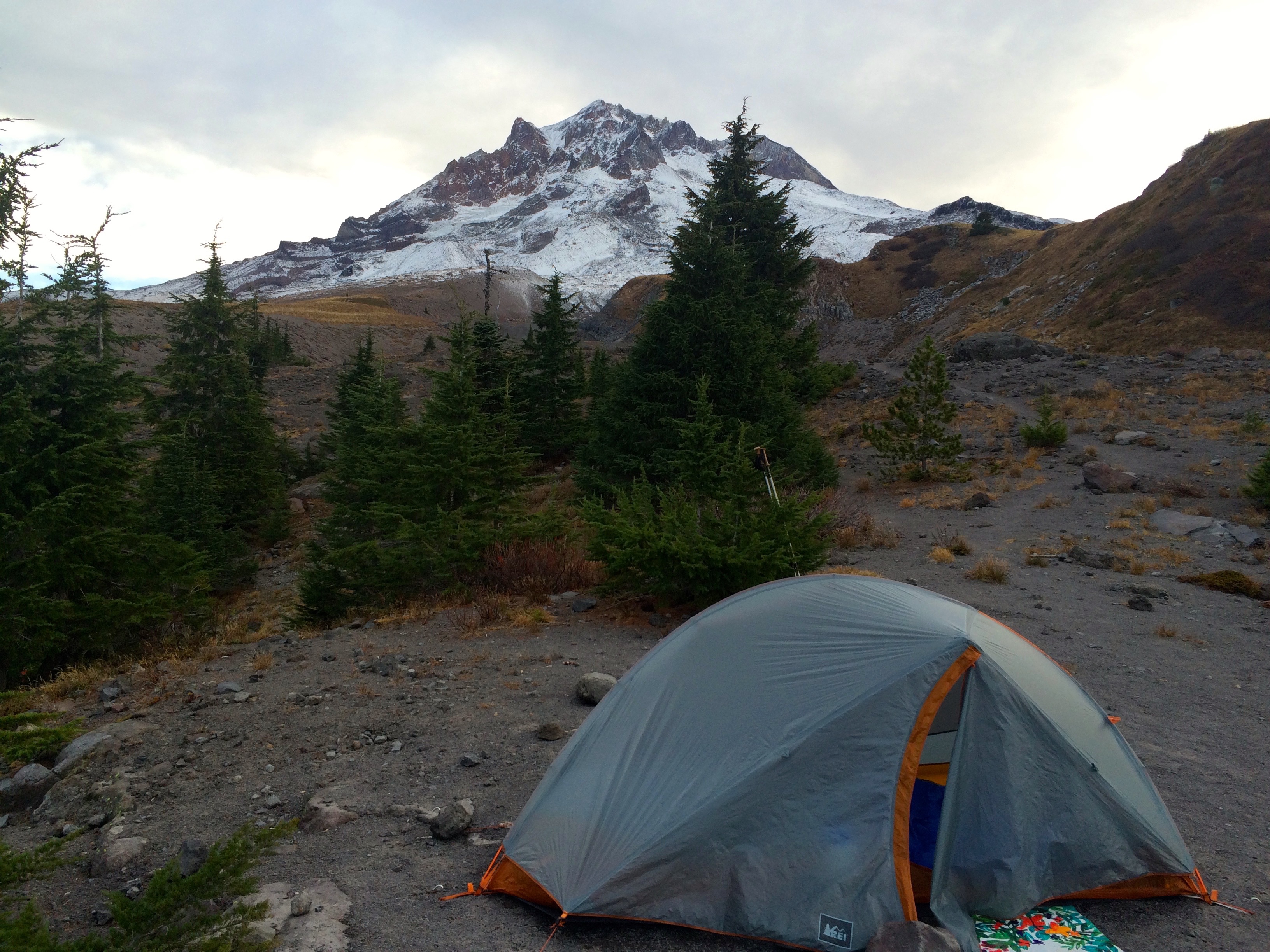
Good Morning
Morning brought a reluctance to leave the warmth of the sleeping bag even though the sunrise potential with a clear Mt. Hood was high. I quickly took it in and then slept in until 8ish. The sun was quickly providing welcome warmth allowing for a pleasant coffee and hot chocolate wakeup.
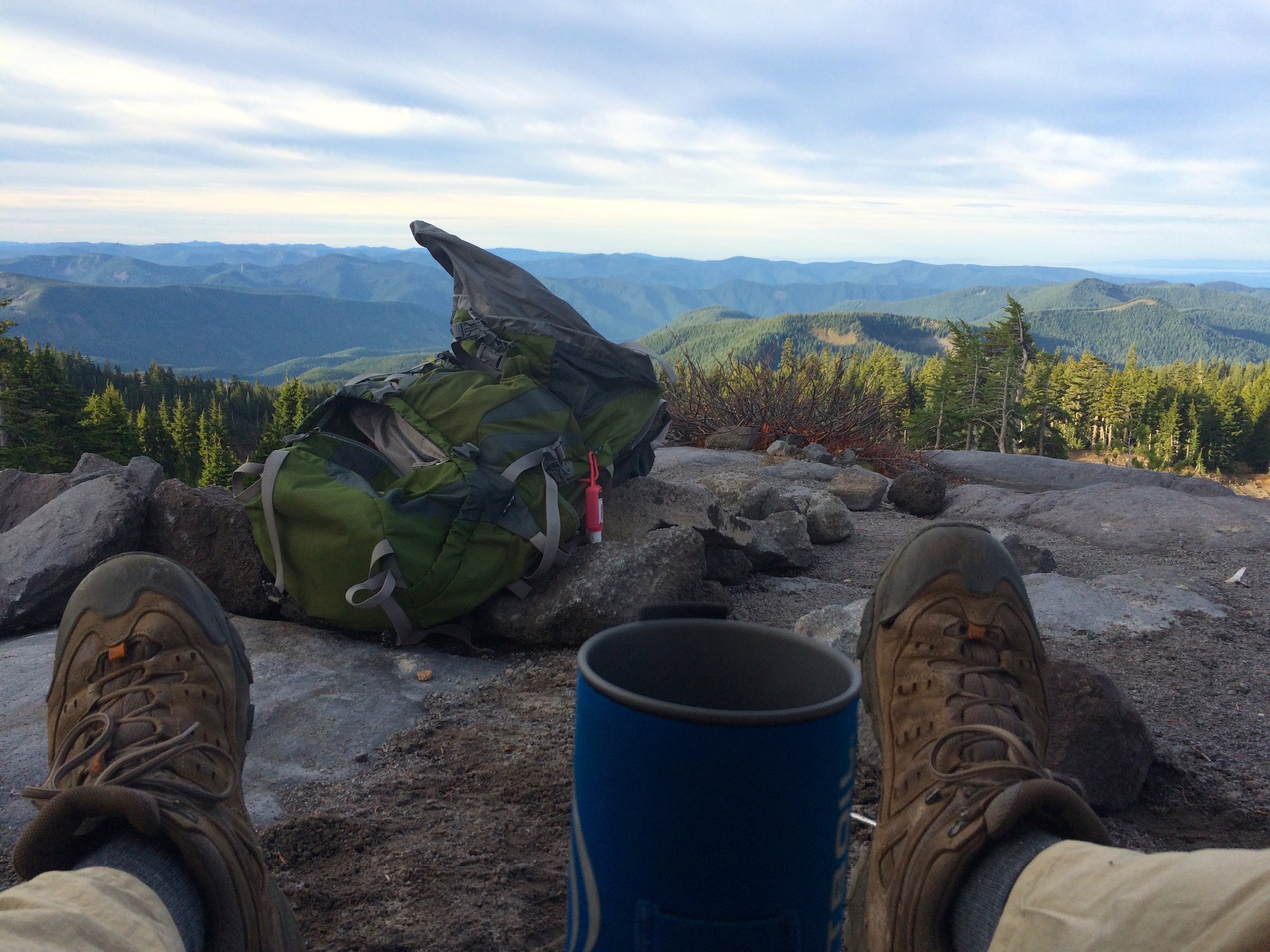
Joys of JetBoil
I hung around most of the morning enjoying the view from Paradise.
The hike back offered numerous views of Mt. Hood and Jefferson which I cherished via my many stops for rest.
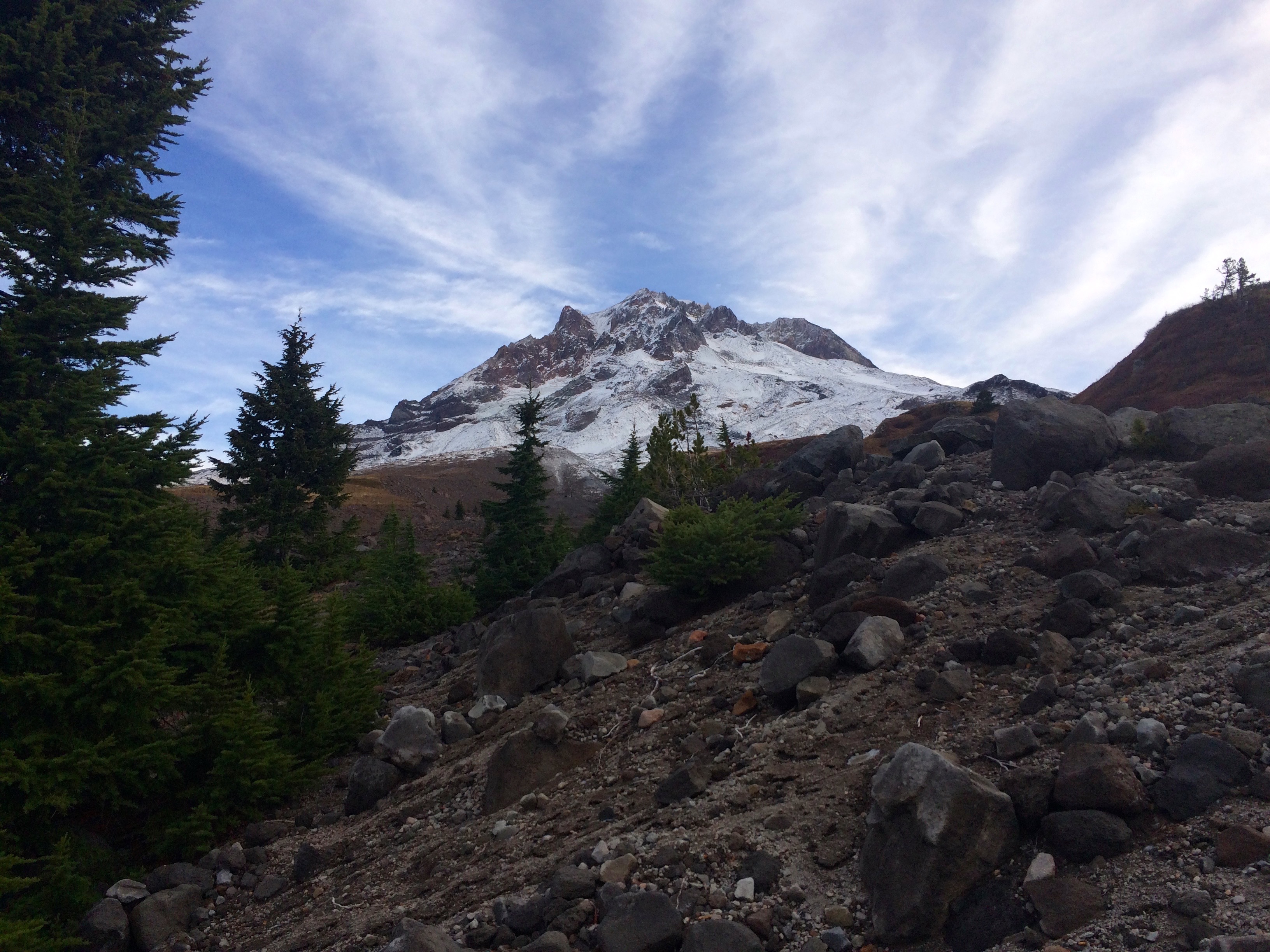
Mt Hood’s Glory
The impulse backpacking escape turned out to be perfect.

Mt. Jefferson
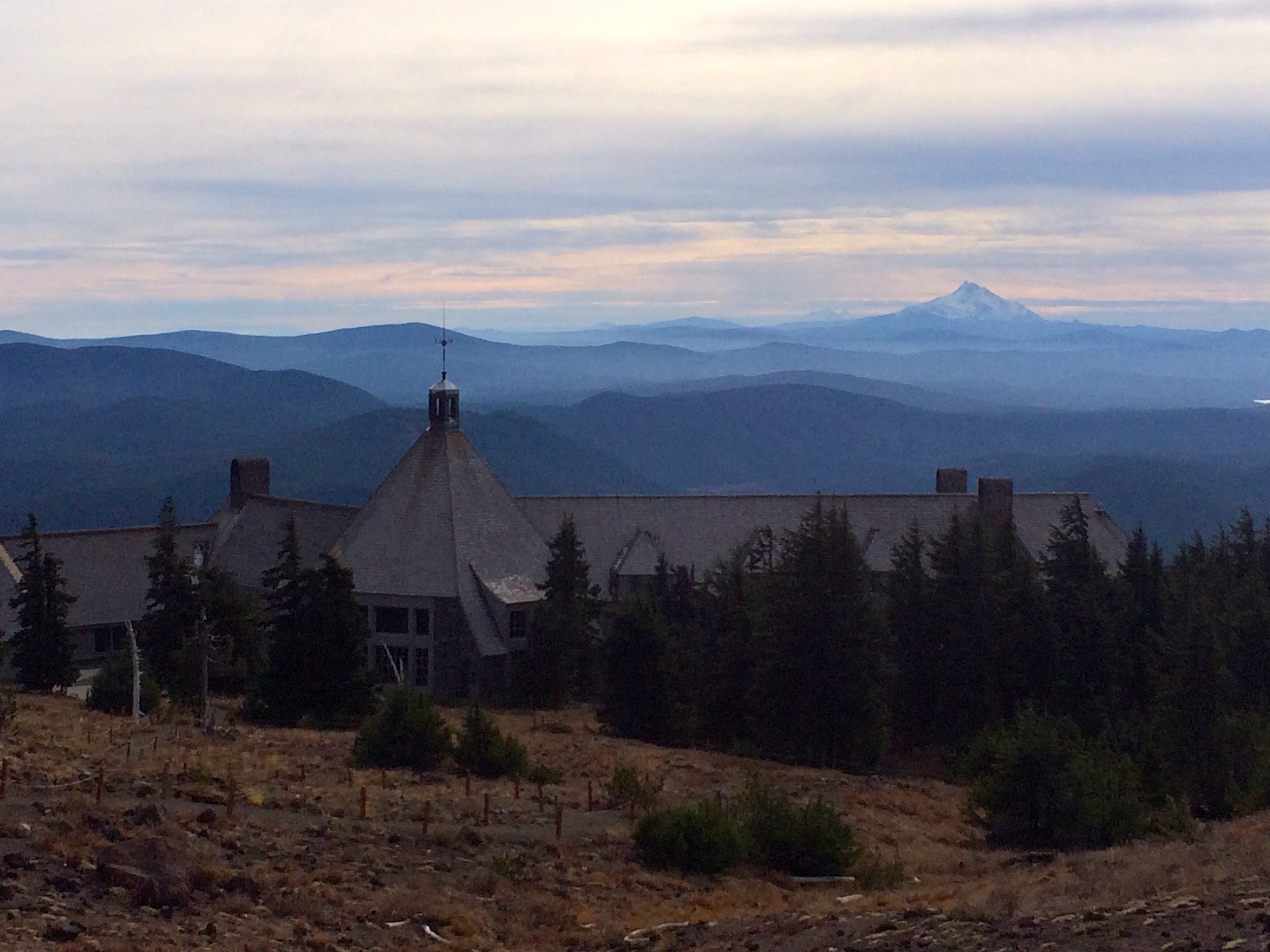
Return to Timberline Lodge
I am so grateful to be able to take advantage of God’s gift to us.

Mountain Top Experience
My backpacking choices just seem to get better and better. The weather October 5th was exceptional and I did not have any commitments for the start of the week so why not find a local backpacking trip. This one was stimulated when I stopped by the Tillamook State Forest Visitors Center and asked a forest ranger for a backpacking recommendation. I think the ranger knew I was serious because she gave me advice about trails that stated they were not for backpacking. Well the Elk and King Mountain summits caught my eye because they created a nice loop option for a day in day out quick trip.

Radically steep trail
I chose Elk Mountain because it appeared to be a relatively short but challenging hike to the summit which I could pull off with an afternoon start. It was 1.5 miles and a 1900 ft climb, which of course had to translate into a steep trail. I found a blog post at crystaltrulove.wordpress.com that was valuable for helping me understand the false summit confusion, but even though I was warned of the difficulty of the steep trail, I assumed it would be a quick way to knock off 1900 ft.
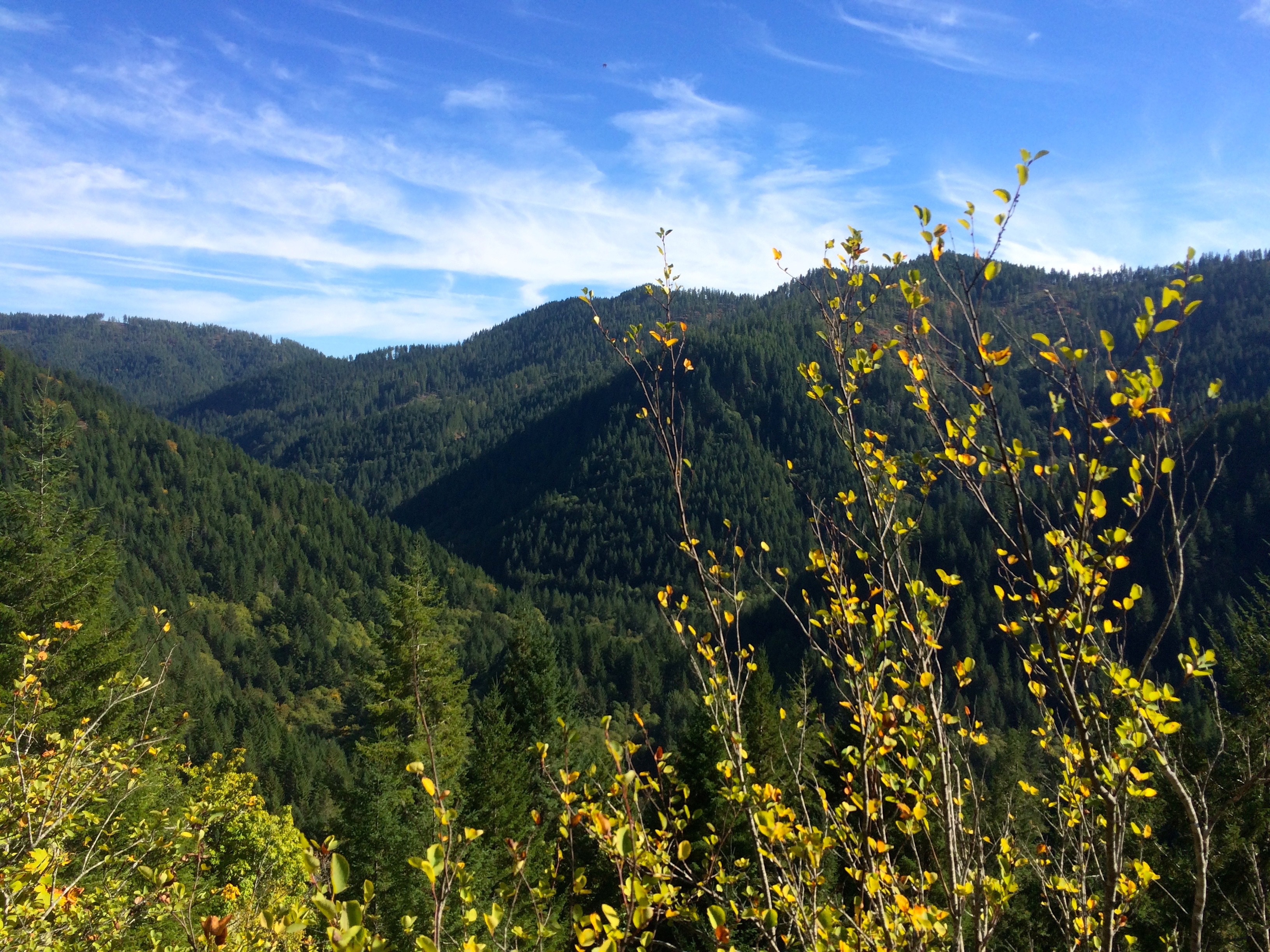
Views of Wilson River Valley along the Trail
Well that 1.5 miles felt more like 5 and it took me about 3 hours to summit. The recommendation that this is not a back-packable hike would be accurate. But Oh what a reward at the top.
This trail has been adopted by the Mazamas for which I applaud their work in helping to make this trail available.

Summit Sign & Log Book
At the summit I signed the log book which the Mazamas have provided. This mountain top consisted of about 700 sq ft of land with maybe enough space for 20 people and one campsite.
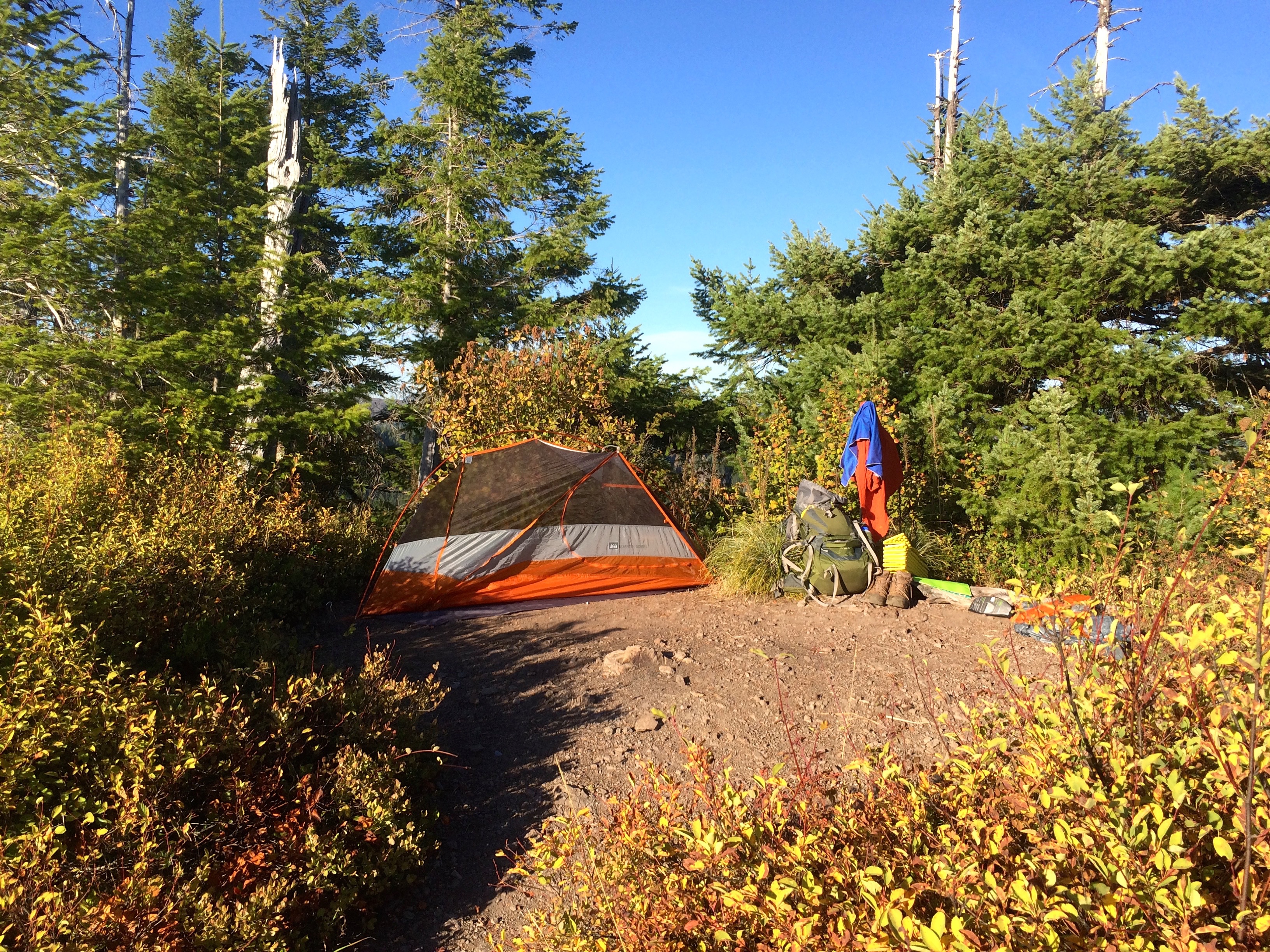
Elk Mountain Summit Campsite
I had it all to myself and the evening was shaping up for a good sunset. This was too good to be true when you consider what would be the nicest front porch view you could have for an evening. Again, the weather was perfect with very little breeze so I setup camp and had dinner as I watched the sun set over King Mountain.
The gallery of photos below gives you a feel for the sunset and the coming prize of the starry night. There was no moon and you are far enough away from the Portland metro area lights to have excellent star viewing.


This was definitely a no fly on your tent night.
The experience got even better with the sunrise.


I jumped out of the sleeping bag to take photos and kept the camera close as I had my coffee.
I knew that the back side of Elk Mountain also offered up some radical vertical which is even more difficult going down, but it was not as extensive as the climb up.
-
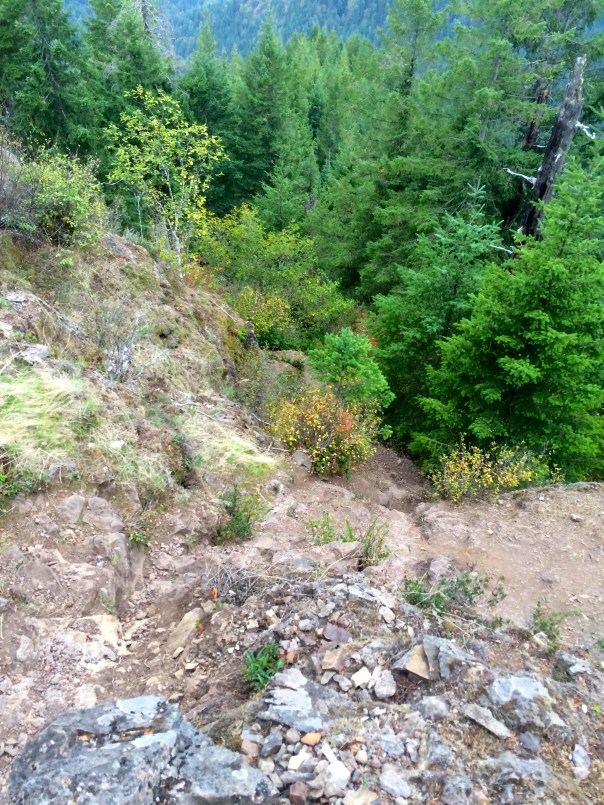
- Decent to Elk Creek Trail
-
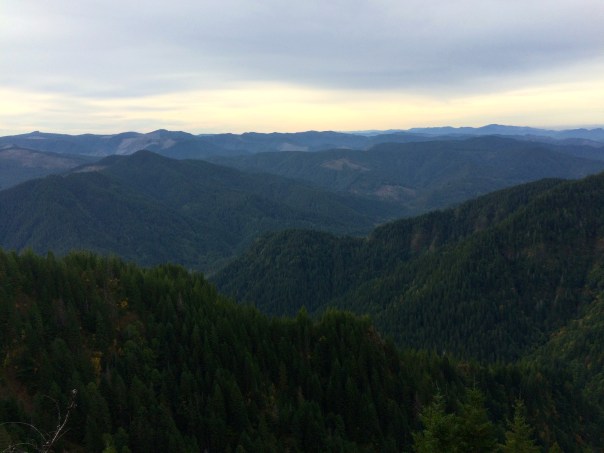
- Wilson River Valley
What did surprise me was the 2 mile segment to the Kings Mountain Trail that inserted more summit climbs and more awesome views of the valley. Another pleasant surprise was how beautiful the final 4.8 miles of the Elk Creek Trail turned out to be.

This was truly a Mountain Top Experience.

The West Coast Trail – Vancouver Island, BC
I finished off my 2 month backpacking adventure by choosing to leave the hot, dry, smokey Pacific Crest Trail to take on the infamous West Coast Trail on Vancouver Island, BC.

Start of WCT at Pachena Bay
This was totally a spur of the moment decision to go for this unique backpacking destination. I only knew about this trail because my wife found it listed in a top backpacking destinations of the world listing in response to my frustrations with the PCT conditions. Most who take on this trip will get their permits early in the year and plan for months. I had a day to replace my REI tent and schedule a few important things like ferry and bus reservations. I actually got the date wrong for the ferry but all worked out without a hitch, I even stayed at the Ocean Island backpackers hostel in Victoria, BC, the night before. On August 21st I road the 5+ hour bumpy bus ride to Pachena Bay Trailhead and got the last walk on permit available. This was just meant to happen with the added bonus of perfect weather.
After a required orientation session put on by the Canadian Parks Service I set out via the beach trailhead for a 12K destination of the Michigan Creek Campsite.
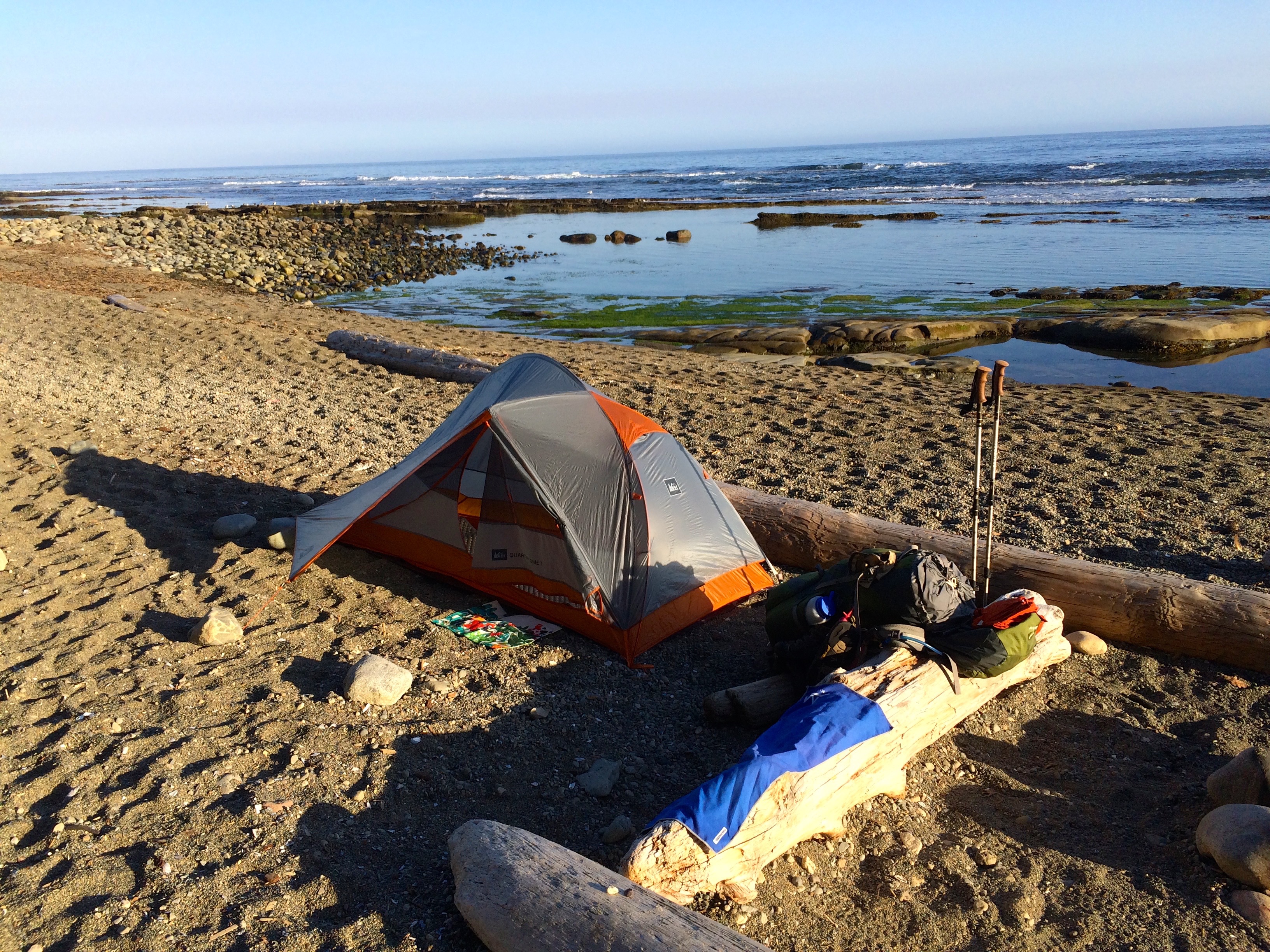
Michigan Creek Campsite
You are provided an excellent waterproof trail map which I quickly realized steered you to designated camping areas which typically had a bear vault for food and a composting outhouse. I went along with this option the first night but there after I tried to camp by myself on the beach whenever possible. I wasn’t being anti-social, I just am not used to that type of control. The West Coast Trail is much more geared to groups which is really important for the motivation and teamwork needed to complete the trail successfully. I did get to know many, typically Canadians and Europeans who were on the same trail schedule as I was. The West Coast Trail is considered an accomplishment of a lifetime for the many casual backpackers who attempt it. As a solo older hiker I was a bit of an anomaly.
The first day’s 12K segment was relatively easy in comparison to the previous PCT segments I had been on. But it was a different kind of difficult in that the trail presented so many situations of risk. I slipped, stumbled and fell far more times on this trail then all of my miles on mountain trails.
Fear Of Heights was Not an Option
You had to overcome any fear of heights that you might have, ladders, log bridges, pulley cable cars and boulder hopping.
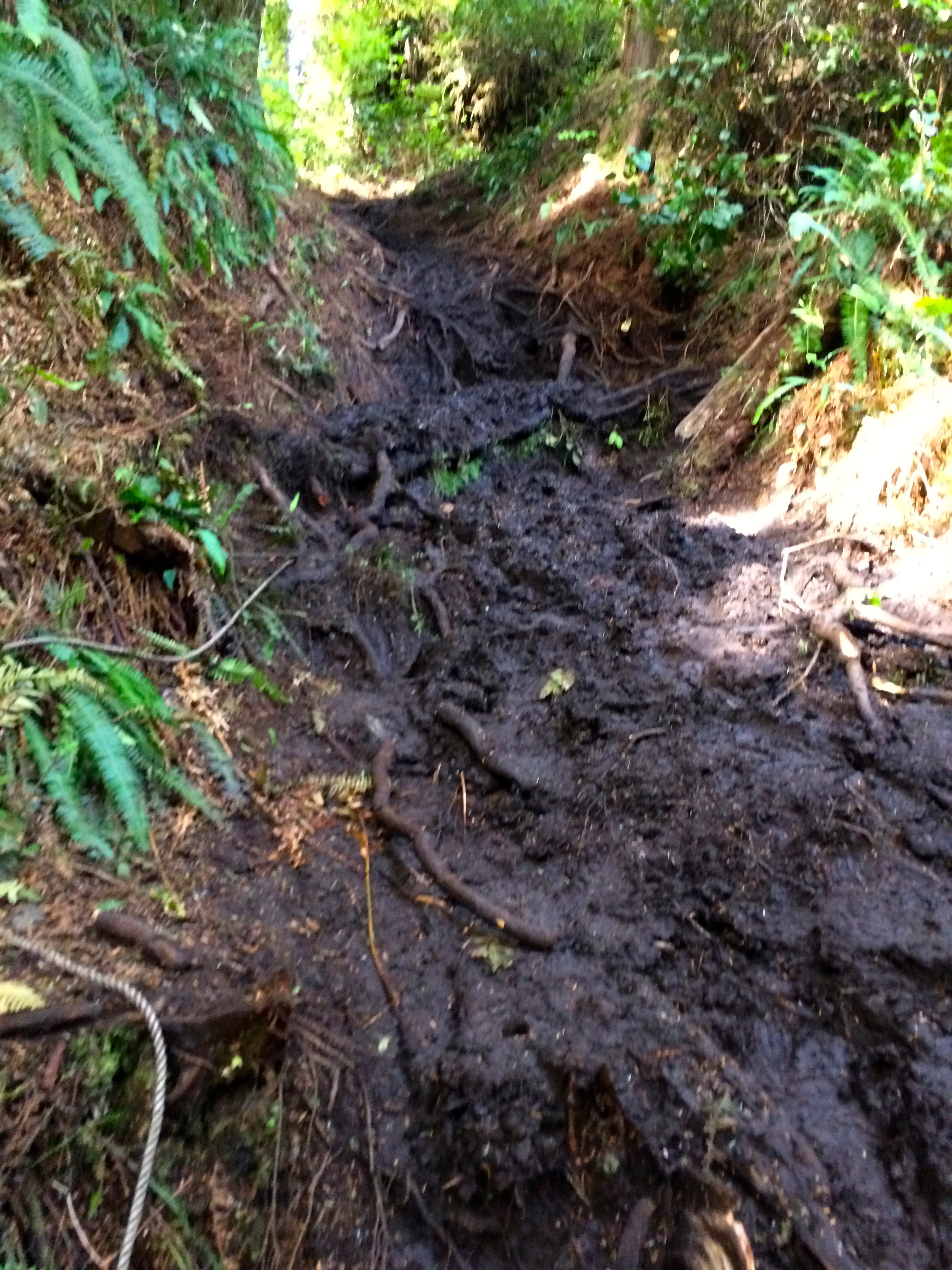
Mud and Roots
I did have to use my first aid kit a few times. I mentioned slippery, mud is a big part of the trail, however, I again benefitted from the period of dry weather, so I believe the typical muddy root infested climbs were tame compared to how they might have been in a normal wet environment. I never had to use my gaiters.
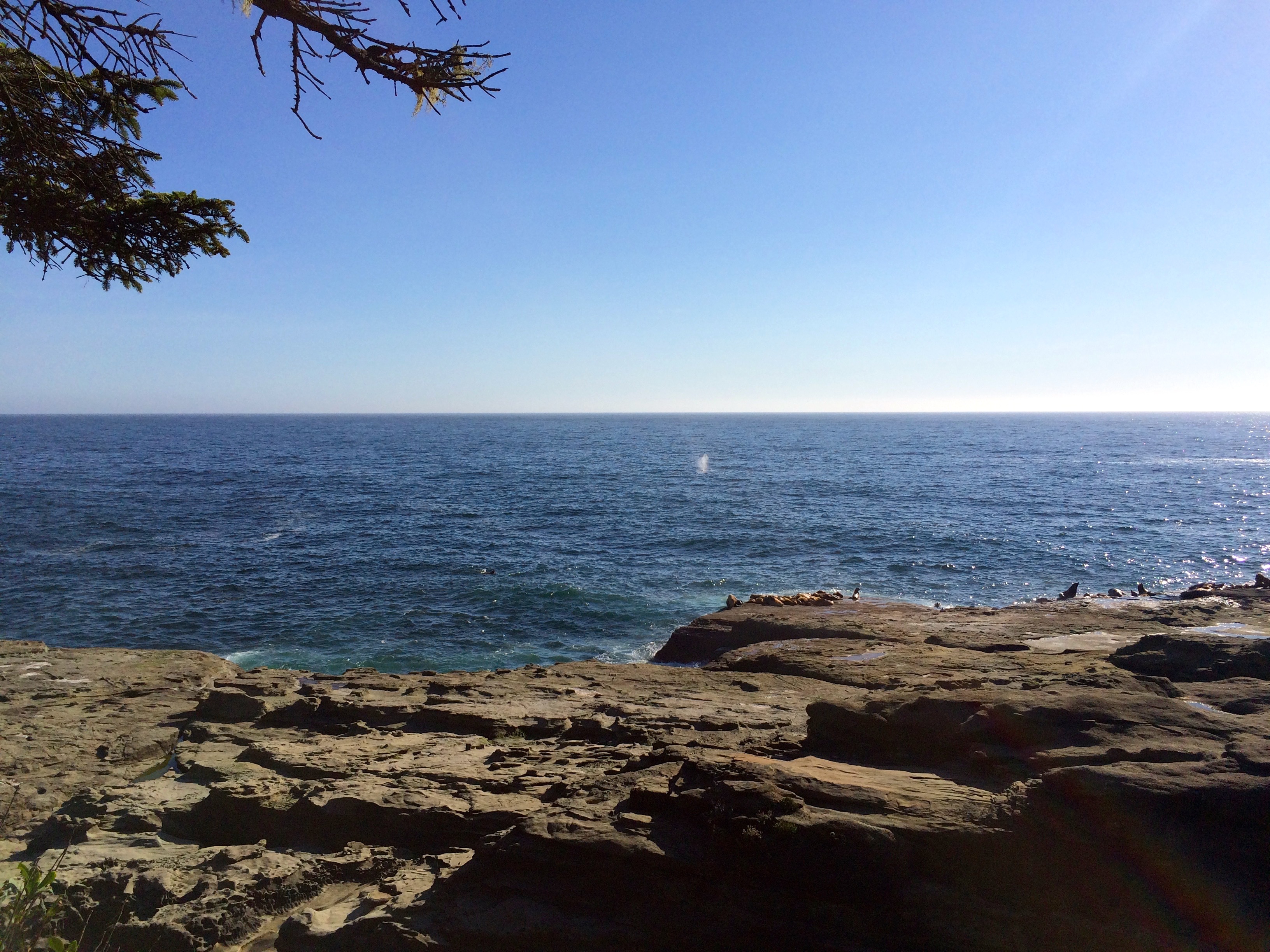
Sea Lions with Whale spouting
Wild life on the trail consisted mostly of sea life. There were a couple a great Sea Lion viewing sites and you saw whales every day. Also lots of sea gulls and on the trail a fair number of small snakes. I was a bit disappointed that I did not get to experience a bear sighting, I intentionally hiked on the trail as quietly as possible, however, many of the hikers had bells on their packs.
If you have ever enjoyed coastal beauty you can relate to what became the norm for me on the this trail. Hundreds of photo worthy views of spectacular coastline. This would have been the trip for a better camera, however, you would probably break it in one of your falls.
Typical Coastline Views


My second night I searched for a private beach campsite which I found just past the Klanawa River.


You are advised not to camp outside of the designated camp areas, but the chance to camp on a secluded beach with a fire was worth ignoring the advice. I did hang my food from a tree not so much for fear of bears but in case I was questioned about camping alone on the beach.
I think that night alone on a wilderness beach with the fire, sunset and moon was one of the most amazing experiences I have ever had.
The third day required a long stretch of trail to just get to the next campsite option. Since I camped a few kilometers prior to the popular Tsusiat Falls, my day was even longer.
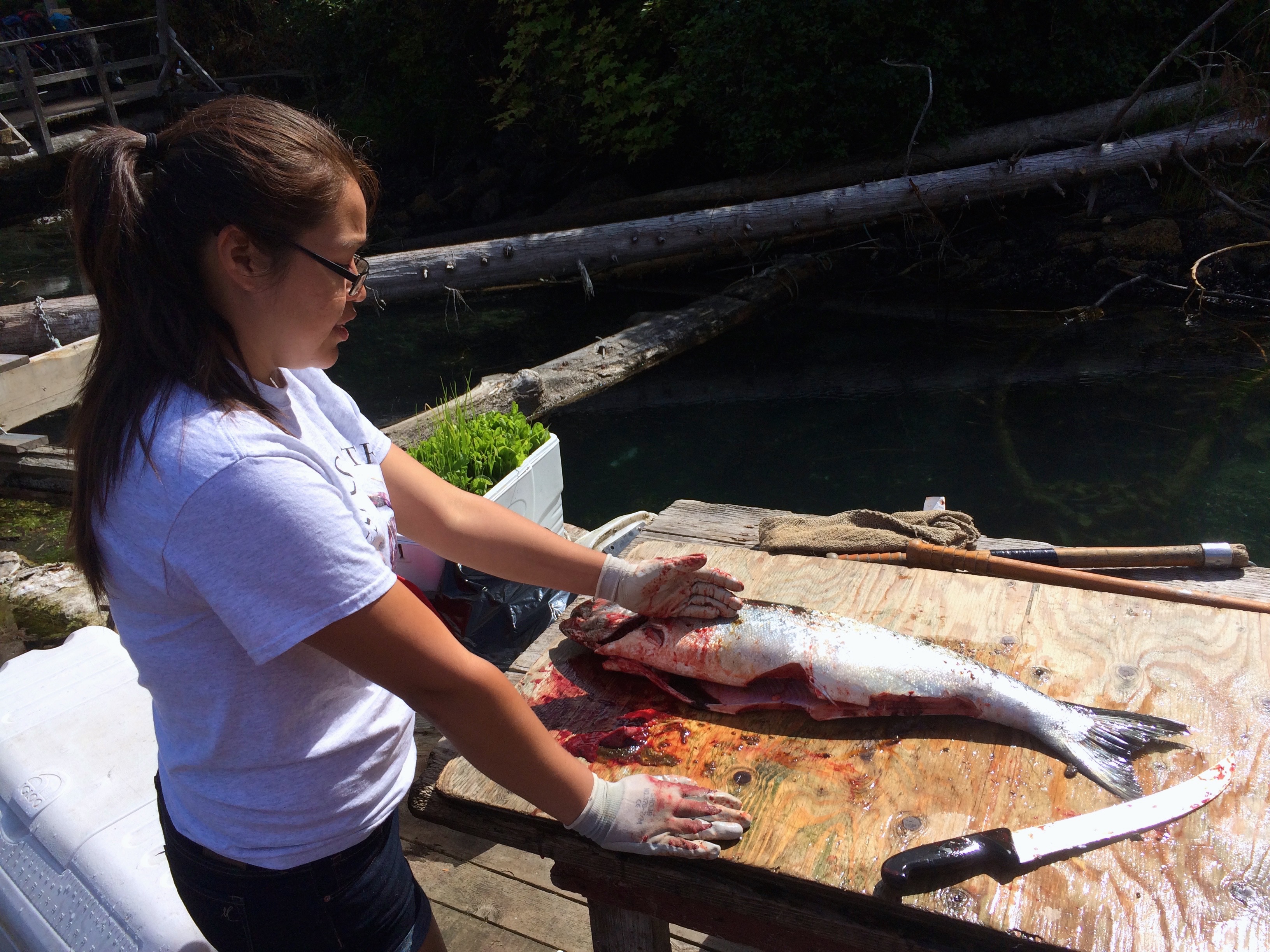
Fresh Salmon Lunch
The reward though was a fish or crab lunch at the Nitinat Narrows. The native Indians provide a ferry service which conveniently takes you to their outdoor cafe on the water for a selection of Halibut, Salmon or Crab. Oh yes, and beer.
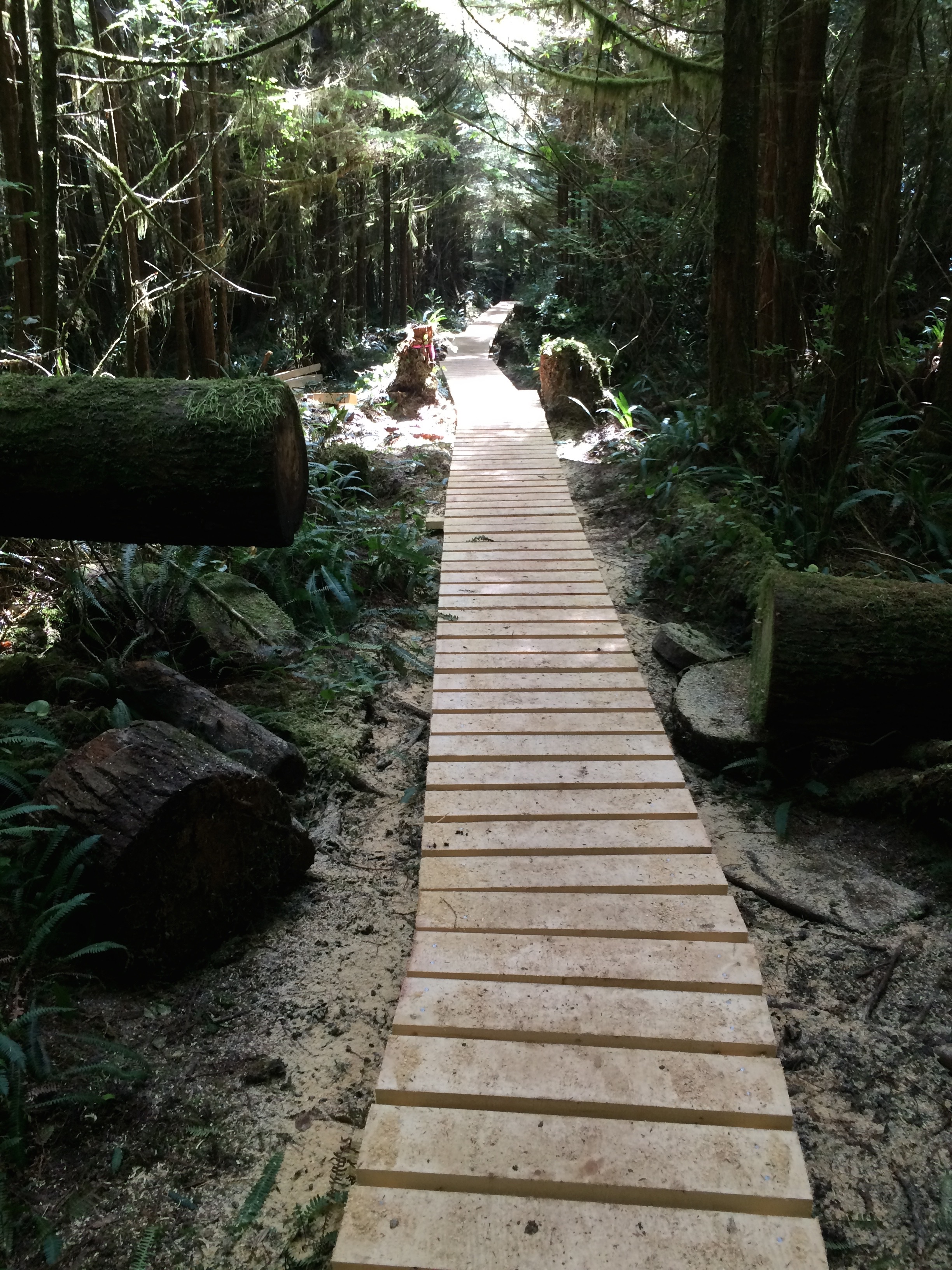
New Boardwalk
I opted for the Salmon but only had one beer since I still had 10K to hike to the Cribs Creek campsites. Thankfully that 10K stretch included a lot of boardwalk which you came to highly appreciate.
I was halfway done with the trail but you are fore warned that the northern segment is easier then the southern which was still ahead of me.
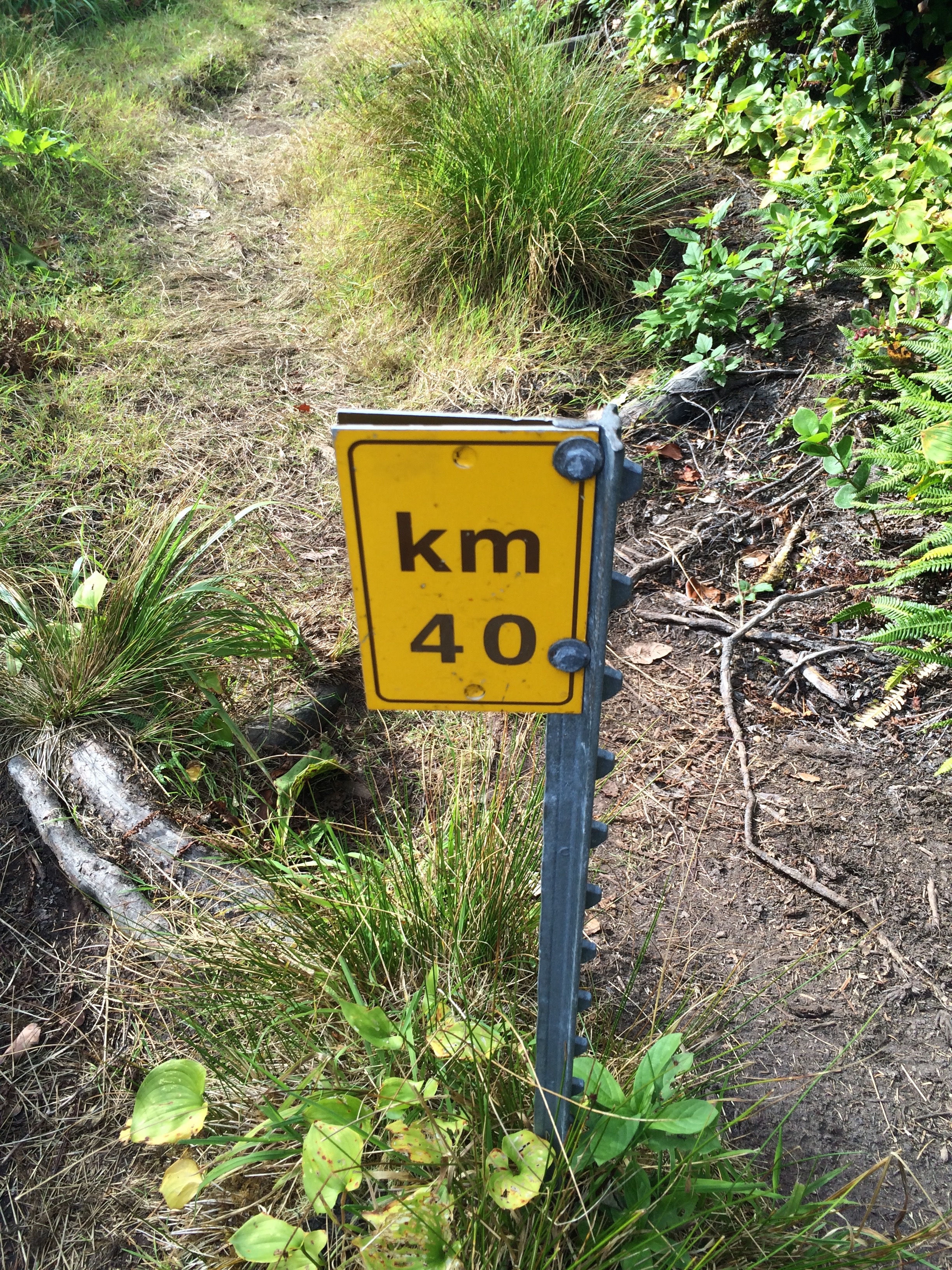
Trail Kilometers
The trail did provide a nice feature of Kilometer markers. Typically you could do 3K per hour on good trail but only 1K on the difficult sections.
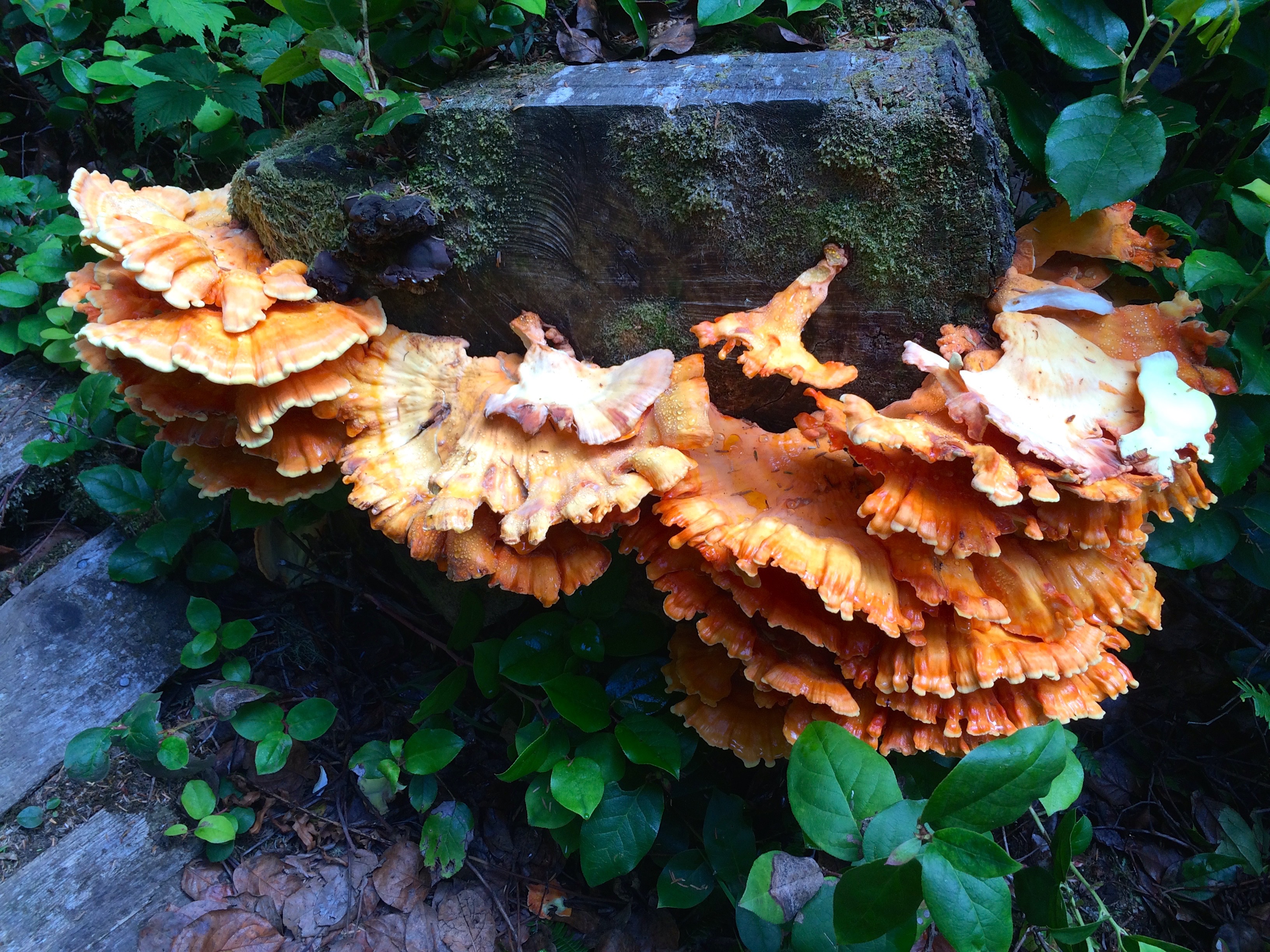
Colorful Mushrooms
There were not many flowers on the trail, however, they would have been absorbed by the overabundance of vegetation. There were some interesting mushrooms though.
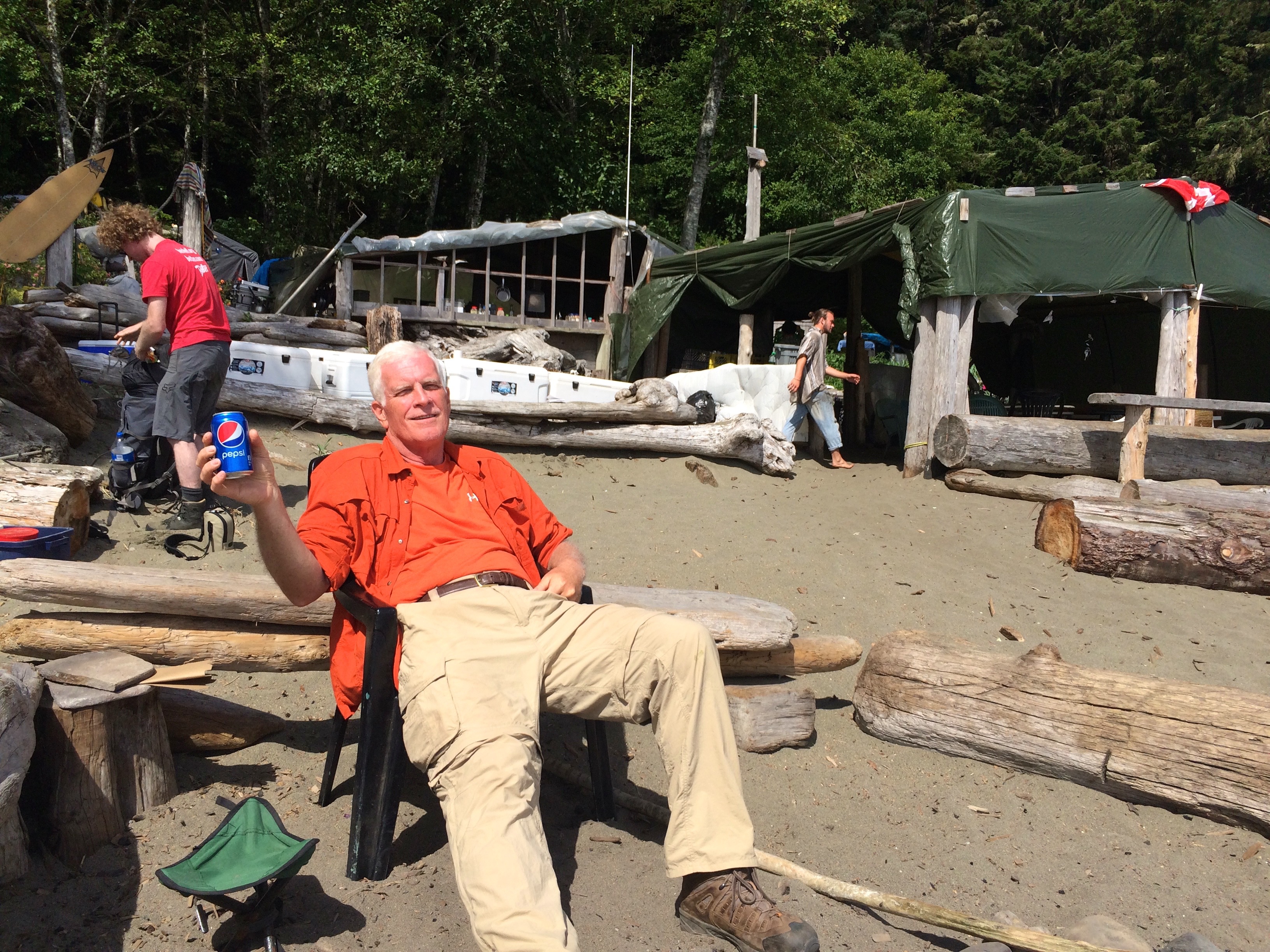
Relaxing at Chez Monique’s
The following day presented another cafe option known as Chez Monique’, a burger tent on the beach. This was too good to be true, a great burger with beer. Well since I put in such a long day prior and I was not on a strict schedule I decided to camp nearby and take the afternoon off with a burger and a number of tallboy brews. My photo shows that I also tempered the beer with some Pepsi. It was a fascinating day of conversations. The guy in the photo with the red shirt was giving a presentation in Vancouver on the Functional programming language GHCJS Haskell. And Monique was an assembly language programmer back in the fifties.


I was able to stumble back to my tent for a really good night’s sleep.
I spent the next night at Walbran Creek with about 40 others. I decided to be social and it was good. I did help a young lady with a foot blister problem understand that moleskin is intended to replace or cover your skin. She was putting it on at night and taking it off to hike??? Walbran did offer the nicest swimming hole but it had accumulated a bit too much seagull droppings for me.
The next day’s trail along the beach offered some of the most beautiful views yet.


My goal for the next day was to seek out another private beach campsite and I had hopes for an option before I got to Owen Point which requires a very low tide to navigate through the caves. Low tide was early in the morning so I hoped to be close to hit it the next day.
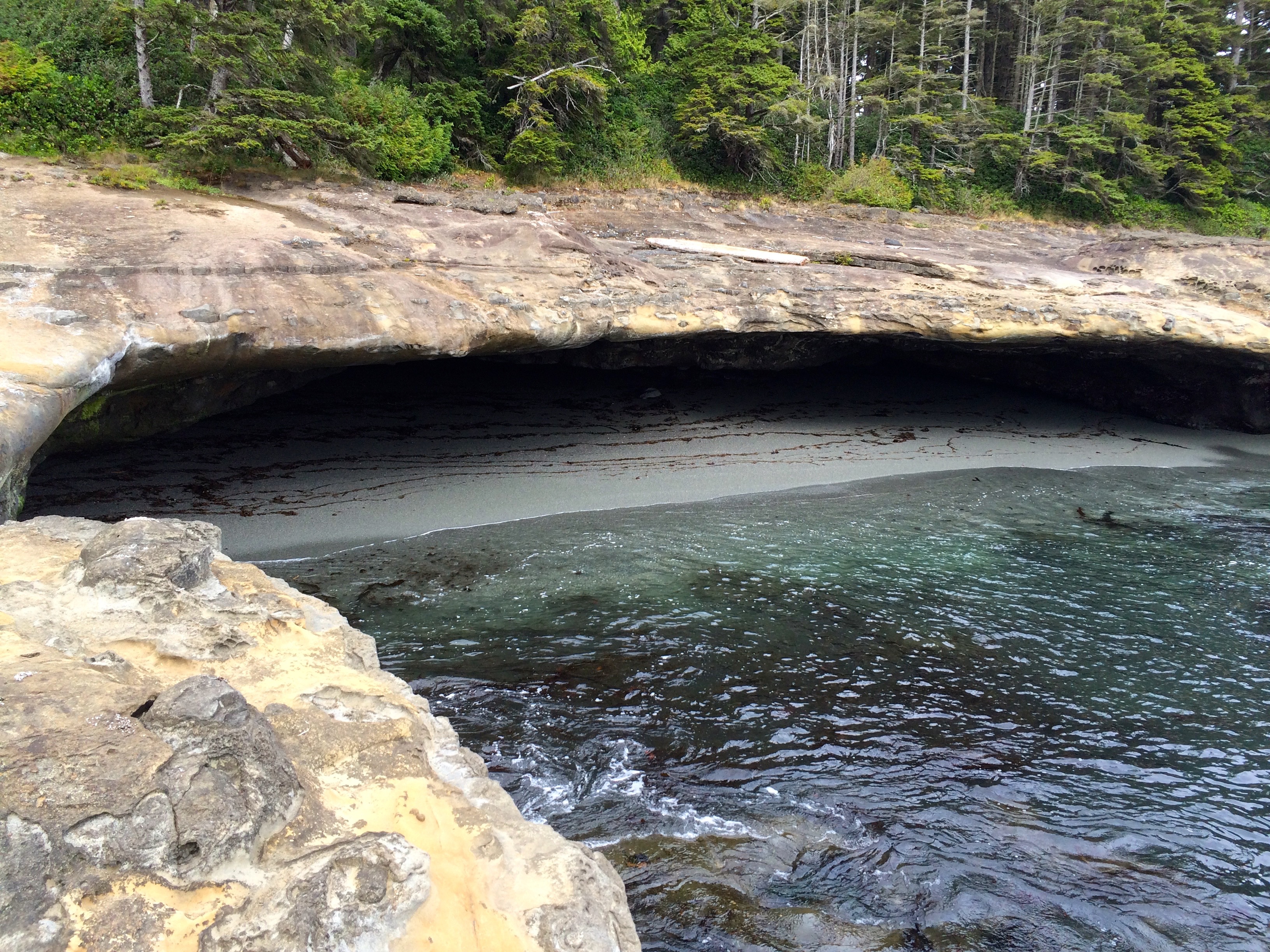
Beach Before Owen Point
Well I entered the beach trail a few kilometers before Owen Pt. but could not find a suitable campsite.
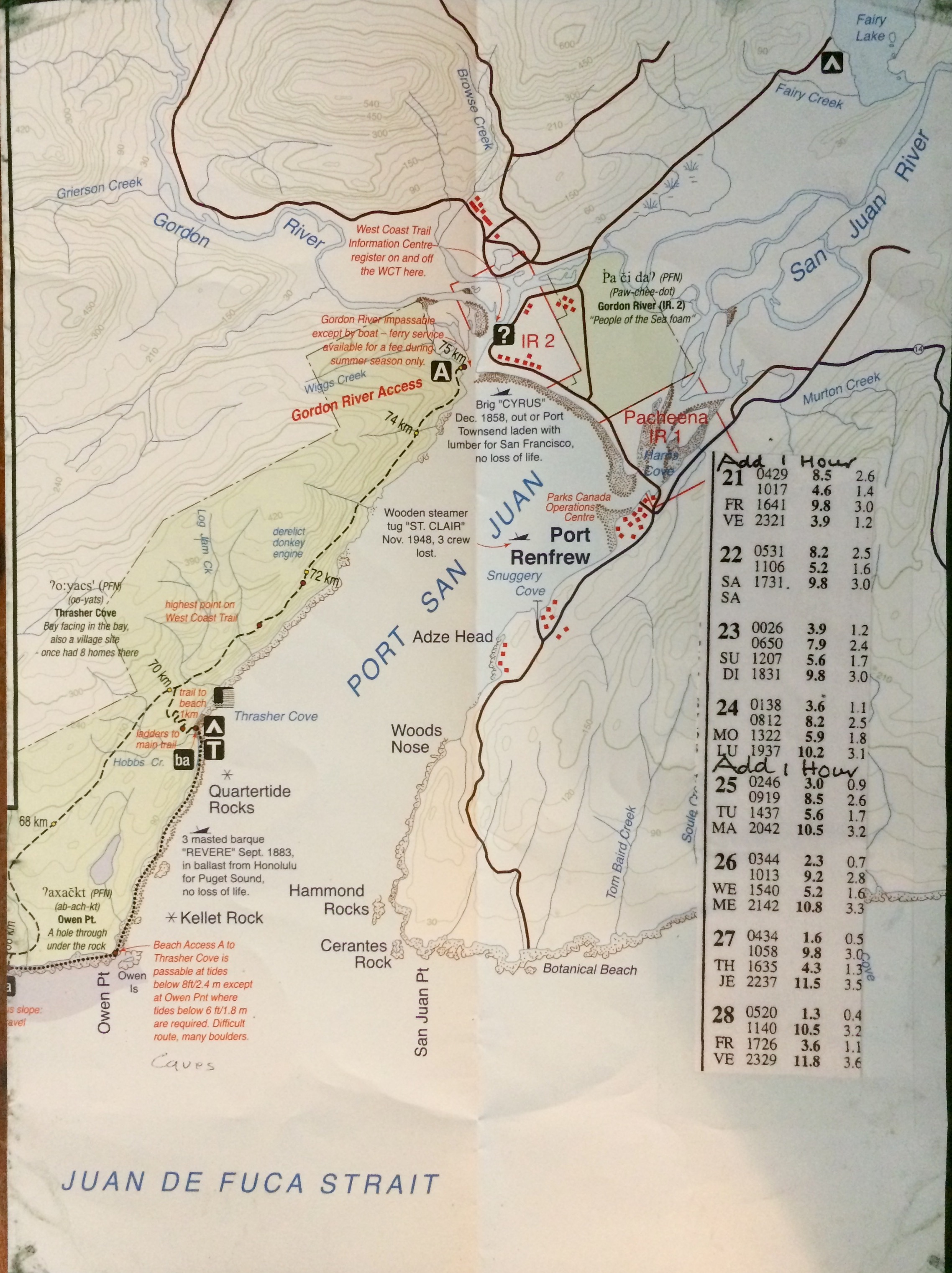
Owen Point Section of Map
So I ended up at Owen Point around 4:30 pm which was close to low tide, plus there were others who had been waiting there for the tide to recede. At this point I had to get past the caves but that meant I would have to navigate the dreaded boulder field for the next 3K to get to the Thrasher Campsite. I made it around Owen Point but not without partially falling into the ocean and getting my boots soaked.


I did save my backpack by giving up some skin off my elbows.
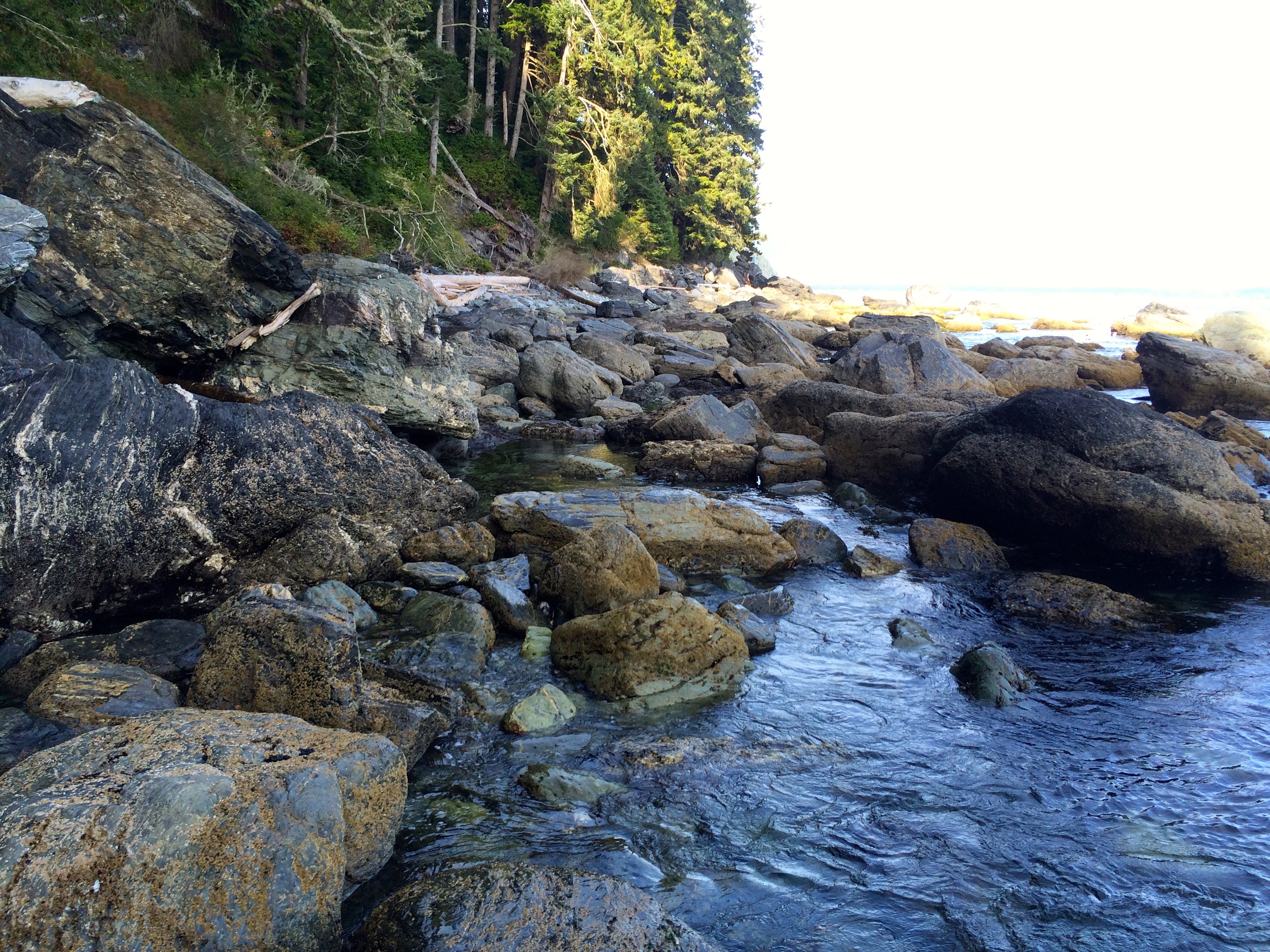
Boulder Beach
I mentioned the boulder field, Wow, navigating this section of beach over massive boulders at the end of a tiring day may be one of my most impressive physical accomplishments. I actually traversed them rather quickly, maybe I was just amazed that I was doing such a crazy thing. All I remember is that when in doubt about the path take the high road. Sometimes you ended up climbing over trees and boulders 2 stories high. Jumping down to boulders with a backpack did take a toll on my thighs, but I recovered quickly.
Once I got to Thrasher beach campsite I was faced with a crowded selection of real estate.
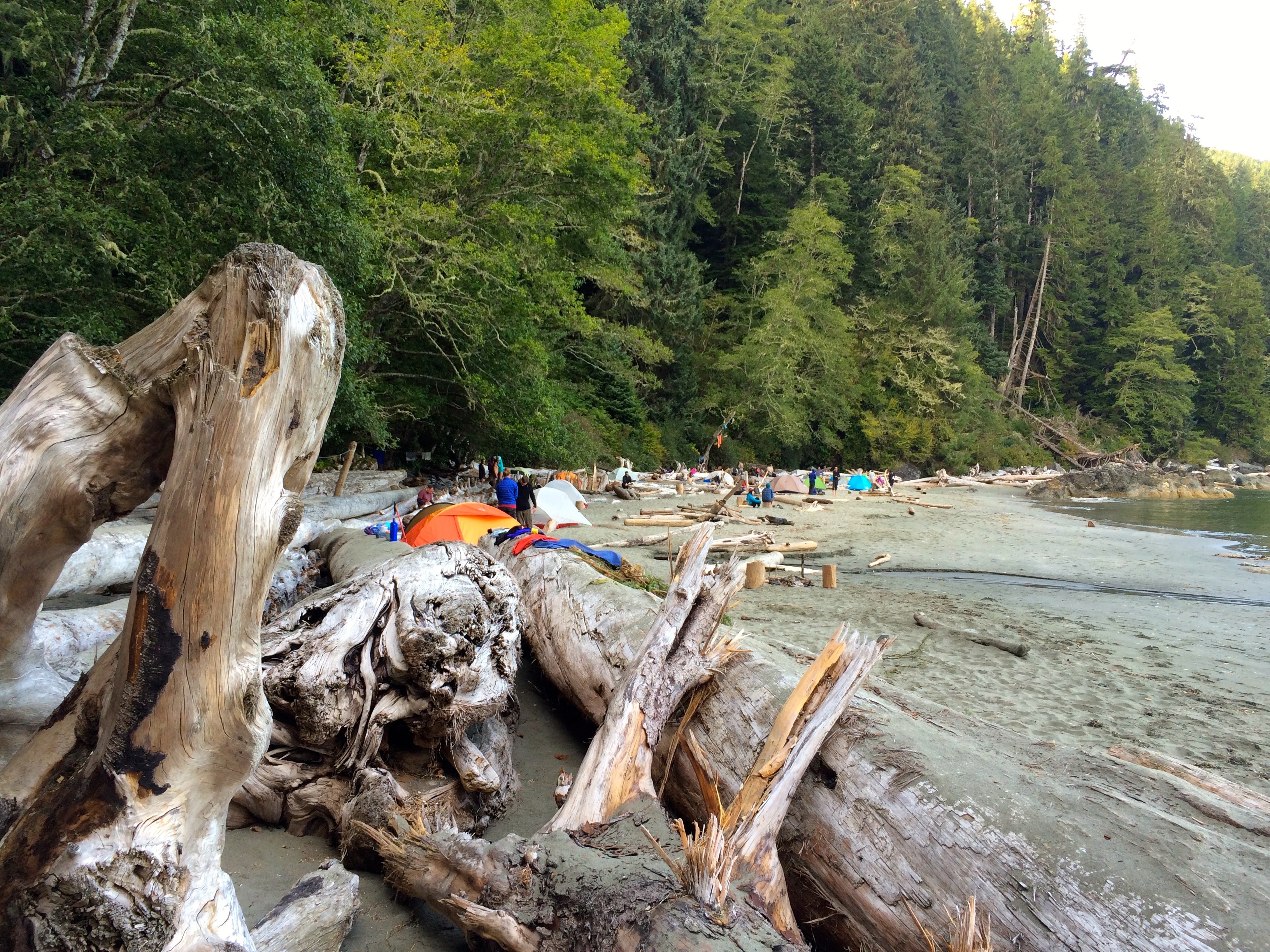
Thrasher Campsite
Prime locations were on high ground since we were expecting a higher than normal tide to hit around 11:00 pm. I chose a spot on on a level that did present some risk, but I had large trees that would protect me from waves. As it turned out most everyone stayed up to make sure that we did not get washed away. All part of the adventure.
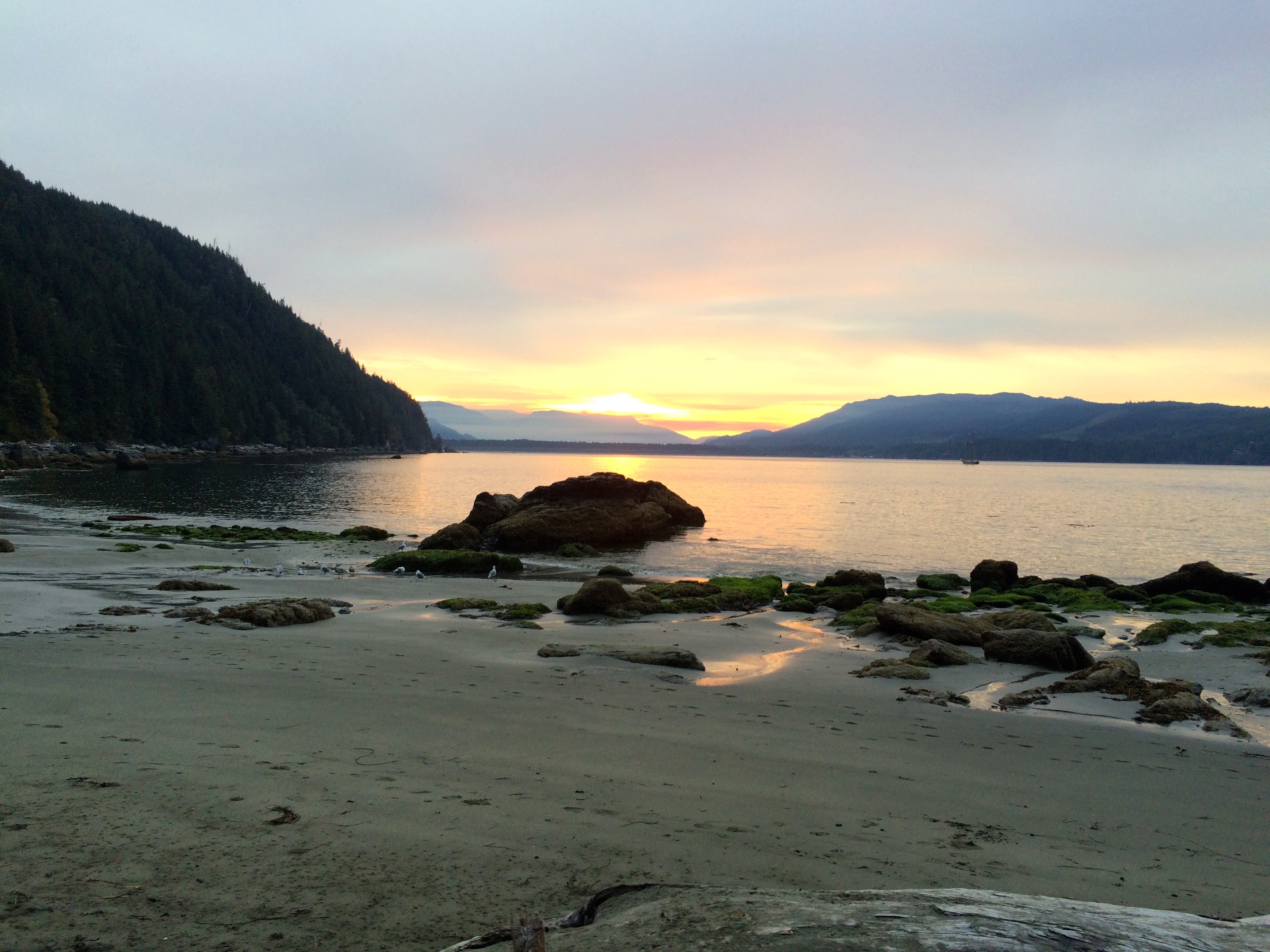
Sunrise over Port San Juan
The next morning brought a beautiful sunrise and less dew then typical so all was set for the final hike out to Port Renfrew. The last section was only 5K but it was a tough go with many root climbs, ladders and mud. I was excited to complete the trail but also sad for it to be over. The entire week I was blessed with perfect weather. Those starting the trail that day, August 27th, were in for many days of heavy rain.
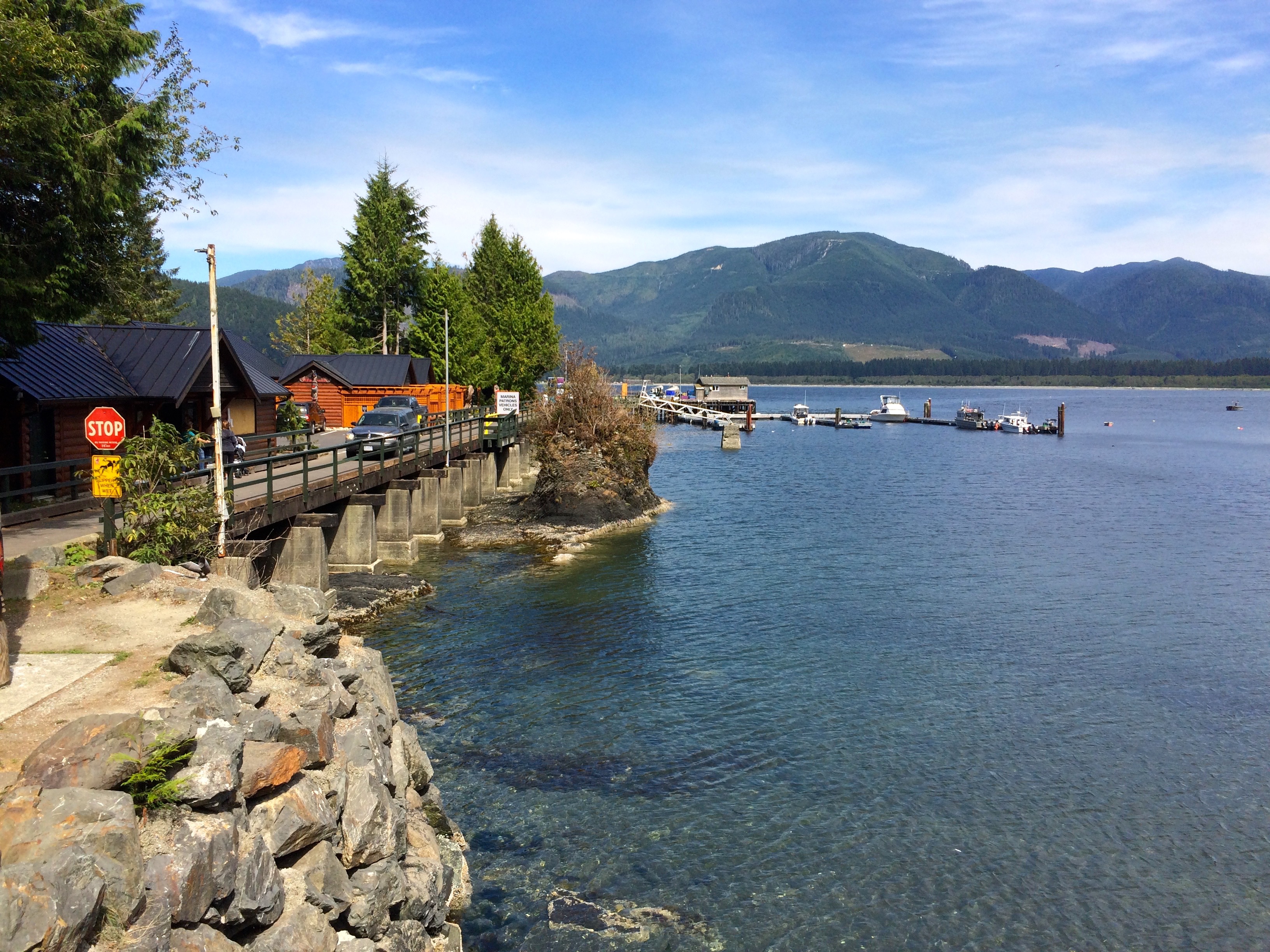
Port Renfrew
I opted for a quick shower at the campground before going into Port Renfrew where I had halibut fish and chips. Excellent.
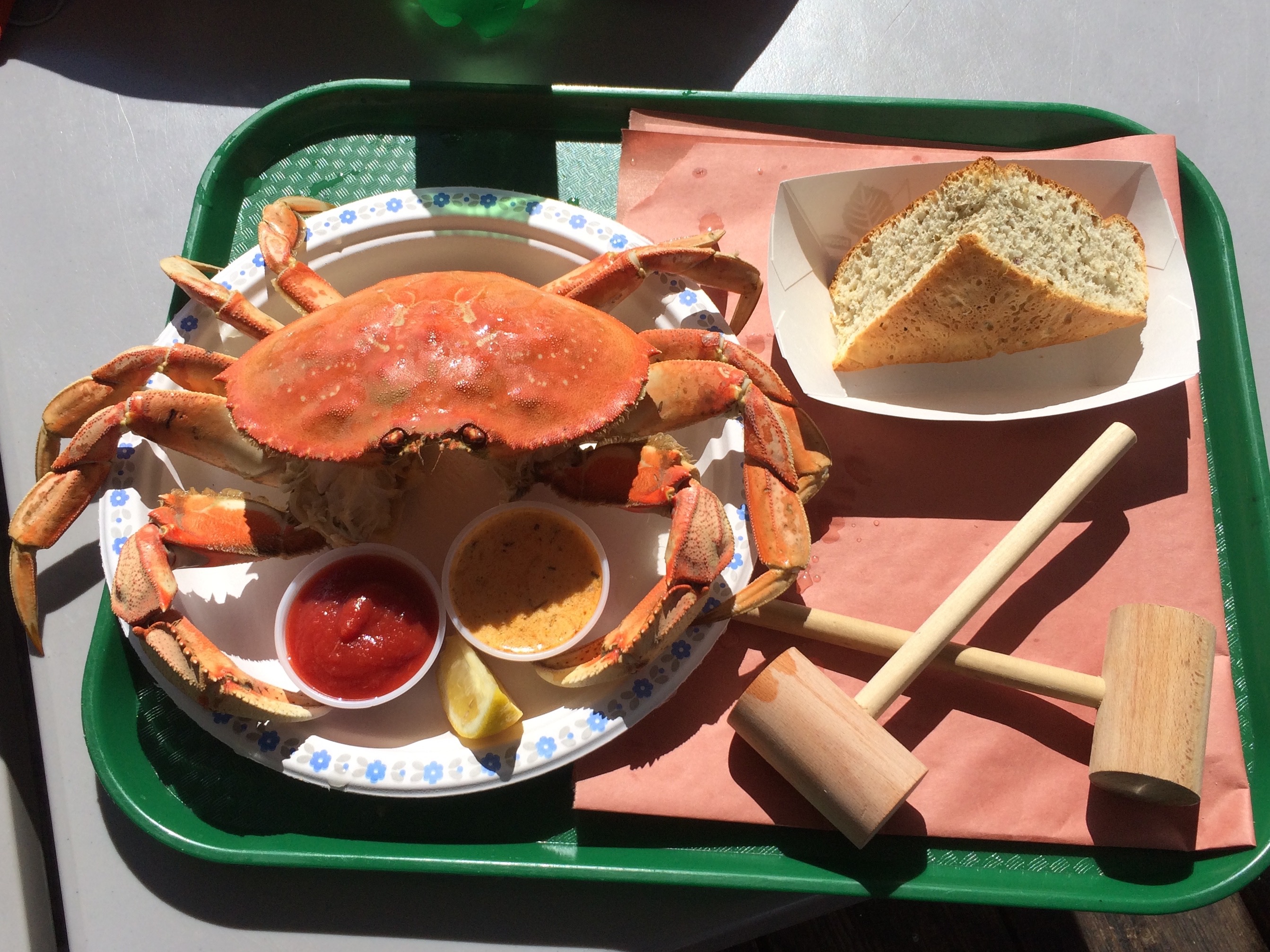
Dungeness Crab Lunch
The bus got me back to Victoria by 8:00 pm, I got a hotel, then enjoyed some sight seeing in Victoria the next morning with a lunch of Dungeness Crab at Fisherman’s Wharf before catching the ferry back to the U.S.
What an amazing couple of months of backpacking and what a fantastic finish with the West Coast Trail, Hike of a Lifetime.

Stevens Pass to Snoqualmie Pass
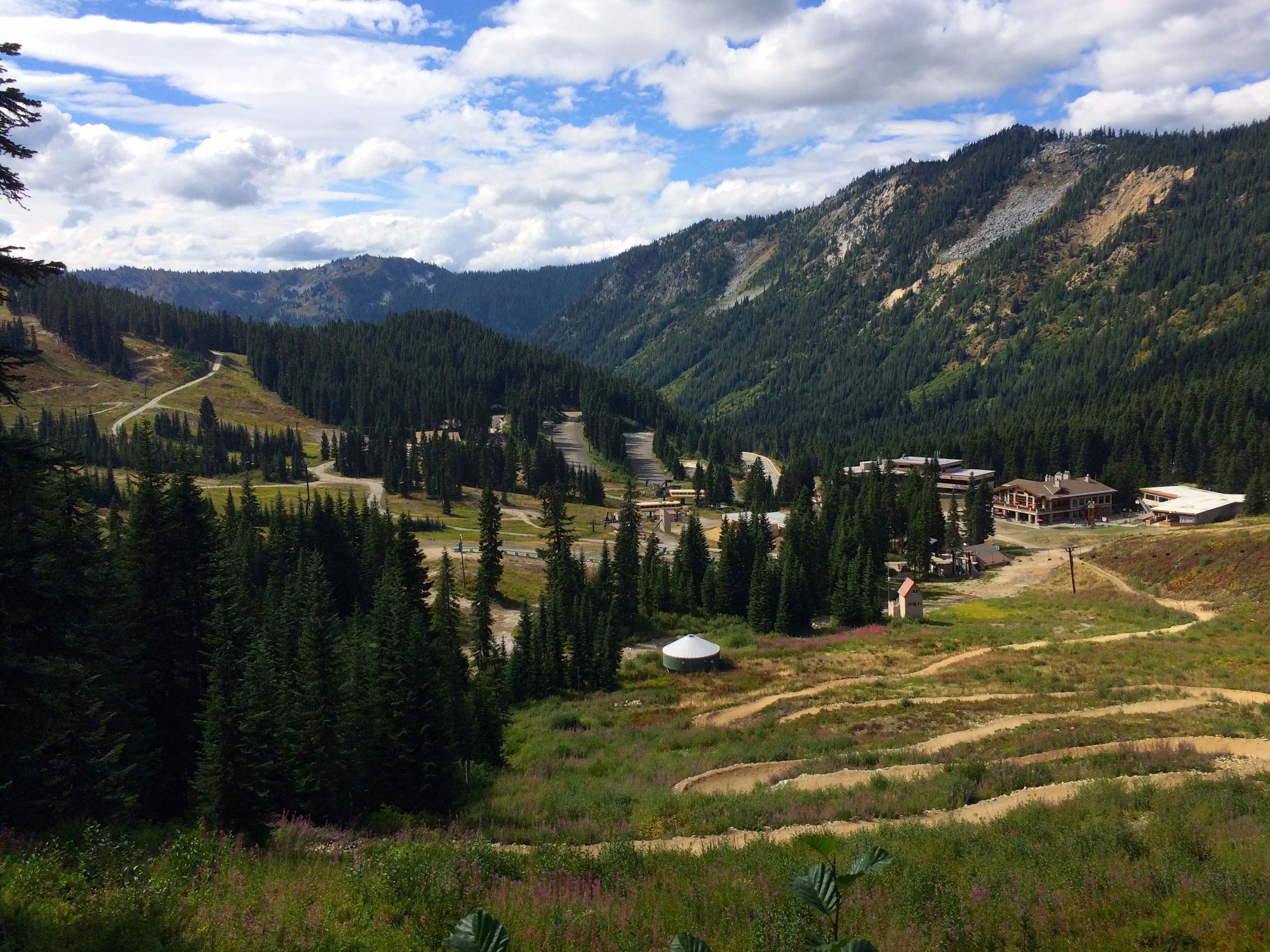
Stevens Pass Ski Area
I backpacked the Stevens Pass to Snoqualmie Pass, PCT Washington Segment J from Aug. 8-16, 2015. It is 71 miles and over 18,000 vertical. This trip on the heals of my Spider Gap Buck Creek loop was challenging in many ways, most of which was related to heat, lack of water, lots of vertical and smokey conditions. Overall though it is a very dramatic PCT segment complete with very rugged and beautiful terrain.

Campsite in Berries
Starting off at the Stevens Pass Ski area was kind of cool thinking about how I might ski those runs that I was hiking. I was also treated to an abundance of huckleberry and blueberries for the first couple of days.

Mig Lake
My second day I had my sights set for a campsite on top of a mountain but along the way I passed many lakes of which I think the most beautiful was Mig Lake.
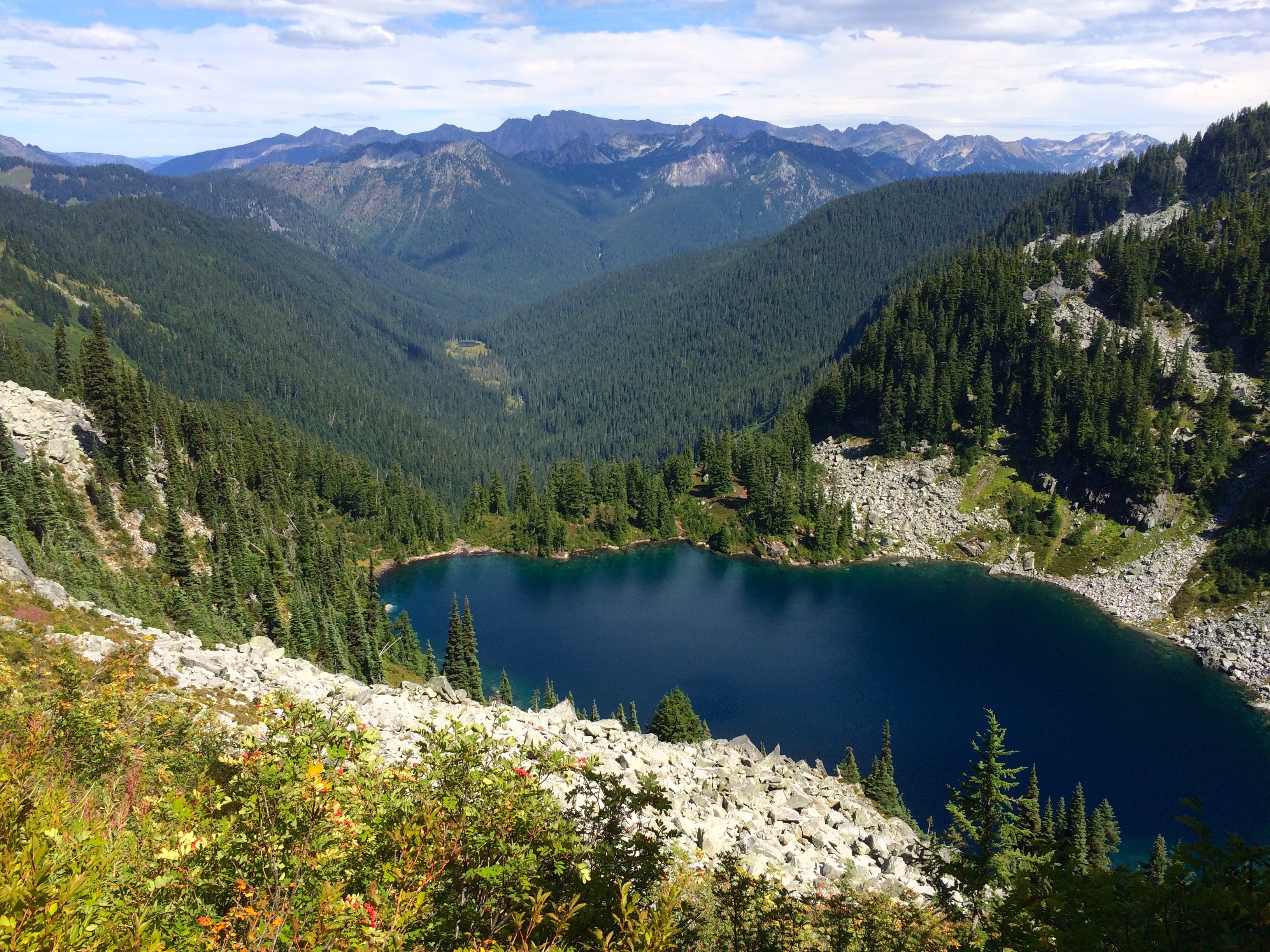
Trap Lake
At my mountain top campsite at PCT 2450 which was after a typical 3000 ft vertical climb day I had Trap Lake behind me and a beautiful sunset waiting ahead of me. One of the best campsites I have chosen.

Sunset from Mountain Top Campsite
The following day I planned on camping at Deception Lake, however,

Jets over the Wilderness
I was not that impressed with the options and I knew it would end up being crowed with the many through hikers now hitting this part of Washington. I pressed on and found a great campsite just south of Deception Creek at PCT 2442. The photo showing the jet exhaust trail represents the many jets that you hear flying over this area out of Seattle. You never see the military jets which fly lower and louder.

Cathedral Rock
The next day I climbed past the Cathedral Rock area but overall I took it easy and ended up at Deep Lake which offered a great site for a swim. Deep Lake still had water flow but it was low and the lake was warming up.
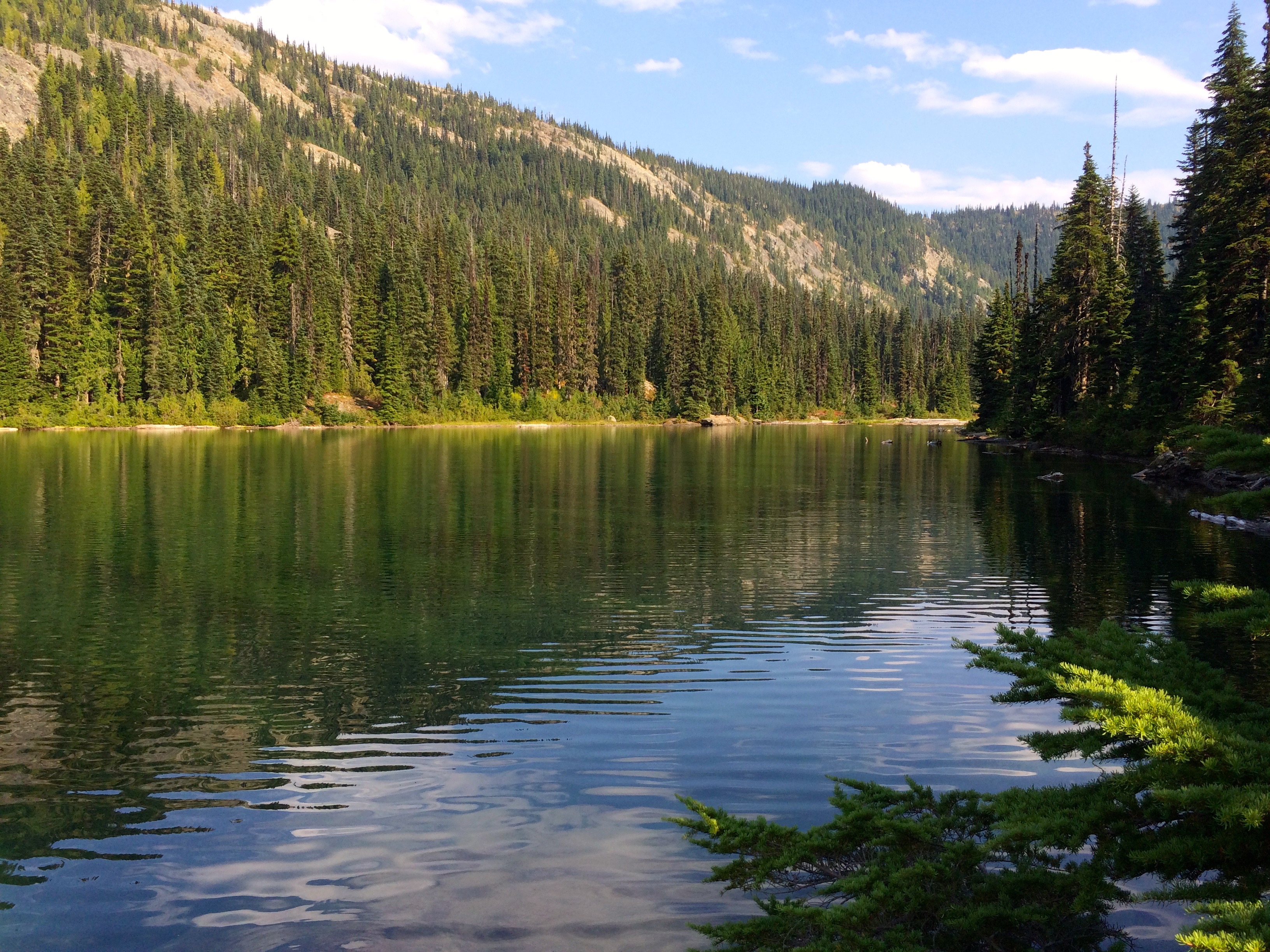
Deep Lake
I knew that I had a tough high vertical day coming up so I also took it a bit easy the following day in preparation to climb over Escondido Pass. I knew that water was going to be an issue and when I realized that my Camelbak bladder had leaked I was a bit concerned.
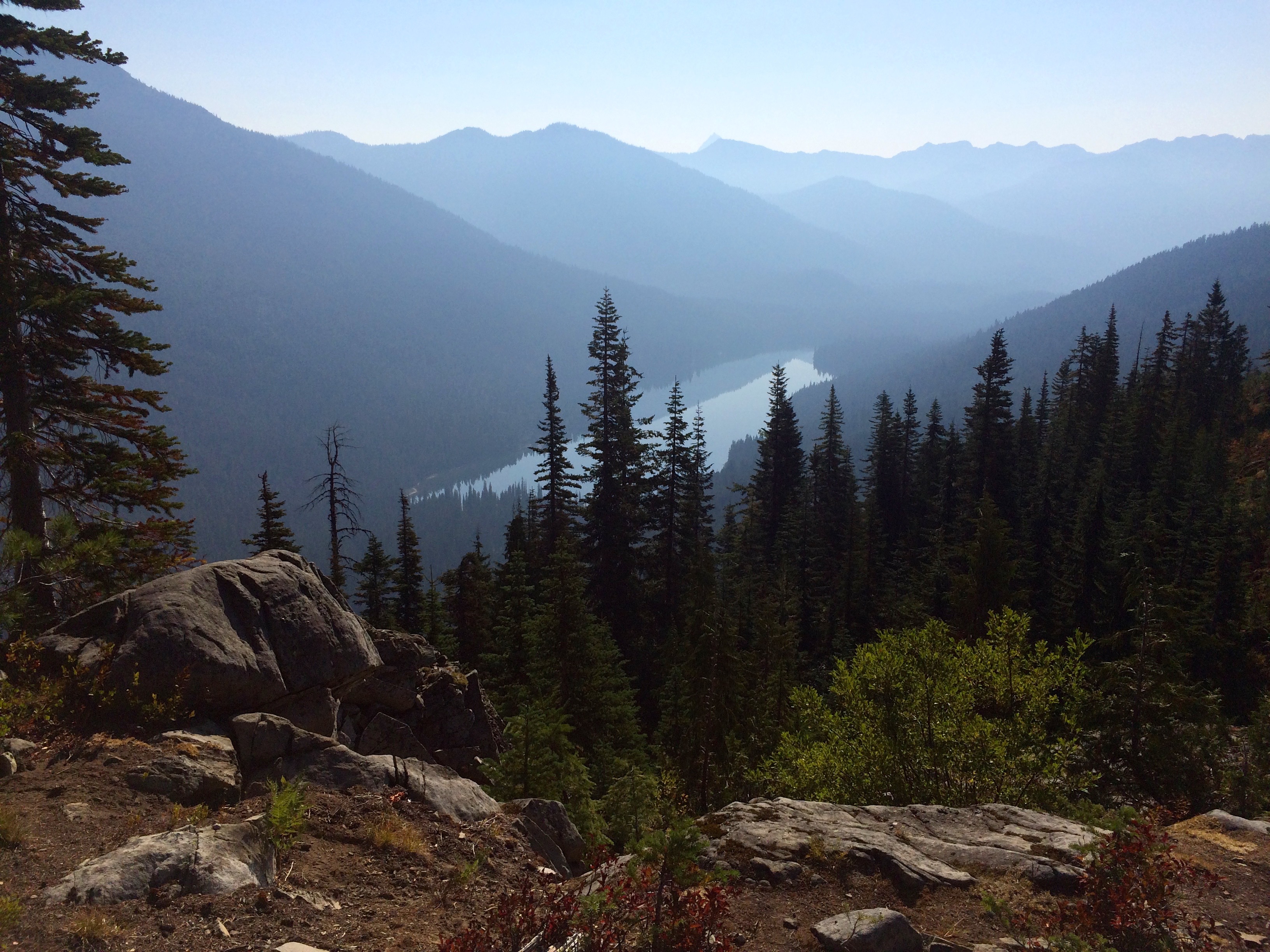
Smoke Over Lake Waptus
I did find a trickle of a stream where I filled up a Nalgene liter but I would need more. This was a long and exposed segment that turned out to be on one of the hottest days along with a lot of smoke sneaking into the area from the Washington forest fires.
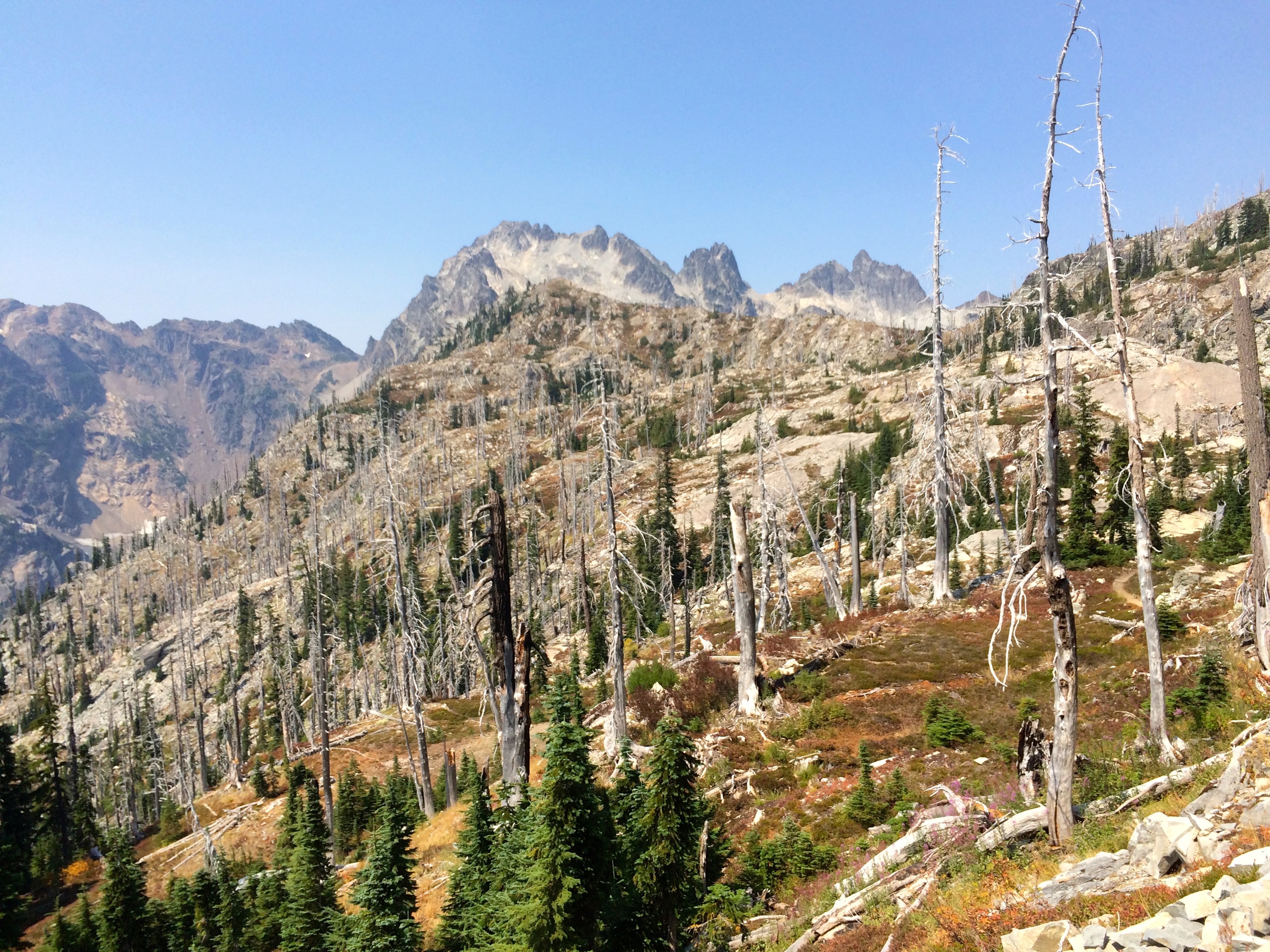
Escondido Pass
There are a couple of dead lakes on top but who wants to drink warm water. It turned out that I did not have enough water or energy which made for a very difficult day. Boy was I happy when I finally got to a cool stream over near Lemah Meadows. I setup camp as it was getting dark and I collapsed for a night’s sleep to recharge. I did experience an interesting event that night as I believe a large buck must have been startled by my tent which was fairly near the trail. This was at 1:30 am and this buck sounded like he raised up and pounded his hooves 3 times right next to my tent. Nothing I could do but just lay there. Or maybe it was just a very real dream.
I took it easy the next day in preparation for more climbing.
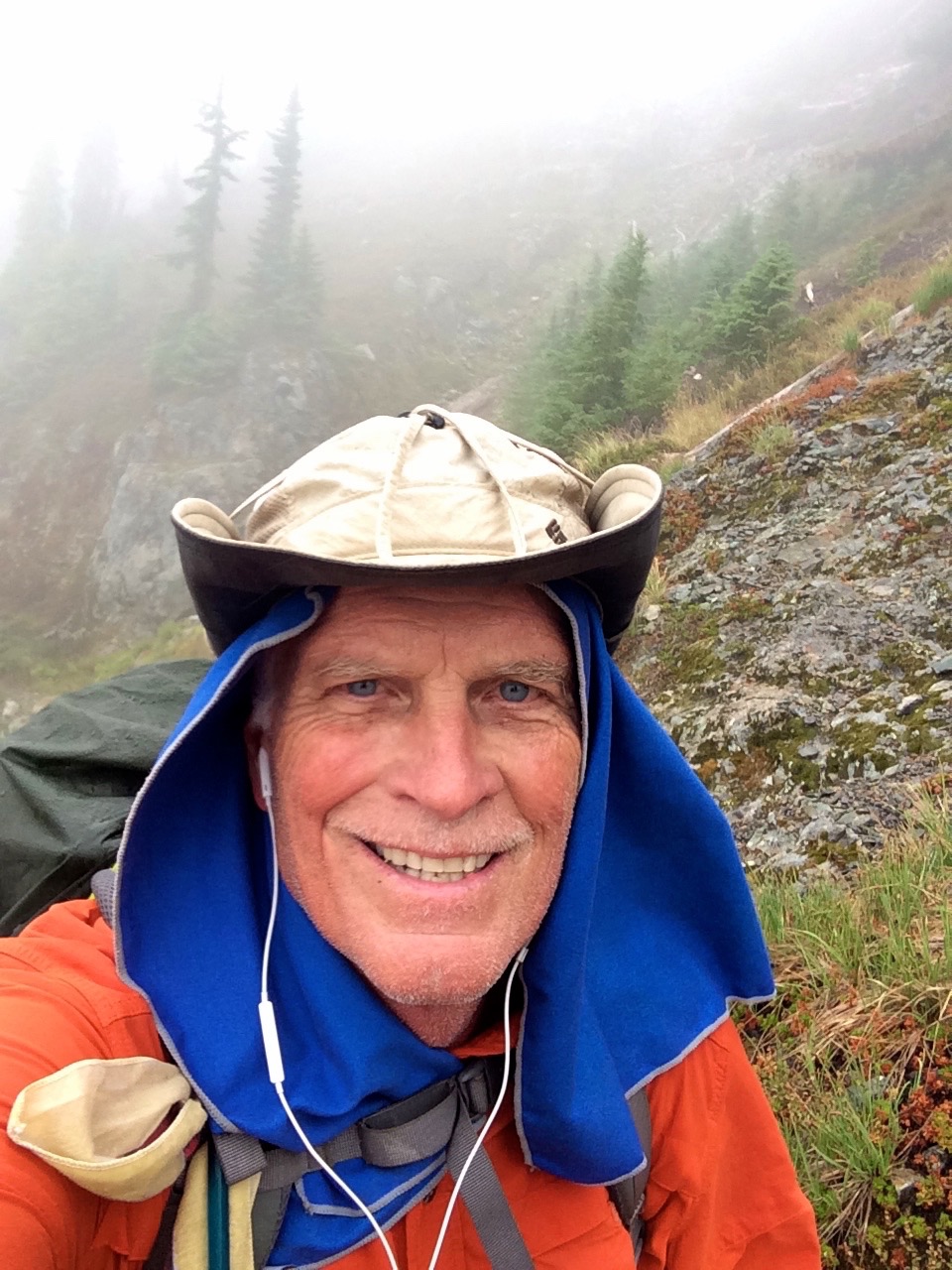
Weather Changing
My plan was to camp near the Park Lakes area which turned out to be as far as I could get before the rain set in.
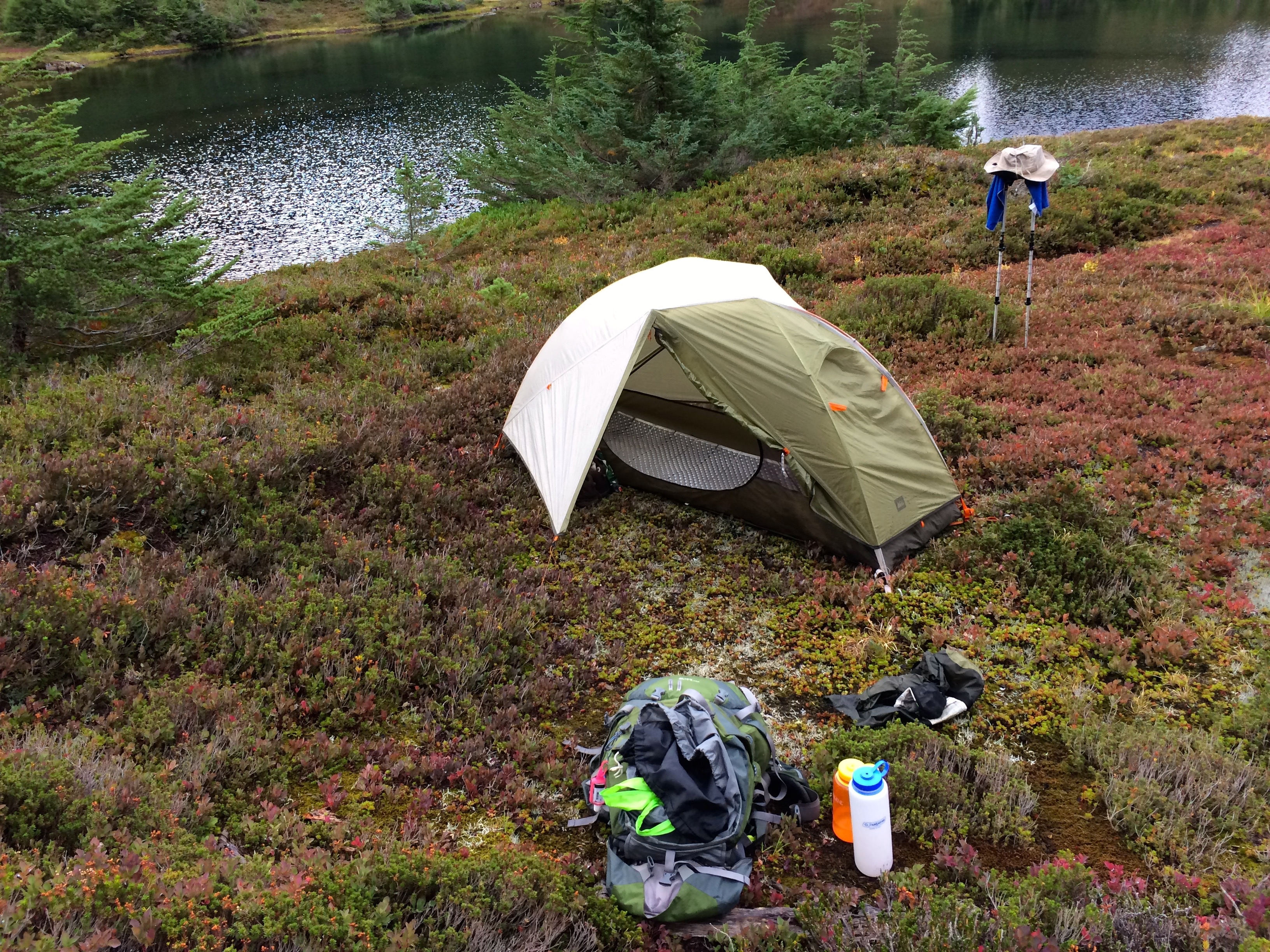
Campsite during Storm
In all of my backpacking I have been extremely fortunate with respect to weather, rarely have I endured a serious rain. Well that all changed with a night of wind and rain which was sorely needed by the draught stricken mountains. I did choose a good campsite next to a lake on top of ground shrubs which made for good drainage for the night long rain. The video gives you an idea of how pleasant the night long rain was.
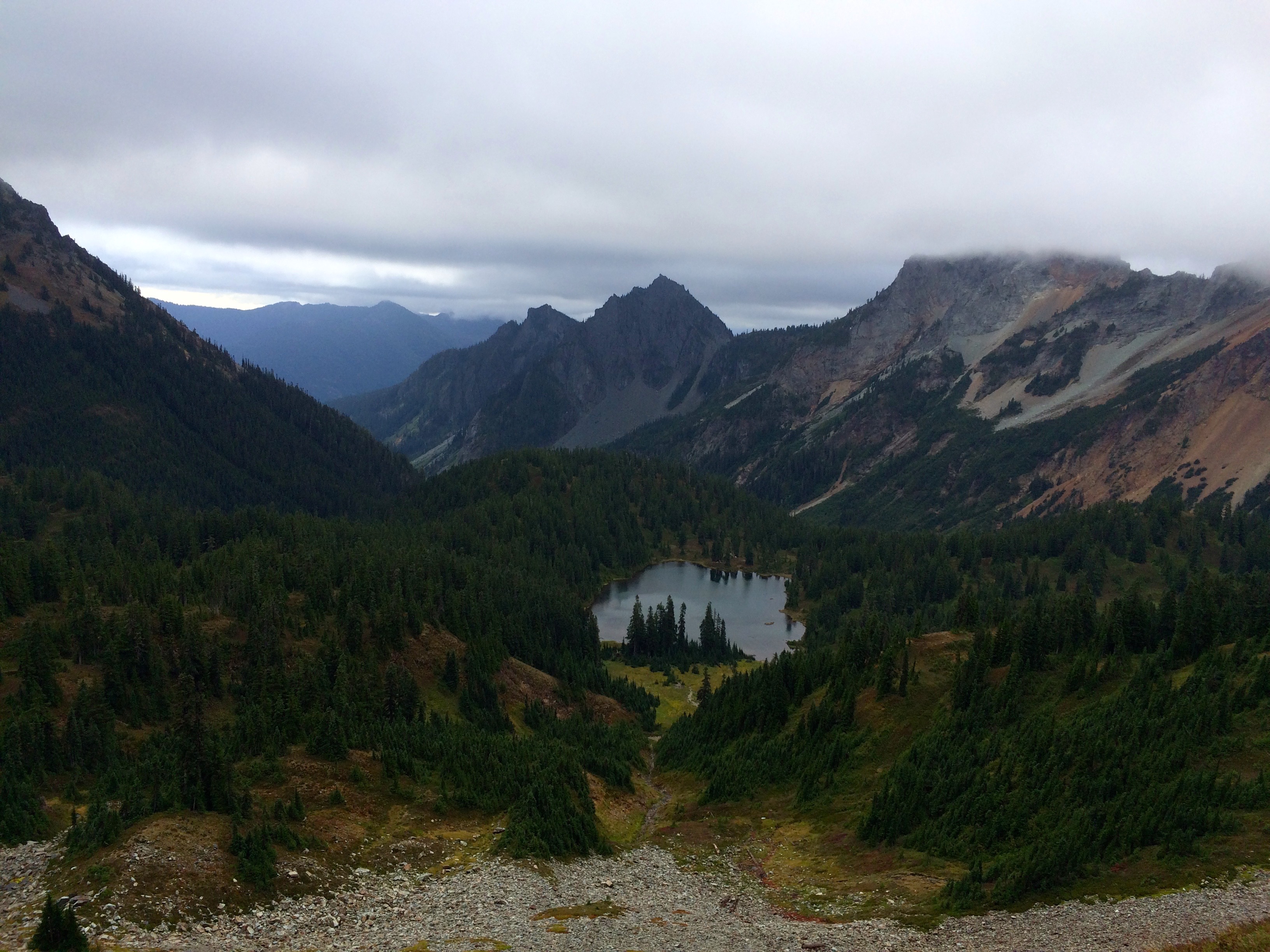
Park Lakes Area
The following day turned out to be a lot tougher then I expected, lots of up and downs, but the misty weather made for excellent hiking conditions.
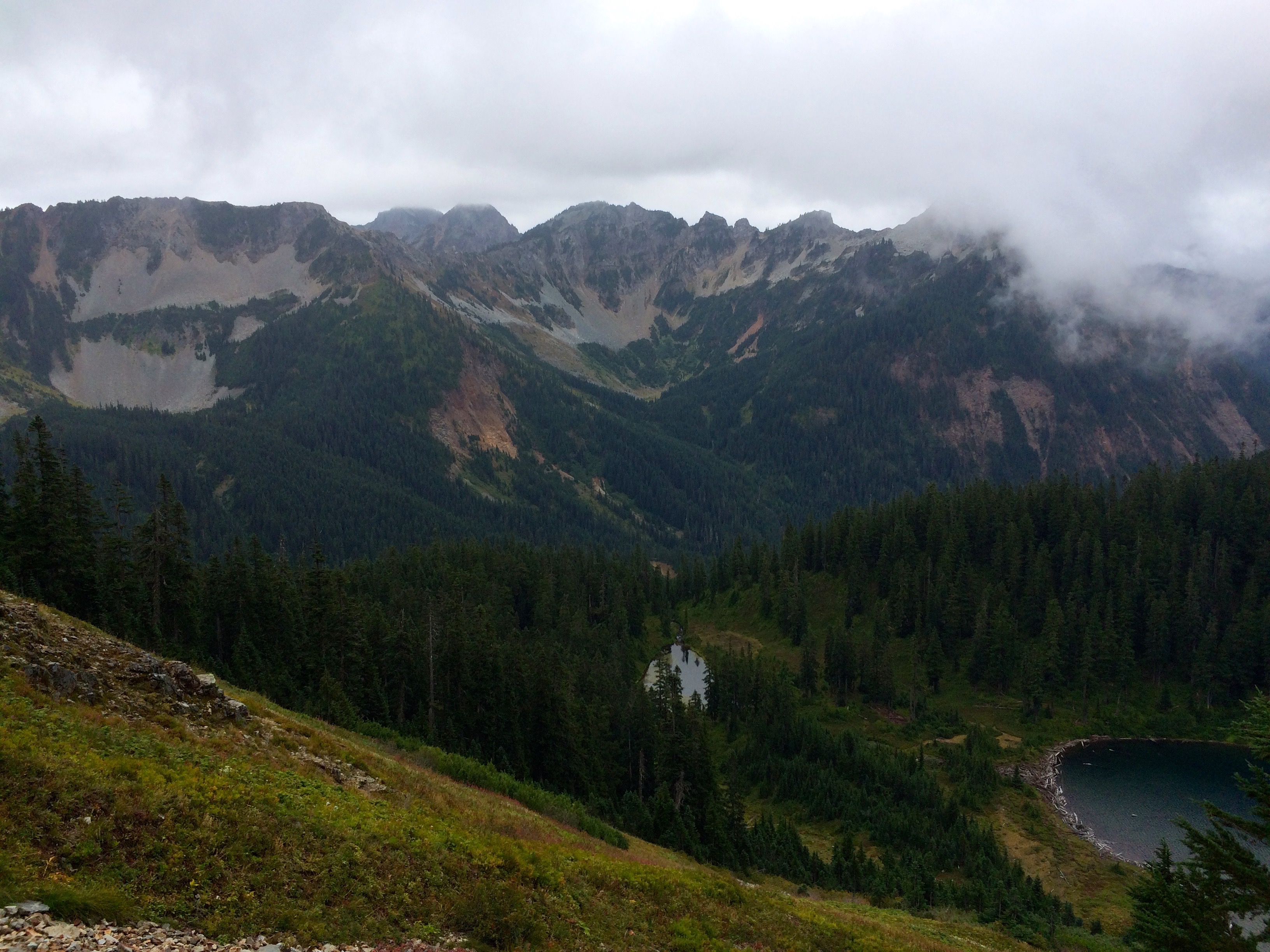
Above Alaska Lake
This is very scenic terrain and doing it in the clouds made for a unique day. Again my day stretched to the end of my energy just in time to make camp at Ridge Lake, just before it started raining again.
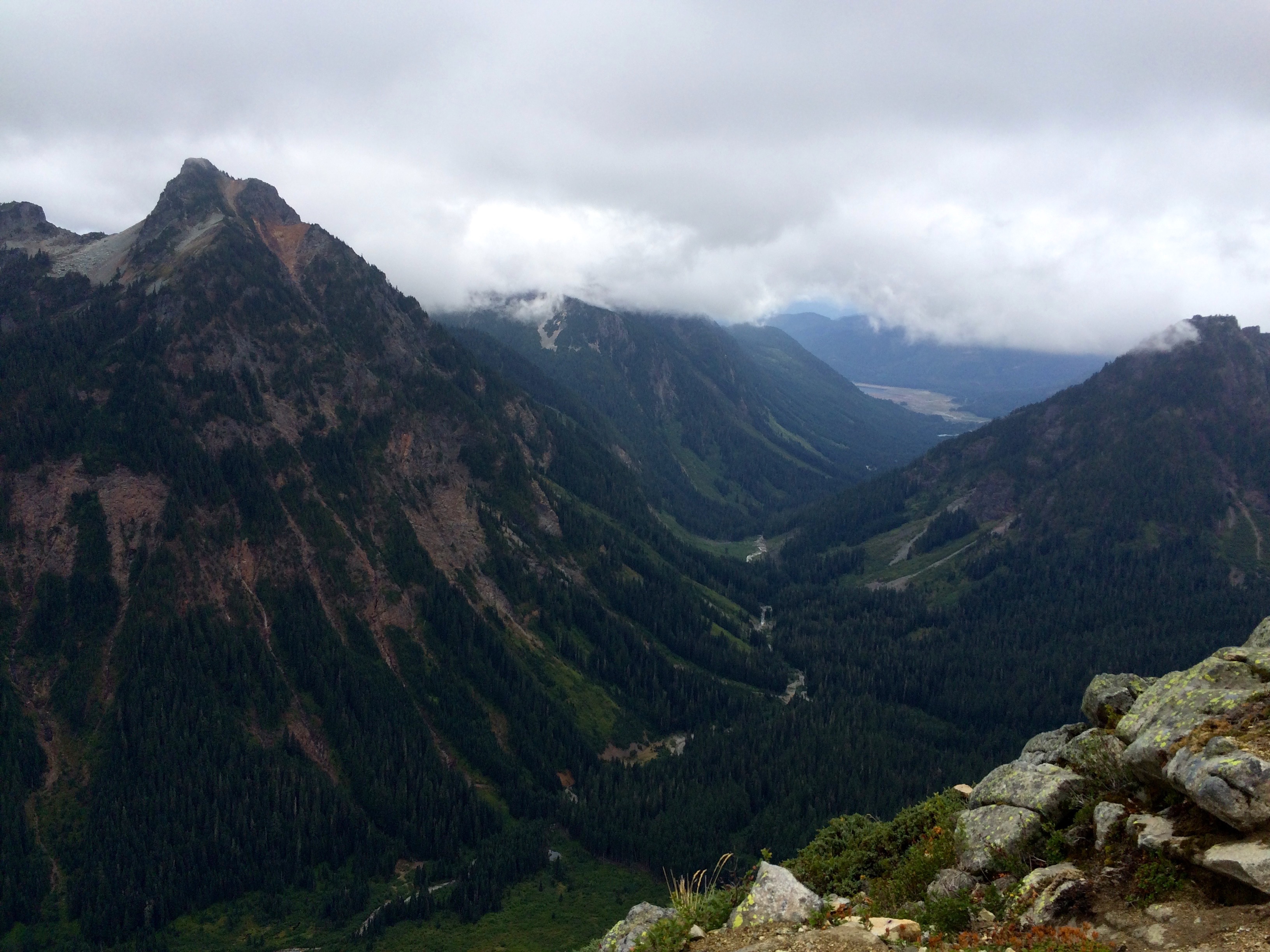
Hiking in the Clouds
Not so bad, just persistent. But this was my last night on the PCT since Snoqualmie Pass was over the next pass. Of course the sun came out just as I got on the trail. It would have been nice to have had the sun to dry some things out before heading out.

After the Storms
However, the rain brought crystal clear air for some of the most beautiful terrain left on the segment. This is a very popular day hike segment for the Seattle folks so I passed hundreds of them as I headed down to Snoqualmie Pass.
Then you see Mt. Rainier and you can get cell service. This all translated into a wonderful finish to this PCT segment. After getting my resupply at the Chevron Station and showering I enjoyed a few craft beers from the Dru Bru Brewery.


Spider Gap Buck Creek Loop

I am sorry for being a bit late on posting about our Spider Gap Buck Creek Loop trip, Aug 1-6. As expected this 36 mile loop with 8000′ vertical was amazing and lived up to our high expectations.
Every year I do a loop like this with friends and when we have asked other backpackers what they believe to be the best loop, Spider Gap Buck Creek tends to be the winner. And it is truly an awesome loop complete with incredible vistas, challenging climbs and unique topography.
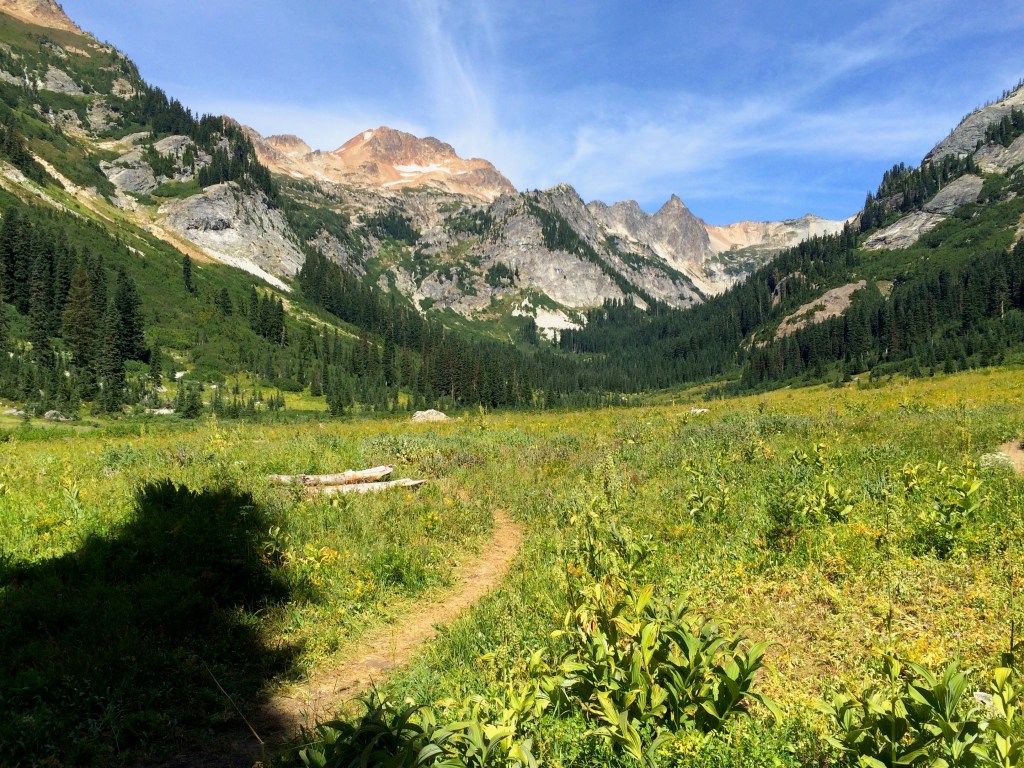
We decided to take the counterclockwise route beginning with the Spider Meadow Phelps Creek trail. The meadow was beautiful but it was obvious that we had missed the high flower point by a few weeks.
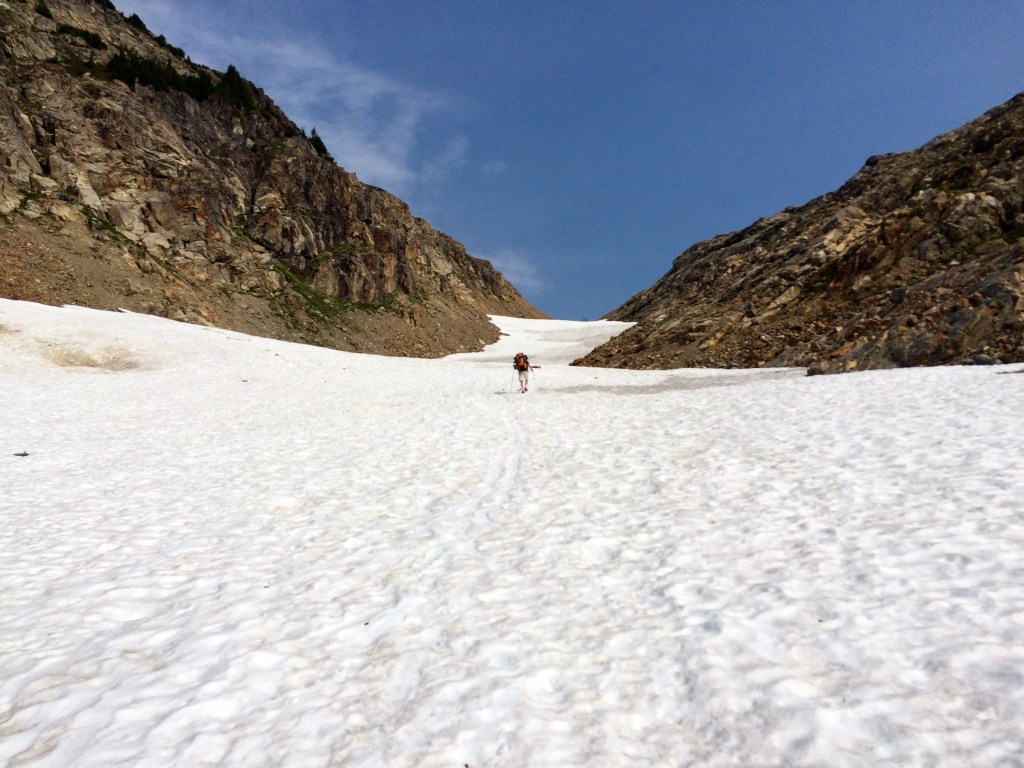
Taking it easy the first day we planned for the Spider Gap climb which is broken into an initial 1000 ft climb on a fairly rugged rock trail and then another 1000 ft climb on up the snow field. The reward at the top was worth the climb.
The view into the Lyman Lakes Valley and Glacier was highlighted by rugged terrain which turned out to offer up a bit of a scare to us. We made the mistake of assuming the trail to the east would eventually wind down to the valley. Wrong, so I advised that we backtrack and go down the snow field. Unfortunately, Bob, who hates to backtrack decided to take the short cut down the mountain slope. This was not communicated well and we ended up getting separated from Bob.

The outcome of this turned into a nervous search for Bob who did eventually turn up to relieve our fears after he had a bit of a hair raising descent down the side of the mountain ending up further down the valley. Our concern stemmed from the dangerous loose rock navigation that could easily result in a slide or a fall. But all was well and we settled in between the Lyman Lakes.

Old Backpakers 
Lyman Lakes Campsite
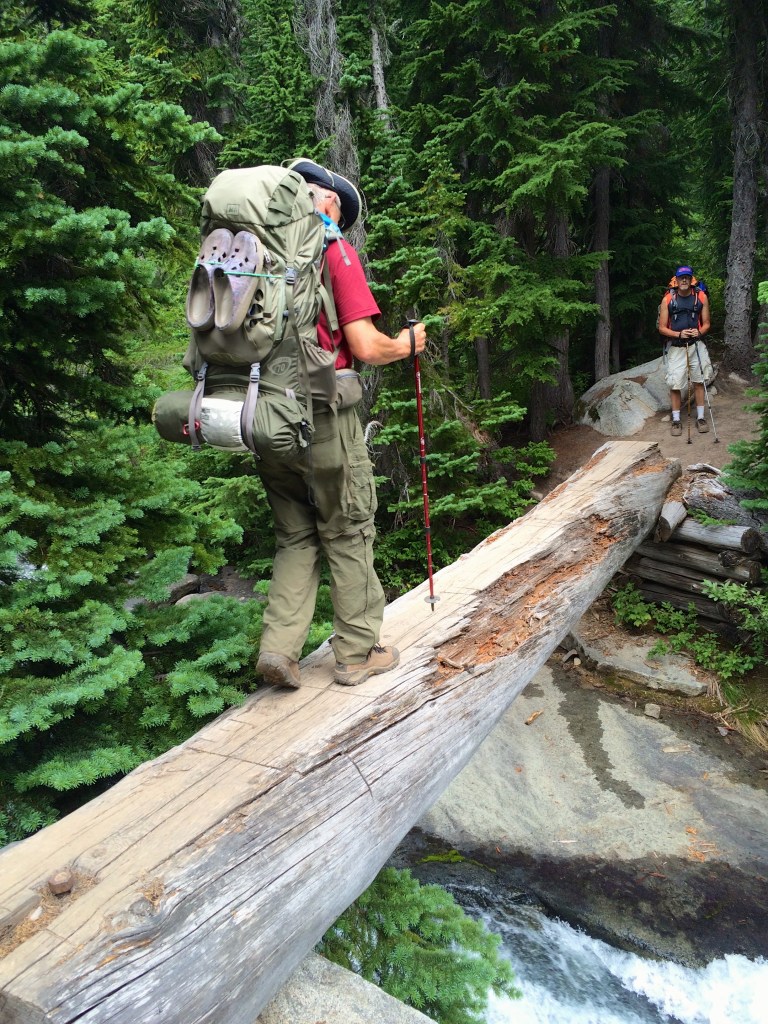
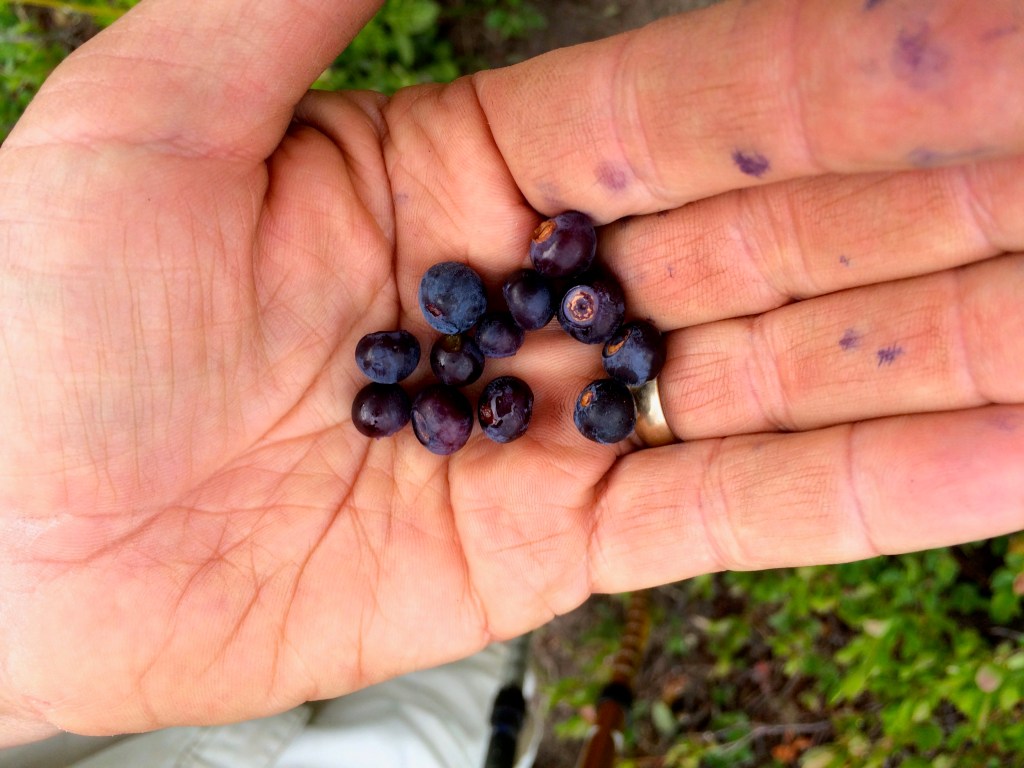
The following day took us over Cloudy Pass which lived up to its name. This is also about the time we began enjoying an over abundance of blueberries and huckleberries. We had a fun log stream crossing below Lyman Lakes. Again we kept losing Bob because he couldn’t resist stopping and eating the berries.
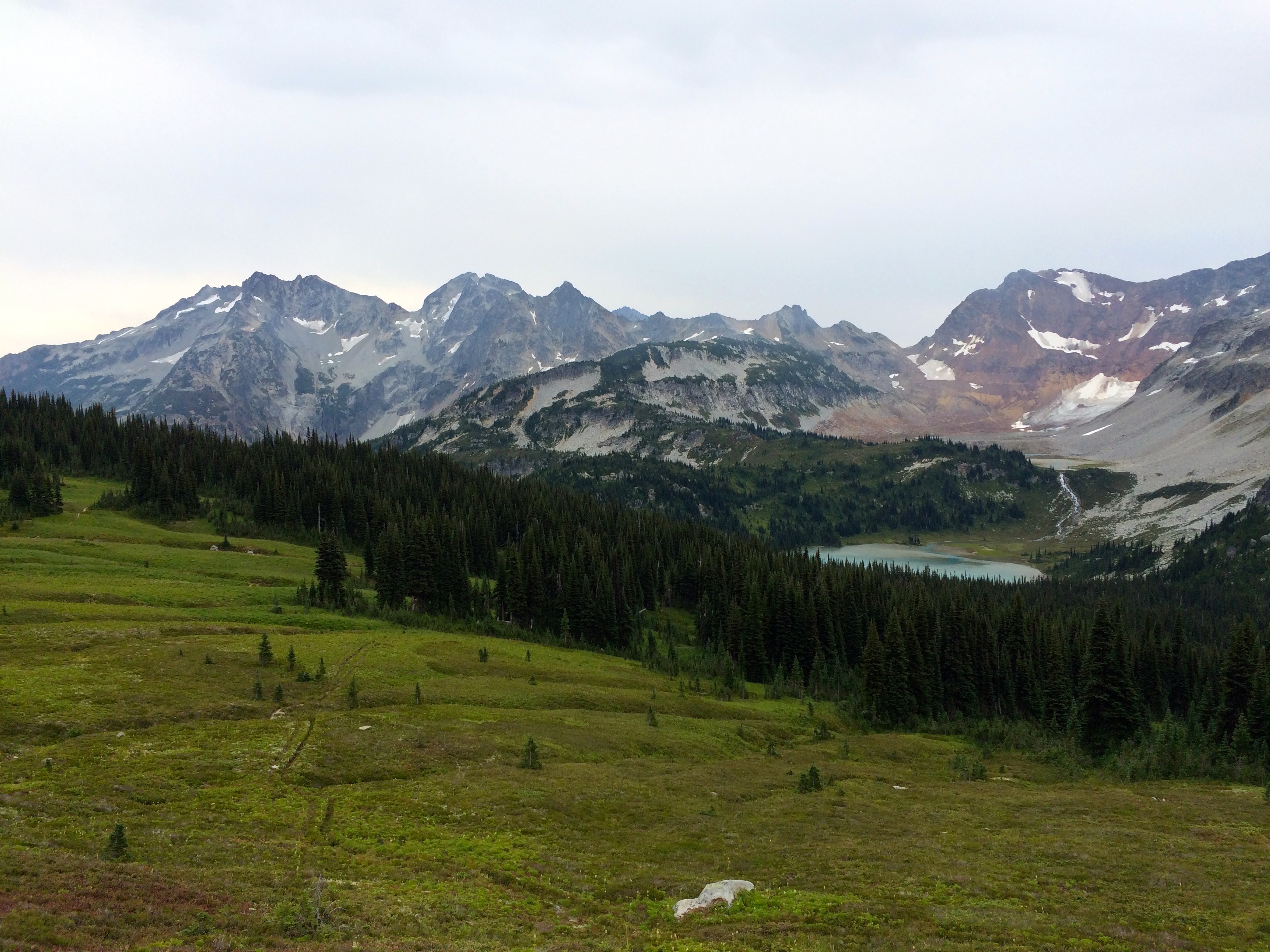

This is when we first saw the fires which have wreaked havoc with the PCT Trail closure. At this time the big fires over at Lake Chelan had not blown up yet. As we climbed over the pass we got to speak with many of the local Whistle Pig population.
This was also when we discovered that the detour to Stehekin was no longer an option for the PCT’ers. We went about half way to Image Lake and turned around figuring that the weather was not going to present us with enough reward. After talking to others who went over I think it was the right decision.
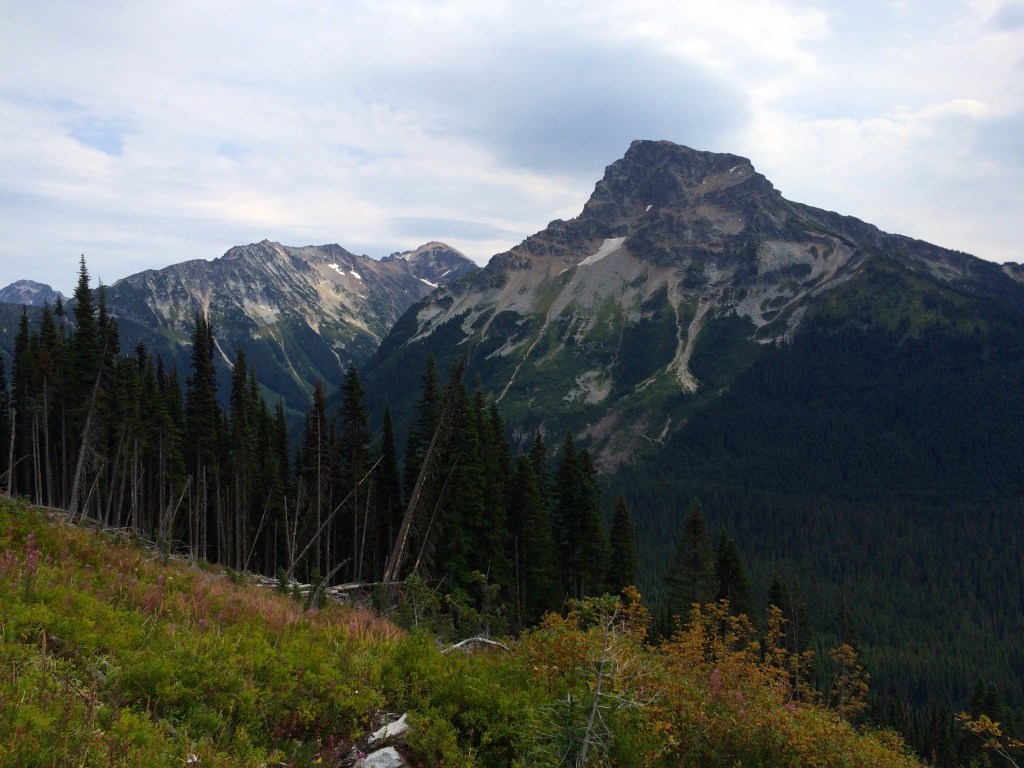
Fortress Mountain 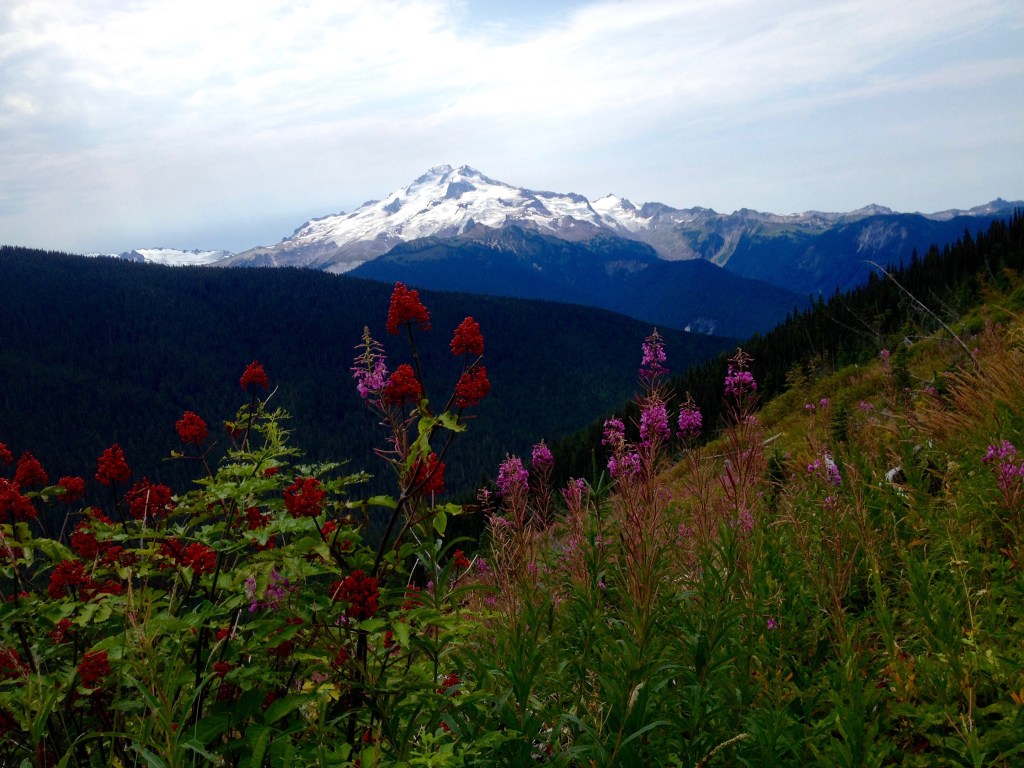
Glacier Peak

We had hoped to hike over to Image Lake which is a 2.4 miles. We went about a mile and decided we didn’t really need to go all the way. The views of Glacier Peak were excellent from where we were. (I did finally get to Image Lake and yes it is awesome) We camped across from Fortress Mountain. This was the Suiattle Pass Junction area where the PCT closure was spelled out.
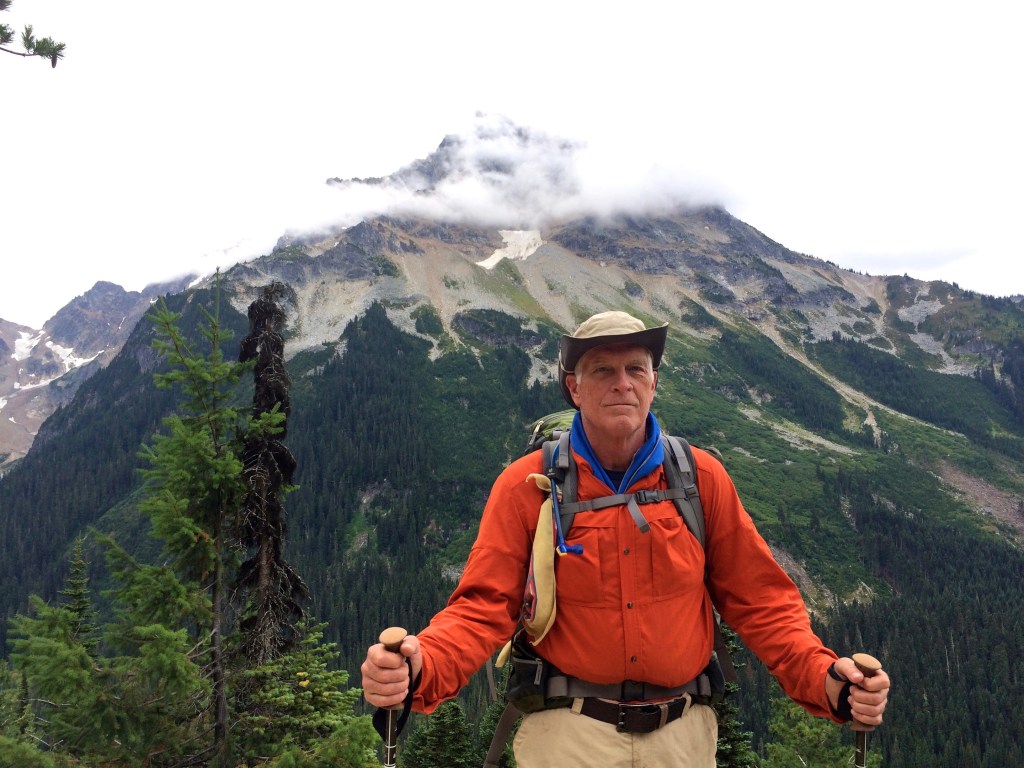
We continued on with our loop up to Buck Creek Pass knowing that we would have time for a side hike. We setup camp at the top of the pass while the weather still looked good and we decided to do the Liberty Cap trail.

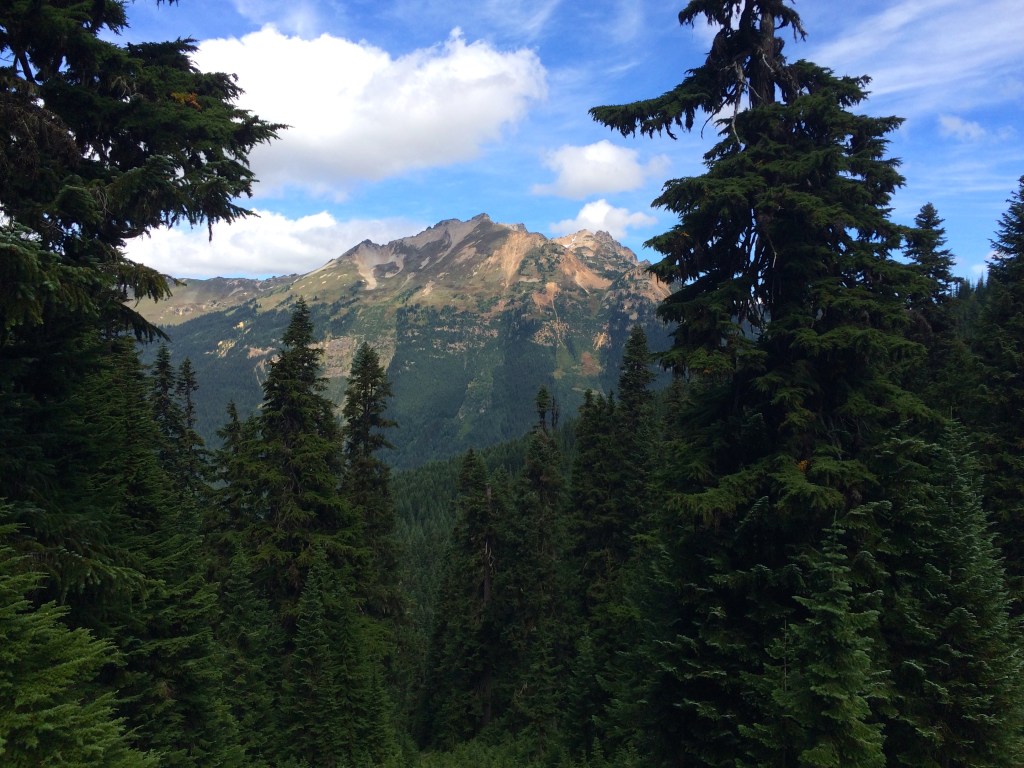
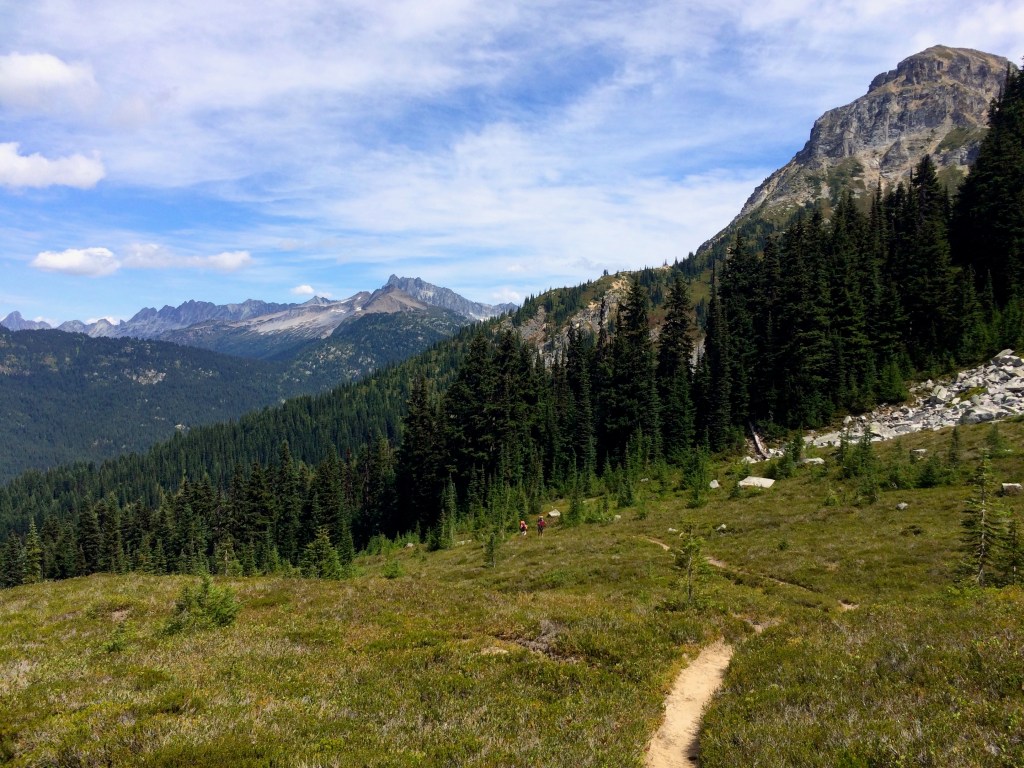
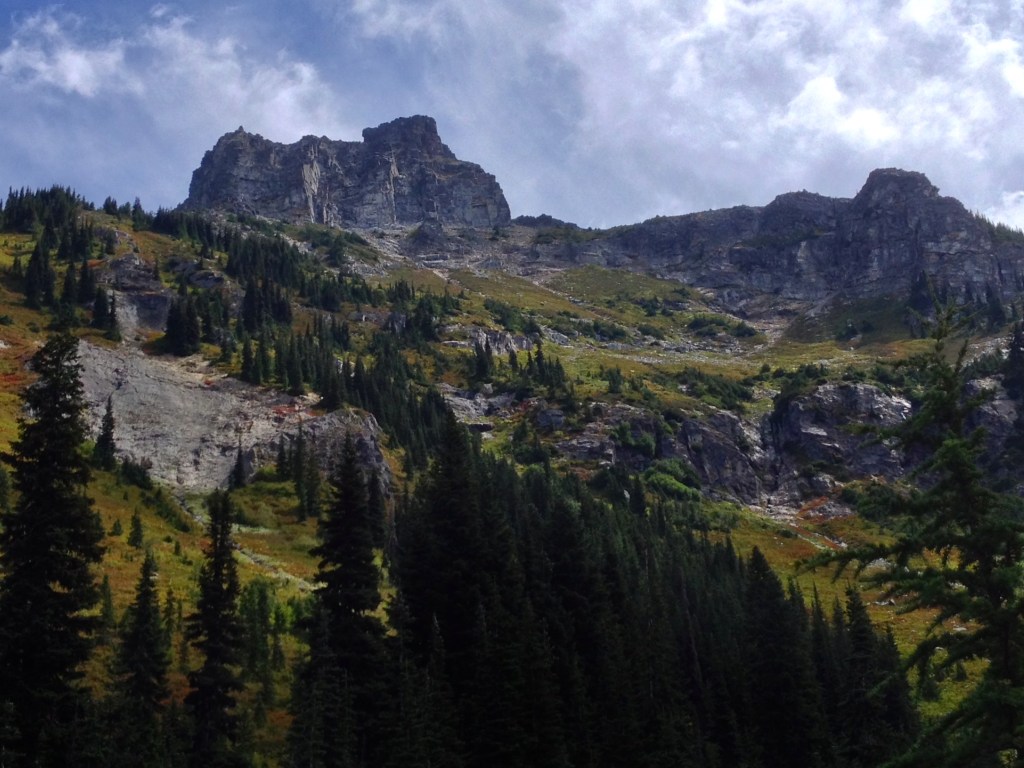
I highly recommend this route which offers fabulous views of Glacier Peak.
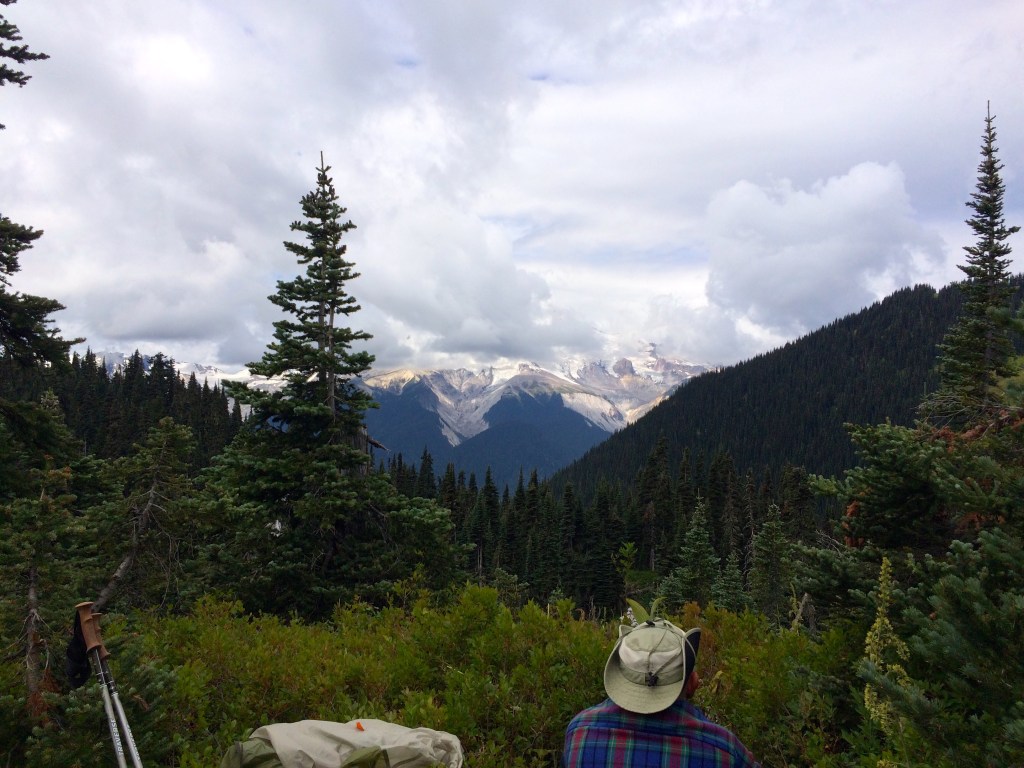
Well the weather started to change once we got up on Liberty Cap which caused us some concern but also offered beauty in the cloud formations.
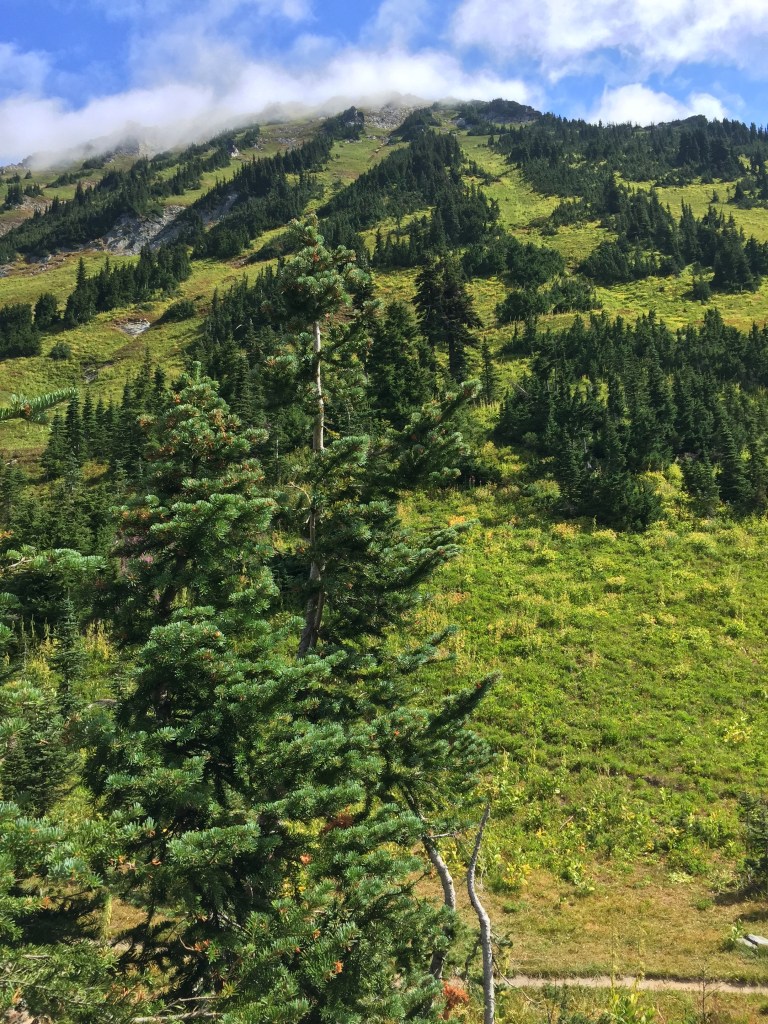
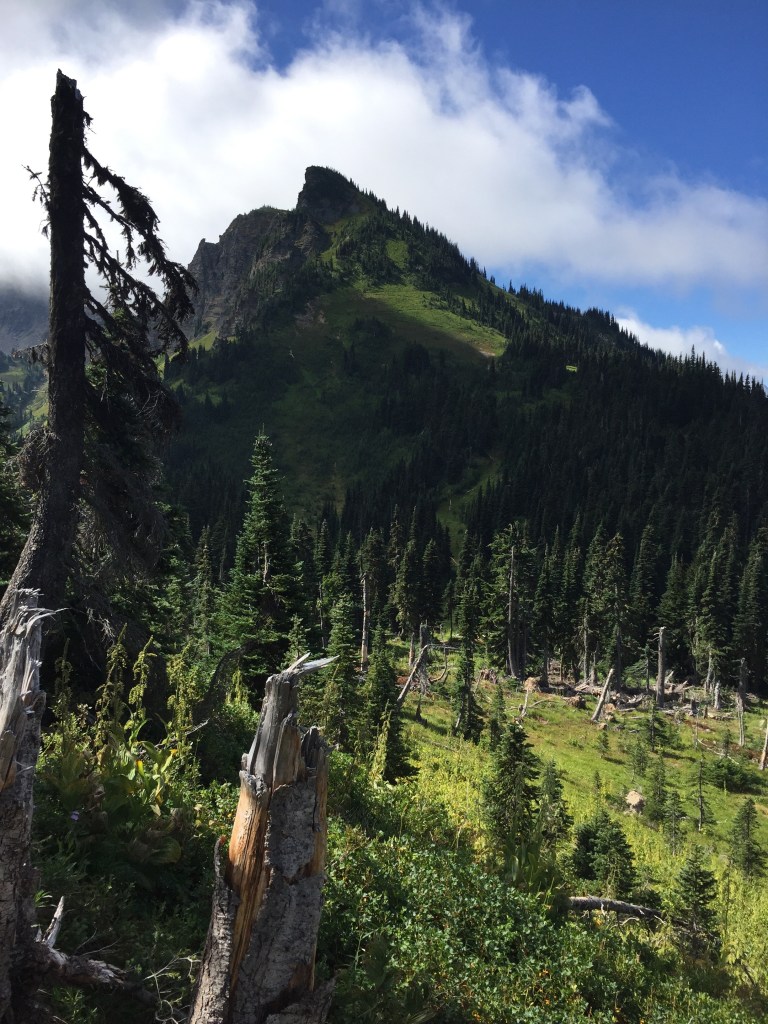


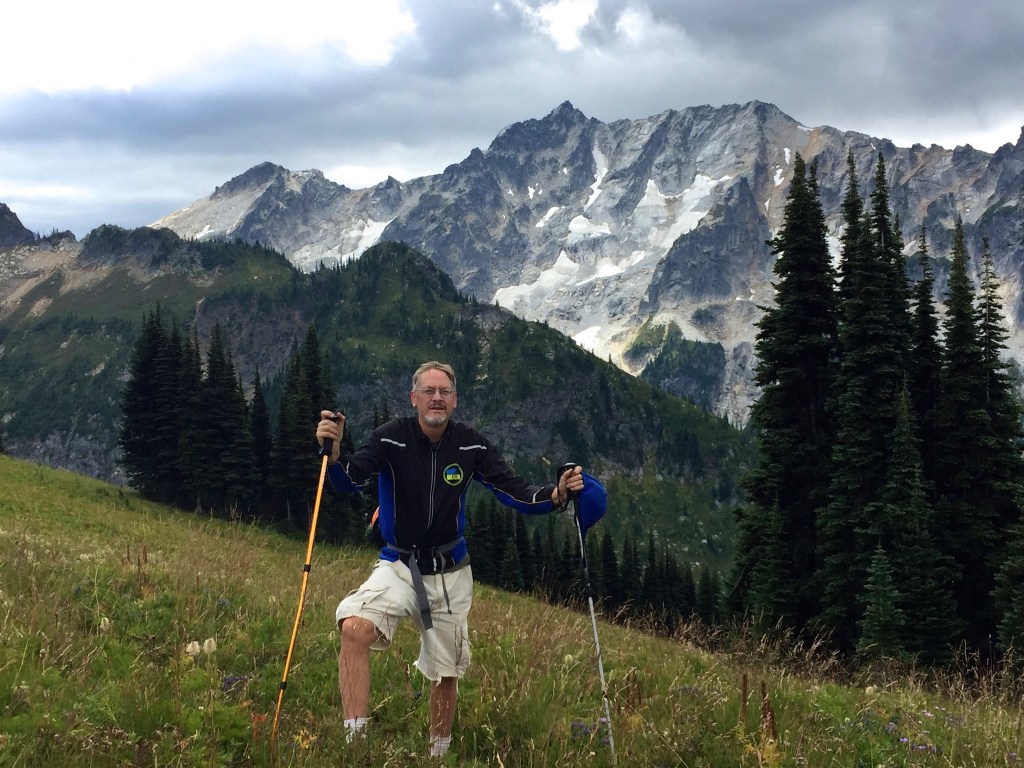

We got back to camp just in time to avoid the rain.
The next morning it was still miserable on the pass but we could see that there was sun in the valley on our route back to the Trinity Trailhead. The annual backpacking loop trip with friends was again a great success, however, this year I was set to continue on for a few more weeks.
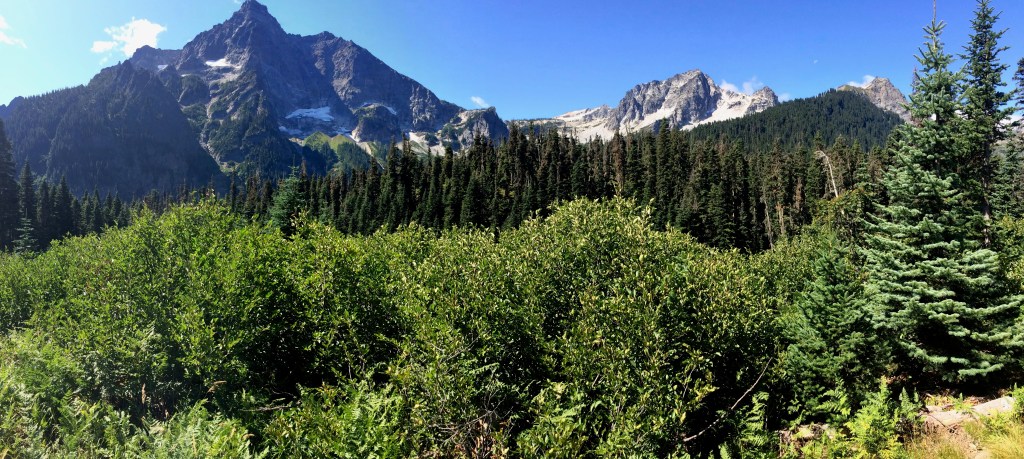
My original plan was to get my resupply and go from Stevens Pass to Canada, however, the fires forced a change to that strategy. So I decided to go from Stevens Pass to Snoqualmie Pass for my next segment.


 The Adventure Continues