Blog Archives
Metallosis Health Scare
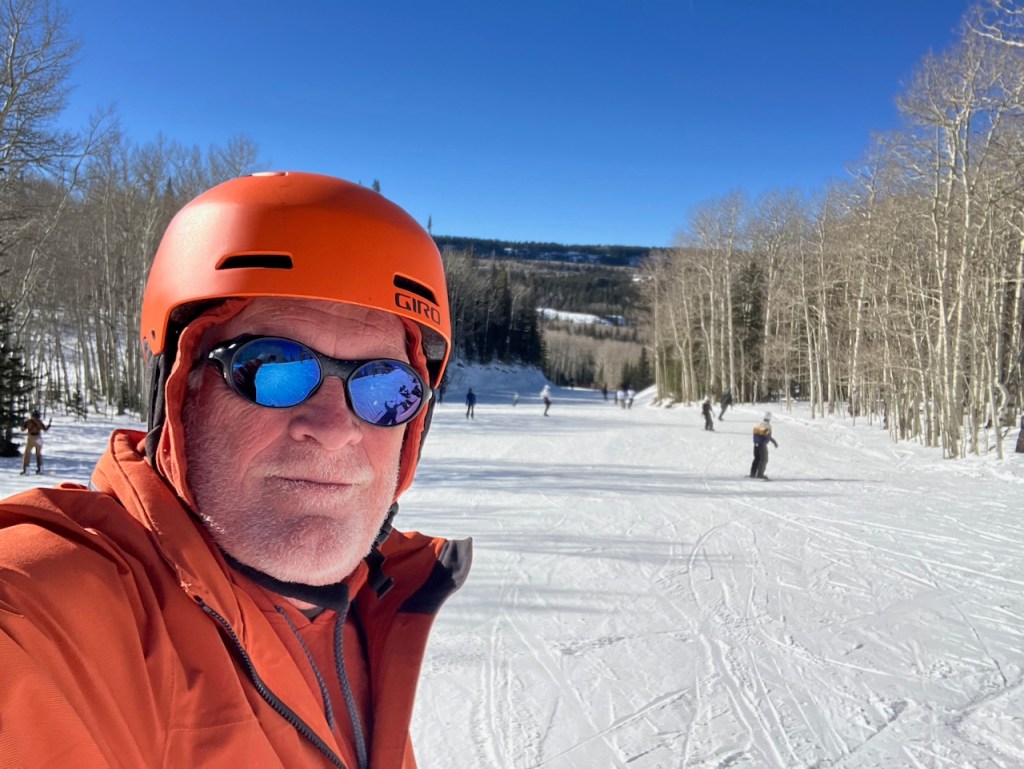
The last couple of years has brought so much change and happiness with marrying my High School Sweetheart and then building our dream home overlooking Grand Junction, CO. However, 2024 started off with a bout of Shingles as I turned 70 and finished up with a couple cases of Covid. But all was trending to great with my first annual ski pass at Powderhorn.
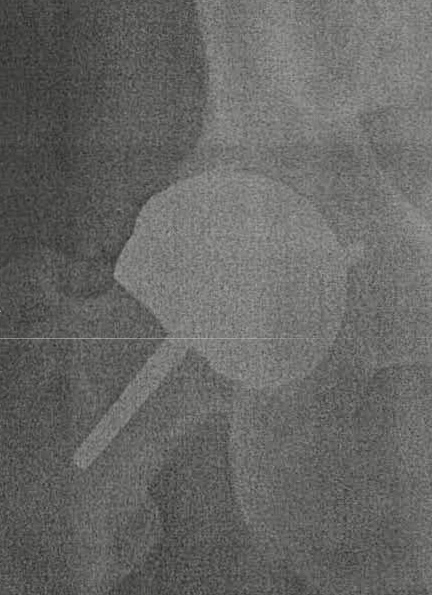
At the beginning of March 2025, I experienced what seemed like a kidney stone due to centralized pain in the lower back and abdomen. After a visit with my doctor and a blood test for cobalt, I realized that I was undergoing a metallosis event from my 2 Wright CONSERVE® Femoral Resurfacing, which are made from chrome/cobalt. My hips were resurfaced in 2006 and 2010, and I have been extremely happy with the results, which allowed me to continue my love for backpacking. I did experience a metallosis event back in 2016 when I took up playing my beloved game of handball. I quickly realized that the lateral movement of this court game was causing metal fatigue in my hips, confirmed by a high concentration of chrome/cobalt in my blood. When I realized the similarity of symptoms with this latest event, my “A-ha” moment pointed directly at the amount of skiing I had done this winter. I didn’t equate lateral movement with skiing; however, after thinking about the stress put on my hips from skiing, I knew what I had done.
After my first encounter with Metallosis, I scrambled to understand more about health ramifications from metal poisoning and it was scary. I had friends with hip resurfacing who shared with me their terrible experiences of tissue dying around their hips that were somewhat confirmed by the Documentary: “The Bleeding Edge” that I wrote a post about. Luckily it appeared that my specific brand of hips had a superior metal alloy and design which limited the amount of metal fatigue. But I was not sure how much damage had been done from the skiing. I was definitely in severe pain for many weeks but I was not sure how much permanent damage had been done. In my earlier research I found that the over the counter supplement N-Acetyl-Cysteine, NAC, was a natural chelating agent for your blood. (An earlier Post about NAC) It was OK to increase my dosage of NAC from 1200 to 2400 mg which I did along with shutting down my exercise routines that did not sit well with my almost 1 year old Labrador Retriever or my golf game.
The severe pain began to subside and I was able to walk the dog again, I was daily monitoring the muscle cramping and weakness of the muscles around my hips. The slow but steady progress through March was encouraging and now I am able to walk 18 holes of golf at least once a week in April. I have an appointment with a Orthopedic Surgeon in May when I hope to get more deliberate about a maintenance program for monitoring the metal fatigue. (Update)I met with my Orthopedic Doctor to discuss my MRI of my hips and all looks good. No reason to be concerned so now I can exercise without fear of doing more damage. Overall, it appears that I will be able to manage this problem and continue my plans for a return to Backpacking.
Redesigning our Wireless Network for BYOD
I’m giving a presentation next week at a technology conference for higher education technology leaders entitled “Redesigning Wireless Networks for the Proliferation of Multimedia Enabled Mobile Devices”. What will be valuable about my presentation won’t be details about wireless network technology, although some details will be used to seed the conversation. No, the value will be the open discussion about what we are doing with our wireless networks and why we feel we need to do it. A discussion that invariably takes us to how we will deal with the influx of BYOD, Bring Your Own Device, to our campuses.
The BYOD buzz is helpful to the vendors and consultants to generate concern about this proliferation of wireless personal computing devices on our campuses. We may just deal with this as a policy decision of (Not Allowed) hoping to maintain control of our network. But we will eventually need to deal with this. However, our infrastructure may not be ideally designed for the challenge. The solution is now pointing to a new version of Network Access Control, NAC. Not the NAC of virus quarantine days but a NAC for designed for wireless network management.
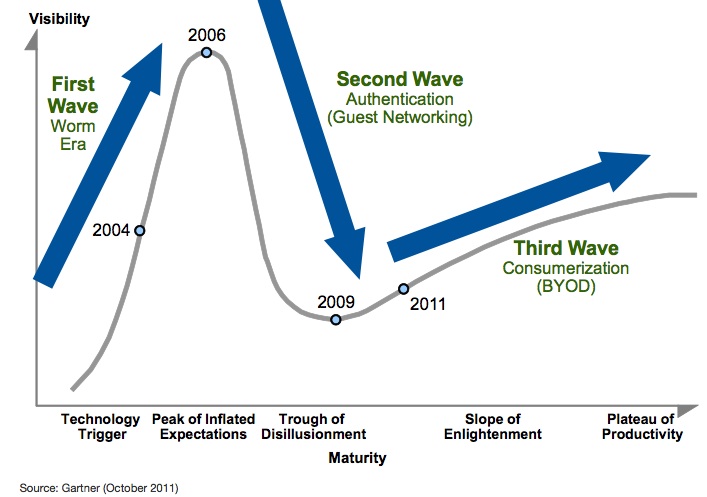
I believe that our wireless network has become the primary network access. This means we can’t wait to negotiate authentication and provisioning back at the network core, we need to make those decisions at the point of access. There may be wireless devices that we do not want on our network and there is enough information to make that decision before any access is granted. Our user classes are no longer just employees and guests, we need to offer role based policy management. Wireless service is now about seamless handoffs as one moves across campus and bandwidth allocation from multiple access points with multiple antennas. Responding to these wireless networking requirements is not just about a financial investment. The correct strategic decisions are more critical then ever as we try to position ourselves for the next wave of innovation destined for our campuses.


 The Adventure Continues